 Domain SearchInstantly check and register your preferred domain name
 Web Hosting
 cPanel HostingHosting powered by cPanel (Most user friendly)
 WordPress HostingHost your WordPress website with fast, secure, and affordable WordPress hosting in Kenya.
 KE Domains
 Reseller HostingStart your own hosting business without tech hustles
 Windows HostingOptimized for Windows-based applications and sites.
 Free Domain
 Affiliate ProgramEarn commissions by referring customers to our platforms
 Free HostingTest our SSD Hosting for free, for life (1GB storage)
 Domain TransferMove your domain to us with zero downtime and full control
 All DomainsBrowse and register domain extensions from around the world
 .Com Domain
 WhoisLook up domain ownership, expiry dates, and registrar information
 VPS Hosting
 Managed VPSNon techy? Opt for fully managed VPS server
 Dedicated ServersEnjoy unmatched power and control with your own physical server.
 Website Builder
 Online Store BuilderLaunch a professional e-commerce store without writing code.
 Web Design ServiceGet a custom-designed website tailored to your brand and goals. From just KES 15,600
 BlogRead our guides on web hosting, online business, digital marketing, and more
 SupportOur support guides cover everything you need to know about our services
 ContactContact us via chat or email
Free hosting has an obvious appeal. Right?
It removes one of the first costs of putting a website online, and for a lot of people starting out, that’s exactly what makes it tempting.
A first website, a student project, or an idea you’re not even sure will go anywhere yet, none of that needs a monthly bill attached before you’ve even proven the concept works.
Free hosting can genuinely be useful.
It works well for experiments, learning projects, or something temporary you’re testing before committing to anything bigger.
But no hosting bill doesn’t mean no trade-offs.
Somewhere behind the word free sits a set of limits, and those limits can affect storage, traffic capacity, how much control you have over your own site, security, performance, and how easily the site can grow later on.
This article walks through the practical risks worth checking before you put an important website on a free hosting plan.
None of these are reasons to avoid free hosting entirely.
They’re just things to look at closely before deciding what kind of site belongs on it, and what kind doesn’t.
It also helps to separate the idea of free hosting from the idea of a bad host.
Plenty of free hosting providers are upfront about their limits, and plenty of paid hosts still fall short in places.
The real work is reading past the price tag and checking what a specific plan actually includes, rather than assuming free or paid tells you everything you need to know on its own.
1) Your Website May Have Very Limited Server Resources
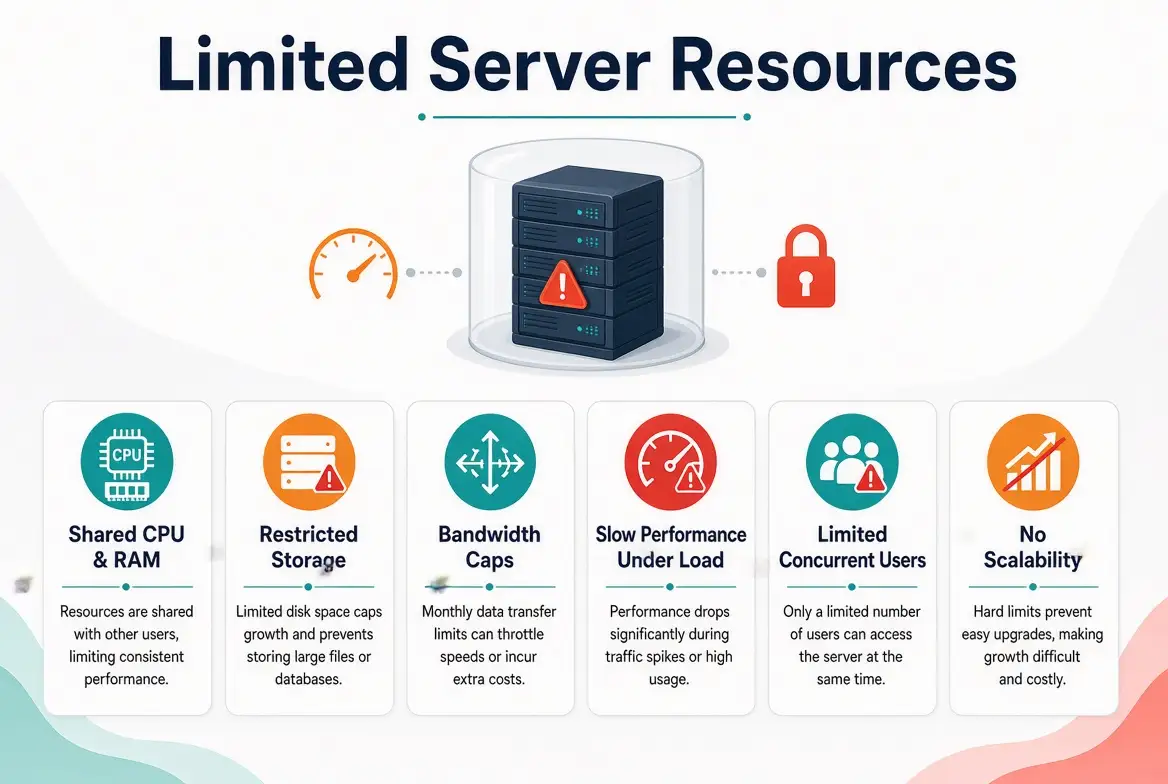
Free hosting plans usually come with fewer server resources than paid hosting. A small static site might run comfortably within those limits.
Problems tend to show up once you install applications, add more content, or start getting more visitors.
- CPU usage may be restricted.
- RAM allocations can be small.
- Storage may be limited.
- There may be restrictions on databases, files, or inodes.
- Resource-intensive plugins and applications may not work properly.
- Reaching a resource limit can make the website slow or temporarily unavailable.
It’s worth checking the actual resource limits on a plan rather than relying on the word free to tell you anything useful.
Two providers can both call themselves free and still allocate completely different amounts of CPU, memory, and storage behind the scenes.
The only way to know what you’re actually getting is to read the specifics, not the marketing headline.
2) Your Website Can Become Slow as Traffic Increases
A website that runs fine with ten visitors can behave very differently with a few hundred.
Free hosting environments work with limited resources, and that becomes more noticeable as traffic or site complexity grows.
- Pages may take longer to respond during busy periods.
- Dynamic websites such as WordPress generally need more resources than simple HTML sites.
- Large images, scripts, and plugins can push resource usage up fast.
- Ecommerce stores and other database-heavy websites tend to be especially demanding.
- Poor performance can affect how visitors experience the site, and whether they convert into customers.
It helps to think about whether the hosting environment can handle your expected traffic, not just what you’re getting right now.
A site that starts small but is meant to grow, a business launching a new product, a blog hoping to be shared widely, needs headroom built in from the start, not resources sized only for its first quiet month online.
3) Free Hosting May Give You Less Control Over Your Website
One of the less obvious risks of free hosting shows up later.
You go to change something you need, and find out the provider doesn’t give you access to it.
Depending on the service, restrictions can include:
- Limited control panel features
- No SSH access
- Restricted PHP configuration
- Limited database management
- No cron jobs
- Restrictions on certain plugins or applications
- Limited DNS controls
- No ability to change important server settings
Checking which management tools and server features are actually available, before building the site, saves a lot of frustration later.
It’s a lot easier to choose a different plan upfront than to rebuild a site somewhere else because a feature you needed turned out to be locked behind a paid tier.
4) You May Be Forced to Use a Subdomain
Some free hosting services place your website on an address that belongs to the hosting company, rather than letting you connect your own domain.
Instead of:
yourbusiness.co.ke
you could end up with something closer to:
yourbusiness.provider-example.com
You don’t fully control the parent domain in that setup.
Moving later means changing the address visitors have already gotten used to.
Printed materials and existing links may keep pointing to the old URL long after you’ve moved on.
A custom domain gives a business real control over its own web address, something a subdomain simply doesn’t offer.
It’s worth checking whether connecting your own .co.ke, .com, .org, or other domain is actually included before signing up.
For a personal hobby project, a subdomain might be perfectly fine. For a business trying to build a real, recognizable presence online, it usually isn’t.
5) Your Hosting Provider May Place Ads on Your Website
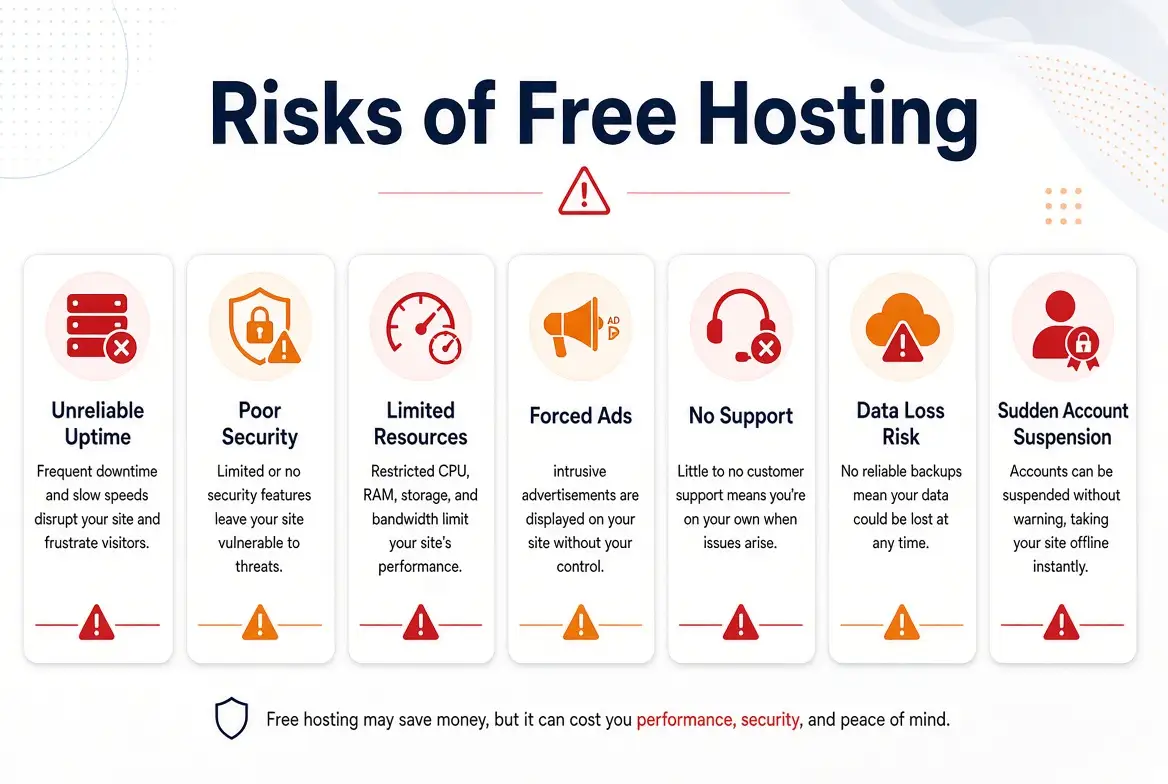
Some free hosting companies cover their costs by placing advertisements on the websites using their service.
- You may have little say over which advertisements appear.
- Ads can pull attention away from your own products or content.
- They may take up valuable space on the page.
- Removing them may require upgrading to a paid plan.
Reading the provider’s terms closely will tell you whether advertising is mandatory, and whether there’s any way to turn it off.
It’s also worth considering how ads might look next to your own brand.
A professional-looking site can lose credibility fast if it’s sitting alongside ads for products that have nothing to do with your business.
6) Backups and Website Recovery May Be Limited
A website can break for plenty of reasons, a failed update, an accidental deletion, a corrupted database, a security problem, or plain human error.
That’s exactly the moment good hosting becomes important, because you need a clean copy to restore from.
With some free plans:
- Automatic backups may not be included.
- Backup frequency may be limited.
- Retention periods may be short.
- One-click restoration may not be available.
- You may have to create and download backups manually yourself.
A hosting backup shouldn’t be treated as the only copy of an important website anyway, regardless of which plan you’re on.
Keeping an independent copy somewhere else, a local download or a separate backup service, is good practice no matter how solid the hosting itself is.
Still, it’s worth checking exactly what gets backed up, how often, and how restoration actually works before you need it in an emergency, since that’s the worst possible moment to find out the answer is “not much.”
7) Security Features May Be More Basic
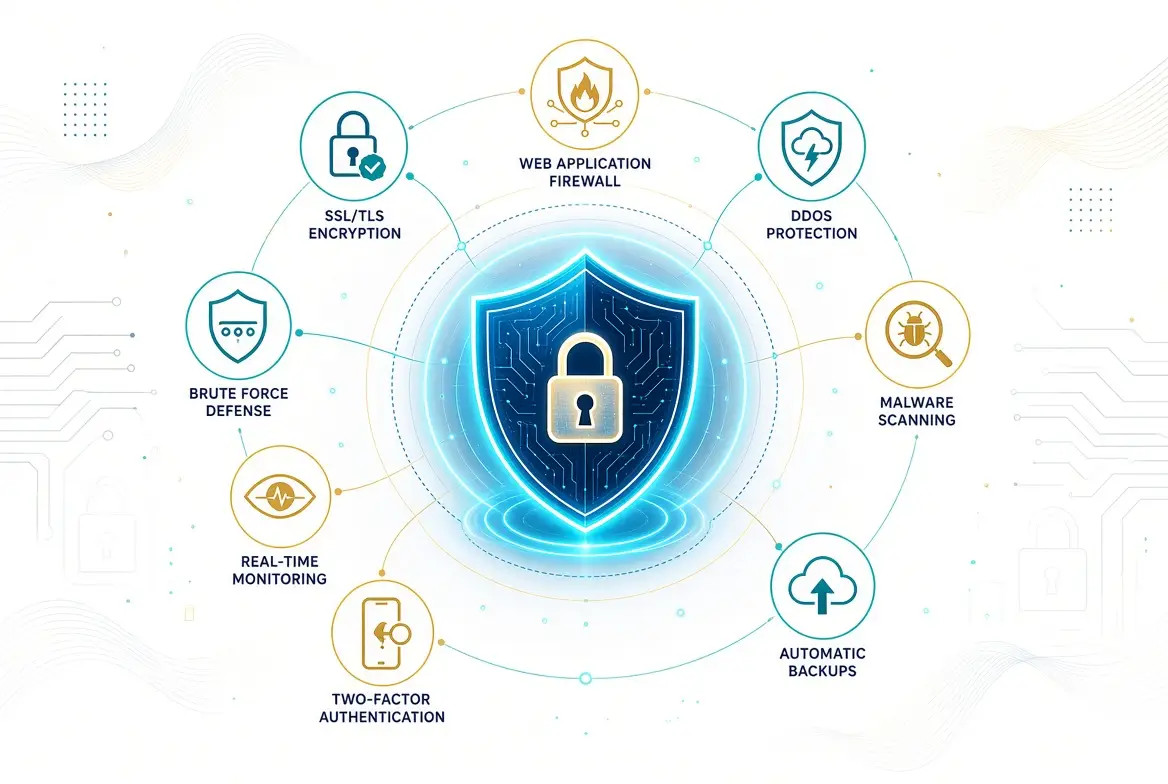
Free doesn’t automatically mean insecure, and paid doesn’t automatically mean secure.
The real question is what protections a specific hosting plan actually provides, not what tier it falls into.
Features worth checking include:
- SSL certificates
- Malware scanning
- Firewall protection
- DDoS protection
- Account security
- Software updates
- Login protection
- Security monitoring
- Backup and recovery options
For WordPress and other CMS-based websites, a good chunk of the responsibility still falls on the site owner too, keeping passwords, plugins, themes, and applications updated regardless of what the hosting plan handles on its end.
No hosting plan, free or paid, can fully protect a site whose owner is reusing a weak password or running a plugin that hasn’t been updated in years.
8) Getting Technical Support Can Be Difficult
Free hosting customers often don’t get the same level of technical help available on paid plans.
That becomes a real problem the moment your website goes down and you can’t figure out why on your own.
- Support may be limited to documentation or community forums.
- Response times may differ significantly from paid plans.
- Some technical issues may fall outside what free support actually covers.
- Live chat or phone support may not be available at all.
- Migration assistance may not be included.
Worth thinking through ahead of time: how much downtime can your business realistically absorb while you’re troubleshooting a problem alone?
For a personal blog, a few hours offline is an inconvenience.
For a business relying on its website for enquiries or sales, the same few hours can mean real, measurable lost revenue.
9) Migrating Away From Free Hosting Can Be Complicated
Eventually, you may need more storage, better performance, or features the free plan simply doesn’t offer.
Moving sounds straightforward until you discover the tools needed to transfer your website are restricted or missing entirely.
Potential complications include:
- No automated migration tools
- Limited backup access
- Difficulty exporting databases
- Email accounts that need to be recreated from scratch
- DNS changes
- Moving files manually, one by one
- Possible downtime during the migration itself
- Changing URLs if the website used the provider’s subdomain
Before choosing free hosting in the first place, check whether your files and databases can be exported easily if you ever decide to leave.
A provider that makes it hard to export your own data is effectively locking you in, whether that’s the intention or just a side effect of a limited free tier.
10) Your Website May Outgrow Free Hosting Faster Than Expected
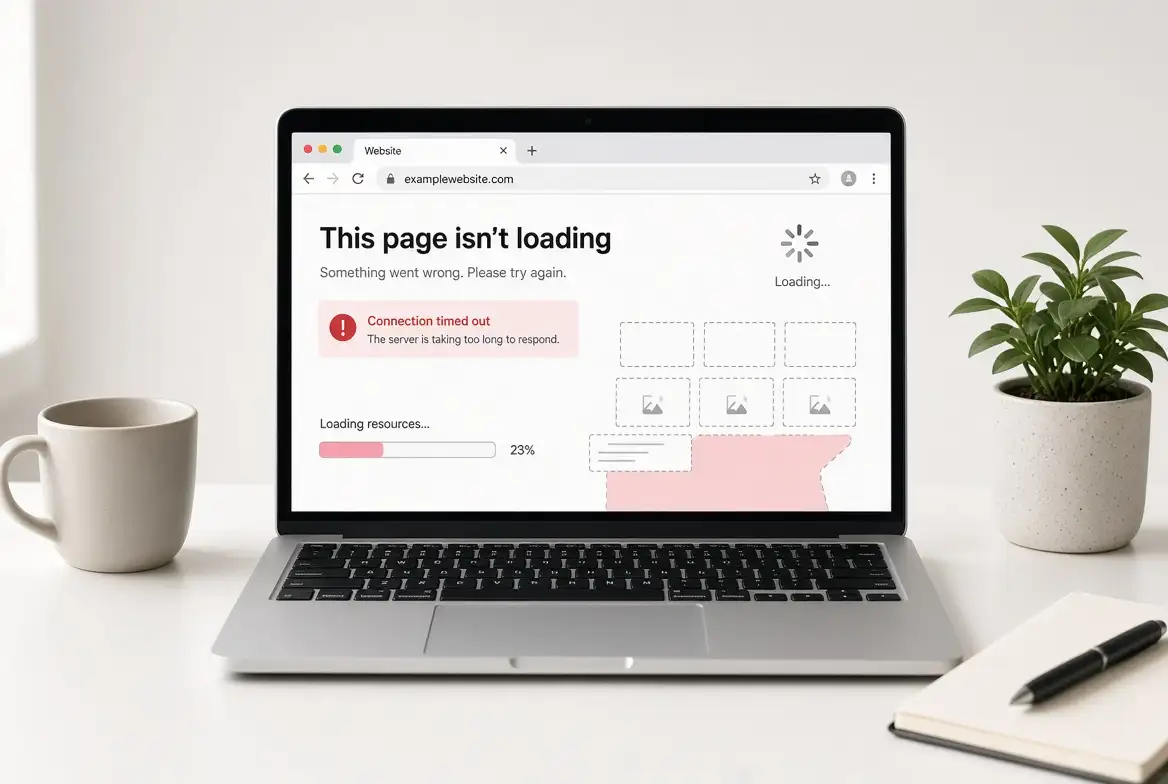
This is probably the biggest practical issue for a serious website.
Free hosting works fine when a project is tiny, but its requirements can shift faster than expected.
Growth can mean:
- More website visitors
- More pages
- Larger media libraries
- More email accounts
- Additional databases
- More plugins
- Higher CPU and RAM requirements
- Ecommerce functionality
- Customer accounts
- Larger amounts of stored data
Checking the provider’s upgrade path before starting means you already know what happens once the free plan stops being enough, rather than finding out in the middle of a traffic spike.
A clear, straightforward upgrade path, one that doesn’t require rebuilding the site from scratch, is worth almost as much as the free hosting itself.
Free Hosting vs Paid Hosting
| Feature | Free Hosting | Paid Hosting |
|---|---|---|
| Hosting cost | Free | Monthly or annual fee. At Truehost- Kshs 208.33/month |
| Server resources | Usually limited | Depends on plan |
| Custom domain | May be restricted | Commonly supported |
| Provider ads | Possible | Usually none |
| Backups | May be limited | Often available depending on plan |
| Technical support | Often limited | Usually broader |
| Server control | Limited | More options depending on hosting type |
| Scalability | Limited | More upgrade options |
| Best suited for | Learning, testing, temporary projects | Blogs, business sites, stores, and growing websites |
Need More Room for Your Website?
Free hosting still has its place.
It’s a reasonable option for learning, testing an idea, or running a short-lived project that doesn’t need to last.
But an important website, one representing a real business, brand, or ongoing project, needs hosting chosen around what it actually requires, not just what costs nothing.
Rather than upgrading the moment something is labelled paid, it’s worth comparing actual resources instead: storage, traffic capacity, website type, and the specific features your site depends on.
A plan that matches those needs will serve you a lot better than one picked purely on price, in either direction.
Paying more doesn’t automatically mean getting more of what your particular site needs, just as free doesn’t automatically mean missing out on everything a small project actually depends on.
Ten risks might sound like a long list to weigh against a price tag of zero, but most of them boil down to one simple habit: read the specifics of a plan before you build on top of it.
A free plan that’s upfront about its limits, and a fair fit for what you’re building, can genuinely serve its purpose well.
The risk isn’t in choosing free hosting itself.
It’s in choosing it without checking what you’re actually getting, and finding out the hard way once the site is already live and depended on.
If your website has outgrown what a free plan can offer, or you’d rather start somewhere that won’t box you in later, Truehost Kenya’s web hosting plans are built to grow alongside a site rather than restrict it.
Explore Truehost’s web hosting plans and find one that fits what you’re building.