 Domain SearchInstantly check and register your preferred domain name
 Web Hosting
 cPanel HostingHosting powered by cPanel (Most user friendly)
 WordPress HostingHost your WordPress website with fast, secure, and affordable WordPress hosting in Kenya.
 KE Domains
 Reseller HostingStart your own hosting business without tech hustles
 Windows HostingOptimized for Windows-based applications and sites.
 Free Domain
 Affiliate ProgramEarn commissions by referring customers to our platforms
 Free HostingTest our SSD Hosting for free, for life (1GB storage)
 Domain TransferMove your domain to us with zero downtime and full control
 All DomainsBrowse and register domain extensions from around the world
 .Com Domain
 WhoisLook up domain ownership, expiry dates, and registrar information
 VPS Hosting
 Managed VPSNon techy? Opt for fully managed VPS server
 Dedicated ServersEnjoy unmatched power and control with your own physical server.
 Website Builder
 Online Store BuilderLaunch a professional e-commerce store without writing code.
 Web Design ServiceGet a custom-designed website tailored to your brand and goals. From just KES 15,600
 BlogRead our guides on web hosting, online business, digital marketing, and more
 SupportOur support guides cover everything you need to know about our services
 ContactContact us via chat or email
Getting the whole web hosting vs email hosting difference right can save you from a lot of stress, like dealing with a website that loads slower than a Nairobi traffic jam, or emails that bounce right back.
And once you understand the difference, you can actually use it to your advantage.
Now, if you’re a Kenyan entrepreneur juggling M-Pesa payments, late-night orders, and clients who expect instant replies, you don’t have time for tech that misbehaves.
You want a setup that keeps your site alive and your emails reliable, without draining your wallet or your sanity.
That’s why in this guide, we peel off web hosting vs email hosting layer by layer so you can see how both work, and how they can work together to make your business run smoother.
Here’s what we’ll cover:
- The basics of web hosting, with tips for Kenya’s mobile crowd.
- Email hosting decoded, so your [email protected] stays sharp.
- A head-to-head look at the real web hosting vs email hosting differences.
- How do the two sync up in real life?
- How to choose the right fit for your business.
Let’s turn that confusion into confidence, starting now.
1) What is Web Hosting?

Let’s say you have a business that you want to get online, or you want to start blogging, or have a space online to post whatever.
That will mean you need a digital space where your website files will be living.
So, web hosting gives you that space.
It’s the server where all your website’s files live, so anyone, anywhere, from Eldoret to London, can visit your site anytime.
How Does Web Hosting Work?
For one, web hosting means your HTML, images, videos, and databases sit on powerful computers that stay connected to the internet 24/7.
When someone types your domain name, the server quickly sends those files to their screen, just like a fast delivery rider dropping an order at your door.
No hosting? No website. Simple as that.
Hosting Options That Make Sense in Kenya
If you’re starting or running a small hustle, shared hosting is your best friend.
It’s like renting a desk in a co-working space, affordable, fuss-free, and perfect for light to medium traffic.
- Truehost’s shared plans, for example, start at around KSh 500/month.
- You still get perks like unlimited bandwidth, which helps when a TikTok post unexpectedly blows up and traffic surges.
If your business starts scaling, you can move to VPS hosting, which is like upgrading to your own private office, meaning more control, more speed, and fewer limits.
The Tech Bits (Without the Tech Headache)
Here’s what keeps everything running smoothly behind the scenes:
- DNS: Tells browsers exactly where to find your site.
- SSL Certificates: Encrypt sensitive data, which is super important under Kenya’s Data Protection Act.
- cPanel: Lets you manage files, emails, and backups without touching code.
- Uptime: Aim for 99.9%. Downtime equals lost sales.
Pros and Cons You Should Actually Care About
Pros:
- Easy to scale as your business grows.
- One-click installs for WordPress and e-commerce stores.
- Faster local loading if the host uses Kenyan data centers.
Cons:
- Shared hosting divides resources among many users, so very heavy sites might feel slow.
- You may eventually need to upgrade for more control.
That said, hosts with Kenyan data centers dramatically reduce loading delays.
As you already know, your Nakuru clients won’t be waiting forever to access your page.
2) What is Email Hosting?
Let’s switch gears to email, the quiet workhorse behind every “Order confirmed!” or “Payment received!” notification.
Email hosting is basically a dedicated server that handles all your sending, receiving, and storage.
Think of it as your own branded mailbox… only much more powerful.
Why It’s Different From Free Email Services
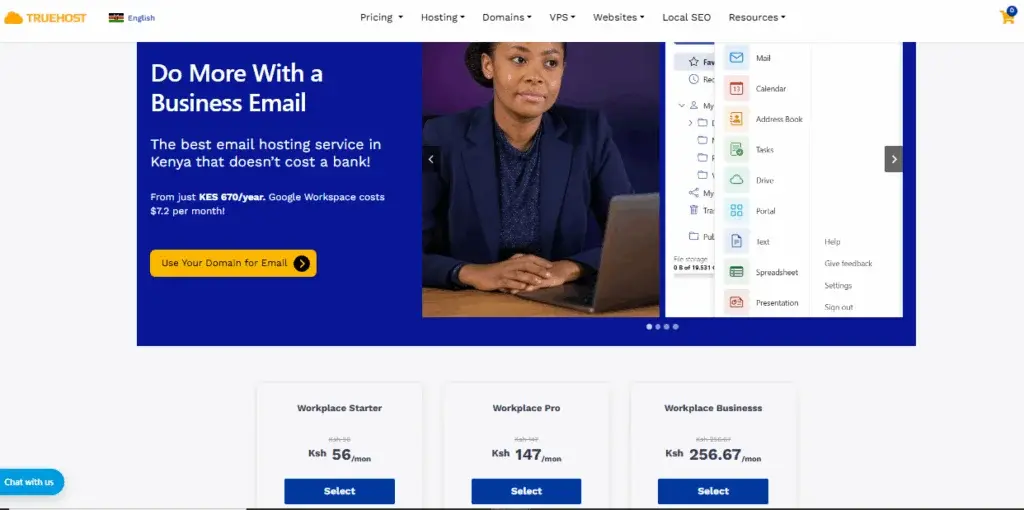
Unlike free options like Gmail, email hosting connects directly to your domain name.
So instead of [email protected], you get something like [email protected].
That instantly boosts your credibility.
Your email will use common protocols like:
- IMAP, which keeps everything synced across your laptop, phone, and tablet
- POP3, which downloads emails to one device for offline access
You also get built-in spam filters, so junk gets blocked before it ever reaches your inbox.
Less clutter, more leads.
Why Email Hosting is a Savior in Kenya’s Business Scene
Kenya is famously chat-heavy with WhatsApp groups, voice notes, and Telegram, yet email still seals the serious deals.
Proposals, invoices, purchase orders, contracts… they all land in inboxes.
With email hosting, you get useful features such as:
- Big storage for long invoice trails
- Mobile apps for quick replies on the go
- Encryption to keep cyber snoops out
- Scalability as your team grows
At Truehost, for example, we include 30GB storage and lets you scale upward from there, all starting at about KSh 500/month.
How It Actually Works Behind the Scenes
You compose an email in Outlook or your webmail dashboard, hit send, and the hosting server handles the routing.
Messages travel through secure channels, and because everything is properly configured, bounce rates drop dramatically, often hitting up to 98% deliverability.
Pros:
- Super professional image
- Better trust with clients
- Easy integrations with calendars and productivity tools
Cons:
- It’s separate from your website hosting
3) Web Hosting vs Email Hosting: Spotting the Key Differences
Alright, now that you understand each service on its own, let’s compare web hosting vs email hosting.
They can be best described as related, but definitely not identical.
Each shines in its own lane, and when you mix the two without understanding the boundaries, that’s where frustration usually kicks in.
What Each One Really Does
Web hosting brings your website to life, from your products and photos to mobile pages and checkout.
Email hosting, on the other hand, runs quietly in the background as your CRM backbone.
It nurtures leads, confirms payments, sends newsletters, and keeps your communication professional.
Cost: What to Expect
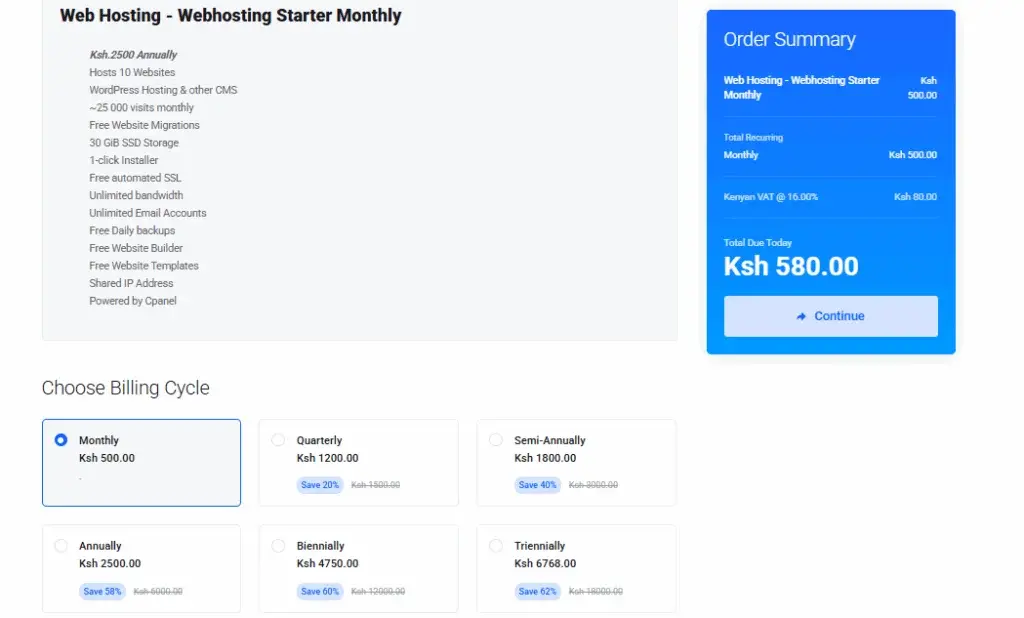
Web hosting in Kenya typically ranges from KSh 500 to KSh 5,000 per month, depending on whether you’re on shared, VPS, or dedicated plans.
Email hosting is usually cheaper, ranging from KSh 50 to KSh 1,000 per user or domain per month.
Performance
Performance also plays out differently:
Web hosting aims for strong uptime, around 99.9%, to keep your site always accessible.
Email hosting fights a different battle: keeping you off blocklists and ensuring your messages actually land in the inbox, not spam.
Security
Security also varies across services.
Web hosting leans heavily on SSL certificates and firewalls to protect your site.
Email hosting relies on encryption, authentication protocols, and strong anti-spam systems to keep your messages clean and secure.
Scalability
When it comes to scaling, web hosting is built to absorb sudden surges in visitors, like when a sale goes viral.
Email hosting, on the other hand, scales as your team grows: the more users you need, the more inboxes you add.
In short, if you need a website, choose web hosting.
And if you need client follow-ups, invoices, or branded communication, add email hosting.
4) How Web Hosting and Email Hosting Work Together
Separate, they’re solid. United? Unstoppable.
Web hosting vs email hosting is more a partnership than it is a rivalry, keeping your online presence smooth, fast, and professional.
How the Integration Actually Works
- Point your domain’s MX records to your email server.
- Once that’s done, your website and email “talk” to each other automatically.
- Website forms can send confirmations instantly.
- Platforms like Truehost’s cPanel let you manage everything from a single dashboard (no more login hopping).
The Benefits of this Combo
- Higher response rates: Branded emails sent directly from your web forms can significantly increase replies.
- Better security: Both hosting services encrypt data under KDPA, protecting customer info end-to-end.
- Smoother e-commerce: For Kenyan businesses, integrated hosting means things like M-Pesa payments triggering instant receipts, a huge win for customer trust.
How to Link Them in Under 10 Minutes
- Log in to your Truehost dashboard.
- Verify your domain setup.
- Under the email section, create accounts like [email protected].
- In web settings, configure contact forms to route via the new server.
- Place a quick test order and make sure everything fires correctly.
That’s it, no tech background required.
5) Choosing the Right Hosting for Your Kenyan Business
You’ve seen how everything fits together; now it’s time to choose what works for you.
Deciding between web hosting and email hosting really comes down to where your business is right now.
- Solo blogger? A simple web hosting plan with an email add-on is more than enough.
- Small team of 5–10? Go for a full bundle, one setup, one bill, zero stress.
Think Budget, Think Practical
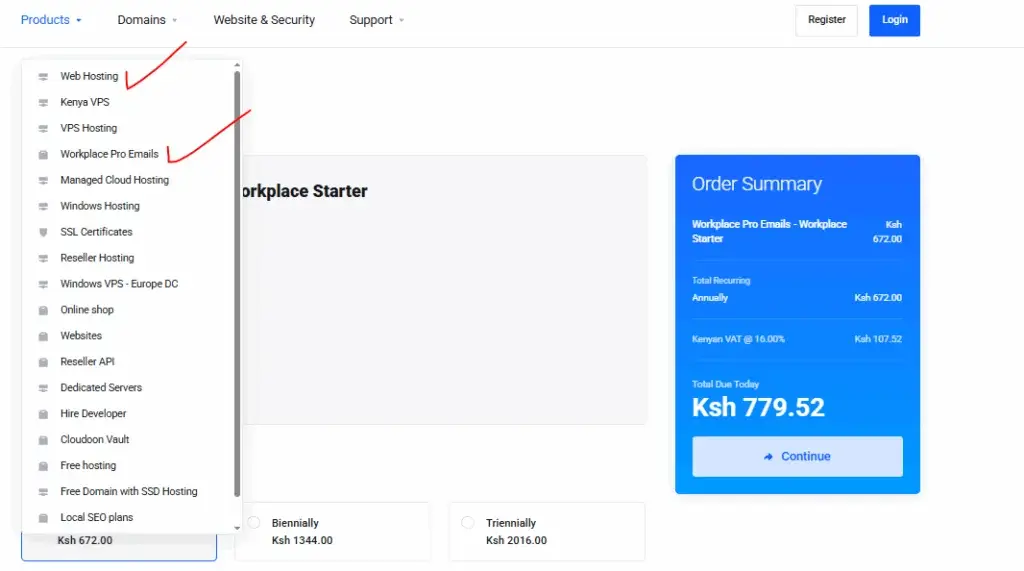
Truehost’s starter package at KSh 500/month gives you both web and email hosting, paid easily via M-Pesa, with 24/7 local support (no staying up for someone in another timezone).
Traffic expectations matter too:
- Under 10K monthly visitors? Shared hosting works.
- Expecting viral spikes? A VPS is safer.
- Planning to grow steadily? Auto-scaling means you won’t need messy migrations later.
Why Going Local Beats Going Global
Truehost’s Kenyan servers deliver sub-50ms load times, which is something overseas hosts can’t match.
You also get:
- Free SSL
- Automated backups
- Free .co.ke domain
Most global hosts charge extra for these basics, but here, they come standard.
Quick Tips
- Audit your needs: If you need a website, lean toward web hosting. If you work with clients daily, prioritize the quality of your email hosting.
- Test before you commit: Truehost’s 30-day trial lets you explore everything risk-free.
- Go local when you can: Support in Swahili/English means faster help and no timezone gymnastics.
FAQ
Should I keep my web hosting and email hosting separate?
It depends on your situation. For most small businesses and startups, bundled hosting is fine. But as you scale, separating the two gives you more control, better performance, and greater resilience.
Is email hosting cheaper than web hosting?
Generally, yes. Email hosting tends to cost less than web hosting, though prices vary by provider and plan.
In Kenya, web hosting plans typically run from around KSh 500 to KSh 5,000 per month, depending on the type. Email hosting is usually cheaper, typically ranging from KSh 350 to KSh 1,500 per user or domain per month.
Can I use the same provider for both web hosting and email hosting?
Yes, and for most small to medium businesses, bundling both under one provider is actually a smart move.
When you manage web hosting and email hosting from the same dashboard, like through a cPanel setup, you avoid the headache of juggling multiple accounts, separate bills, and different support teams.
Do I need email hosting if I already have web hosting?
Not necessarily, but for most businesses, the answer is yes.
Many web hosting plans include basic email accounts. If you are a solo blogger or just starting, that might be enough to get going. However, built-in email through a web host is usually limited in storage, deliverability, and features.
Is a custom domain email address really necessary for a business?
Honestly, yes. And the difference it makes is bigger than most people expect.
When a potential client receives an email from [email protected], it signals professionalism and trust. When they get one from [email protected], it raises questions, even if your service is excellent.
Conclusion
There you have it, web hosting vs email hosting demystified.
The key takeaway is don’t choose; combine for that seamless edge in our fast-lane market.
Ready to ditch downtime?
Truehost’s Kenya-tuned plans make it effortless, so grab your bundled starter today and watch your business thrive.
Head to truehost.co.ke, pay via M-Pesa, and let’s build something big!