 Domain SearchInstantly check and register your preferred domain name
 Web Hosting
 cPanel HostingHosting powered by cPanel (Most user friendly)
 WordPress HostingHost your WordPress website with fast, secure, and affordable WordPress hosting in Kenya.
 KE Domains
 Reseller HostingStart your own hosting business without tech hustles
 Windows HostingOptimized for Windows-based applications and sites.
 Free Domain
 Affiliate ProgramEarn commissions by referring customers to our platforms
 Free HostingTest our SSD Hosting for free, for life (1GB storage)
 Domain TransferMove your domain to us with zero downtime and full control
 All DomainsBrowse and register domain extensions from around the world
 .Com Domain
 WhoisLook up domain ownership, expiry dates, and registrar information
 VPS Hosting
 Managed VPSNon techy? Opt for fully managed VPS server
 Dedicated ServersEnjoy unmatched power and control with your own physical server.
 Website Builder
 Online Store BuilderLaunch a professional e-commerce store without writing code.
 Web Design ServiceGet a custom-designed website tailored to your brand and goals. From just KES 15,600
 BlogRead our guides on web hosting, online business, digital marketing, and more
 SupportOur support guides cover everything you need to know about our services
 ContactContact us via chat or email
You’re hustling hard in Nairobi, running a small craft shop or doing freelance graphic design.
A potential customer scrolls through Instagram, spots your work, and clicks your website link.
However, it loads so slowly that it feels like traffic on Thika Road during rush hour. They leave. Just like that, a sale disappears.
It stings. In Kenya, mobile data is expensive, and people don’t have the patience to wait.
A slow website can cost you clients faster than you can say “loading…”
But the good news is that a static website solves this problem. It’s fast, cheap, reliable, and ready to showcase your work without the drama.
This guide explains static websites in plain, simple language.
By the end, you’ll know:
- What a static website really is
- Why it’s better than dynamic sites for small Kenyan businesses
- How to build one step by step
- Real-life examples to inspire you
- Answers to common questions
Let’s turn slow-loading pages into your first online sale.
What Is a Static Website?
A static website is like a roadside nyama choma stall with a printed menu.
Every customer gets the same plate. No special orders, just consistent, reliable food.
A static website functions in the same manner. It’s made of ready-made HTML files for structure, CSS for style, and maybe a bit of JavaScript for effects.
When someone visits, your server sends the files as they are. No database, no live updates. Just speed.
Back in the ’90s, all websites were static. Early Kenyan banks and news sites used them.
Today, they’re back thanks to tools like Jamstack. Why? Not everyone in Kenya has smooth internet.
Rural Kisumu, slow 4G in Mombasa static sites load in under 2 seconds, even on basic phones.
For you, this means control. Your artisan beads or logo designs stay sharp online.
No plugins are crashing during busy hours. And in Kenya, where mobile data is expensive, fast-loading pages keep visitors engaged.
Static websites are also safer. Hackers love dynamic sites with lots of moving parts. Yours? A digital fortress, easy to back up, stress-free.
If you’re starting online without a developer team, a static website is perfect. Affordable. Reliable. All yours.
Static vs Dynamic Websites
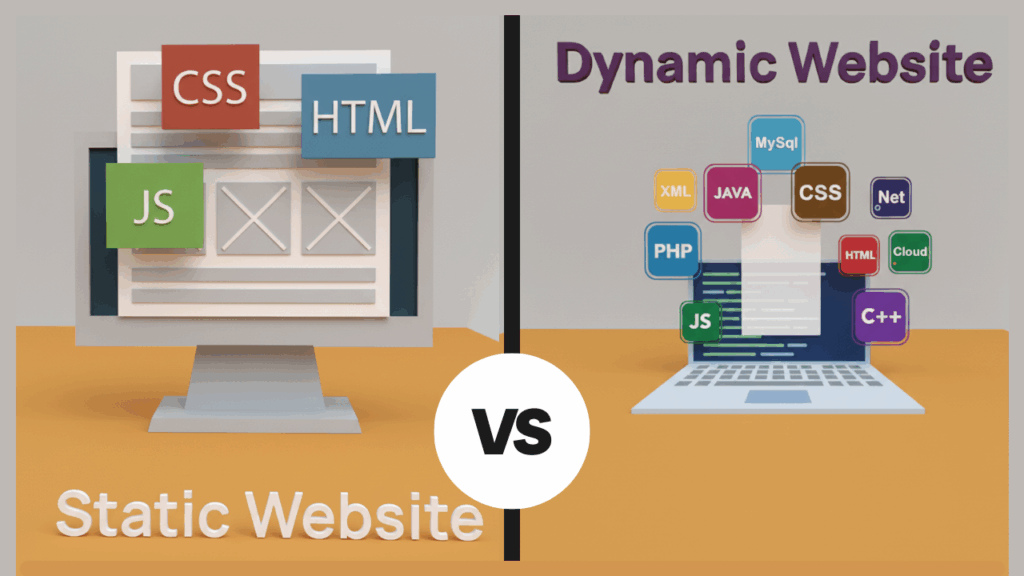
This is like food: a fixed-price ugali and sukuma plate versus a buffet where you pick everything yourself.
The first is quick, simple, and satisfying. The second gives choices but takes longer to serve.
Static websites are the fixed plate. Pre-baked files were served to every visitor.
Dynamic websites make fresh content on the fly, like e-commerce stores showing real-time stock. Powerful, but hungrier for resources.
Here’s a side-by-side:
| Aspect | Static Website | Dynamic Website |
| Content | Fixed files (HTML/CSS/JS) | Database-driven (e.g., WordPress) |
| Cost | Low Ksh 200/month with Truehost Starter | Higher servers, plugins can go 1,000+ |
| Speed | Super fast under 2s load | Can lag if not optimized |
Choose static if you’re small, like a freelance photographer in Eldoret showing work online.
It’s cheap, reliable, and avoids plugin headaches. Dynamic works for bigger setups, like a Nairobi boutique tracking real-time orders.
For most Kenyan startups, static is the smart start. Later, you can migrate to dynamic if your business grows.
Why Build a Static Website?
You want your website to work, not sit idle. Static websites deliver results without stress.
Simplicity
You don’t need to wrestle servers at midnight. Edit plain files like a Google Doc. For a freelancer in Nakuru, that’s more time designing, less time fixing code.
Templates make it easy to change colors, add your logo, and be done.
Cost
Cash flow matters. Dynamic sites eat resources like fuel in traffic. Static sites are cheap.
Truehost Starter plan costs just Ksh 188/month, includes unlimited bandwidth, free SSL, and cPanel.
A .co.ke domain costs about Ksh 1,000/year. In 2025, Kenya that leave more money for stock or ads.
Reliability
Static sites are always ready. No database crashes. Pages load fast even on 3G in Kitale.
Studies show sites taking over 3 seconds lose 40% of visitors. With static, you stay fast and keep customers.
Security
Hackers target dynamic sites. Static sites? Files are read-only. Add Truehost free SSL, and your data is secure. Clients trust safe websites, not leaky ones.
SEO
Google loves fast websites. Static sites rank higher because of speed and clean code. Want to appear in “handmade jewelry Nairobi”?
Fast-loading static pages help you show up. With Truehost SEO tools, you’re easy to find.
Bottom line: static websites help you work smarter, not harder.
Features of a Static Website
A static website focuses on the essentials, ensuring your visitors can access information quickly and easily.
1) Simple Navigation
Static sites prioritize clear, straightforward menus. Paths are direct, and visitors can find what they need without confusion.
- Pros:
- Visitors can locate information quickly, which leads to more inquiries and better engagement.
- Minimal frustration improves user experience, making your site feel professional and reliable.
- Visitors can locate information quickly, which leads to more inquiries and better engagement.
- Cons:
- Static websites offer limited guidance for complex tasks or multi-step processes.
- Adding a sitemap or clearly structured links can help visitors navigate more complicated content.
- Static websites offer limited guidance for complex tasks or multi-step processes.
2) Fixed Content
Text, images, and media on static websites remain constant until manually updated. This ensures a stable presentation of your brand and message.
- Pros:
- Content consistency strengthens your brand identity.
- Backing up your site is straightforward because files rarely change automatically.
- Content consistency strengthens your brand identity.
- Cons:
- Updating content requires re-uploading files, which can be time-consuming.
- Tools like Git or version control systems make updates more efficient.
- Updating content requires re-uploading files, which can be time-consuming.
3) Limited Interactivity
Static websites allow simple forms, image sliders, or embedded content.
However, advanced interactive features like e-commerce platforms, live chat, or dynamic dashboards are not native.
- Pros:
- Lightweight design ensures fast loading times, even on mobile devices.
- Fewer complex scripts reduce potential errors or technical issues.
- Lightweight design ensures fast loading times, even on mobile devices.
- Cons:
- Interaction options are limited compared to dynamic sites.
- Adding contact methods, like WhatsApp buttons or embedded forms, can help maintain communication with visitors.
- Interaction options are limited compared to dynamic sites.
These features make static websites a reliable sidekick for your business: lean, fast, and easy to manage.
They deliver essential information efficiently while keeping your online presence simple and professional.
How Static Websites Work
Every step is simple, making it fast and reliable for visitors.
- Visitor Access
- The visitor types your website URL into their browser.
- The visitor types your website URL into their browser.
- Server Response
- The server instantly sends pre-made files: HTML for structure, CSS for style, and JavaScript for basic interactivity.
- The server instantly sends pre-made files: HTML for structure, CSS for style, and JavaScript for basic interactivity.
- Page Display
- The visitor’s browser assembles these files and displays the fully loaded page, ready to interact with.
- The visitor’s browser assembles these files and displays the fully loaded page, ready to interact with.
- Editing & Storage
- Tools like VS Code make editing files easy.
- GitHub or other version control systems store your files safely and track changes over time.
- Tools like VS Code make editing files easy.
- Hosting & Performance
- Hosting on Truehost SSD servers ensures pages load lightning-fast, even for visitors in Kenya.
- Using Jamstack tools like Hugo allows you to build your site once and deploy it anywhere. The result is low bandwidth usage, high speed, and reliable uptime.
- Hosting on Truehost SSD servers ensures pages load lightning-fast, even for visitors in Kenya.
How to Create a Static Website in 4 Simple Steps
Step 1: Grab the Starter plan
Head to Truehost Web Hosting, pick the Starter plan (KSh 500/month or KSh 5,000/year).
Choose monthly if you want to test, annual if you want the better value.
It already comes with a free .co.ke domain, free SSL, 30GB SSD, unlimited bandwidth, and cPanel.
Nairobi servers keep things fast for local visitors, and 24/7 chat support is there if you trip up.
Pay with M-Pesa, card, or bank transfer, then wait for the Client Area login email. Once that hits, your hosting is live.
You can start here: https://truehost.co.ke/hosting
Step 2: Pick and personalize a template
Use a free Bootstrap/HTML5 UP theme or grab a paid one under KSh 2,000 from ThemeForest.
Download it, unzip it, and open index.html to see how it looks.
Swap in your own words (“Handwoven baskets from Meru order yours today”), add your photos (compress with TinyPNG so the site stays snappy), and tweak the colors in the CSS so it matches your vibe.
Step 3: Upload everything into public_html
Log into the Client Area, go to cPanel, open File Manager, and drop your template folder into the public_html folder (delete the default index if it’s there).
You can upload a zip and extract it there, or use FTP if you prefer.
Make sure your customized index.html is the homepage, and switch on AutoSSL under SSL/TLS so the site stays secure.
Step 4: Go live
If the domain was registered with Truehost, it already points to your new site.
If it’s elsewhere, update the nameservers to ns1.cloudoon.com, ns2.cloudoon.net, and ns3.cloudoon.org, and give it a few minutes to settle.
Visit the domain in a browser (clear cache or use incognito if needed) and make sure everything looks good on desktop and mobile.
FAQ
When to use static vs dynamic? Static for portfolios, simple info. Dynamic for stores or interactive sites.
Best suited for? Brochures, event pages, personal brands. Perfect for Kenyan artisans.
Why build static? Fast, secure, cheap. Truehost 188/month makes it easy.
Fastest way to build? Template + Truehost deploy—under an hour.
Easy to build? Absolutely. Tools are free, files are simple.
How to update? Edit files, re-upload via FTP. Simple as changing a stall sign.
Wrapping It Up
A static website gives you fast, secure, affordable power for your Kenyan business.
Your digital stall is now open 24/7. Don’t let slow pages cost you sales.
Go to Truehost hosting, grab Starter plan, claim your .co.ke domain, and build your story online. Your first page is waiting.