 Domain SearchInstantly check and register your preferred domain name
 Web Hosting
 cPanel HostingHosting powered by cPanel (Most user friendly)
 WordPress HostingHost your WordPress website with fast, secure, and affordable WordPress hosting in Kenya.
 KE Domains
 Reseller HostingStart your own hosting business without tech hustles
 Windows HostingOptimized for Windows-based applications and sites.
 Free Domain
 Affiliate ProgramEarn commissions by referring customers to our platforms
 Free HostingTest our SSD Hosting for free, for life (1GB storage)
 Domain TransferMove your domain to us with zero downtime and full control
 All DomainsBrowse and register domain extensions from around the world
 .Com Domain
 WhoisLook up domain ownership, expiry dates, and registrar information
 VPS Hosting
 Managed VPSNon techy? Opt for fully managed VPS server
 Dedicated ServersEnjoy unmatched power and control with your own physical server.
 Website Builder
 Online Store BuilderLaunch a professional e-commerce store without writing code.
 Web Design ServiceGet a custom-designed website tailored to your brand and goals. From just KES 15,600
 BlogRead our guides on web hosting, online business, digital marketing, and more
 SupportOur support guides cover everything you need to know about our services
 ContactContact us via chat or email
Moving from cPanel to Control Web Panel, commonly known as CWP, involves transferring website files, databases, email accounts, domains and various DNS-related settings.
It is not a task you can complete in a single step, since each of these pieces needs to be moved and verified in the right order.
A successful cPanel to CWP migration requires real preparation before you touch your DNS settings.
Changing DNS too early, before your new environment is actually ready, is one of the most common ways migrations go wrong.
This guide walks through the process from start to finish, covering preparation, the actual transfer, thorough testing, and the final DNS cutover.
Prerequisites for cPanel to CWP Migration
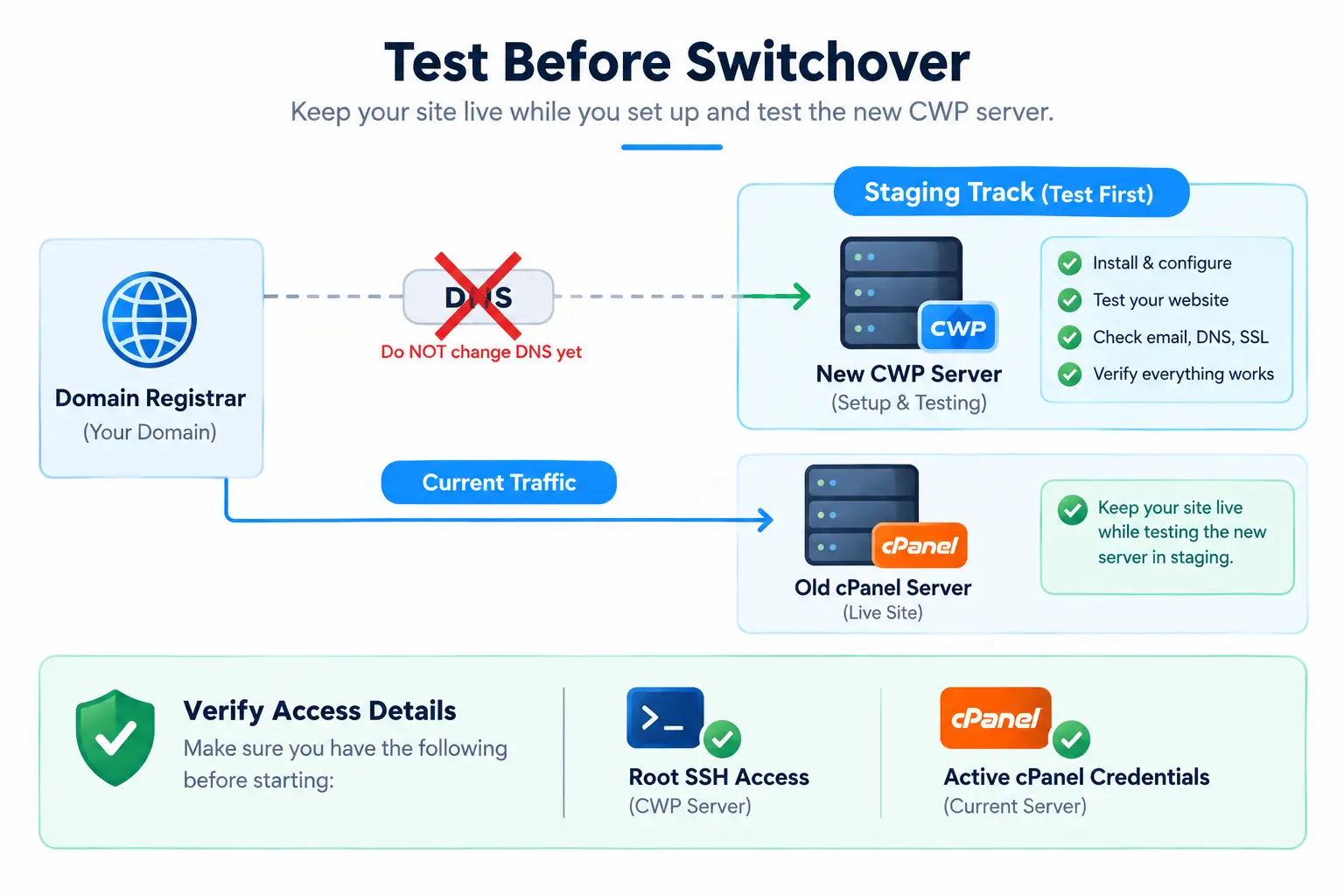
Before starting, make sure you have the following ready:
- Access to your existing cPanel account
- Root or administrative access to your CWP server
- Domain and DNS access
- A backup of your existing website
- Your website files
- MySQL or MariaDB databases and their credentials
- Email accounts and mail data, if email is being migrated
- The PHP versions and extensions required by your website
- Enough available storage on the new server
- SSL certificates, or a clear plan to issue new ones
- A list of domains, subdomains, aliases and redirects
- A suitable maintenance window, especially for sites receiving regular updates
It is worth being clear about why DNS should not be changed yet at this stage.
Until your new CWP environment has been fully set up and tested, your domain should keep pointing to your existing cPanel hosting.
Changing DNS prematurely can send visitors to an incomplete or broken setup, so this step comes near the very end of the process rather than the beginning.
Step 1: Prepare the Existing cPanel Account
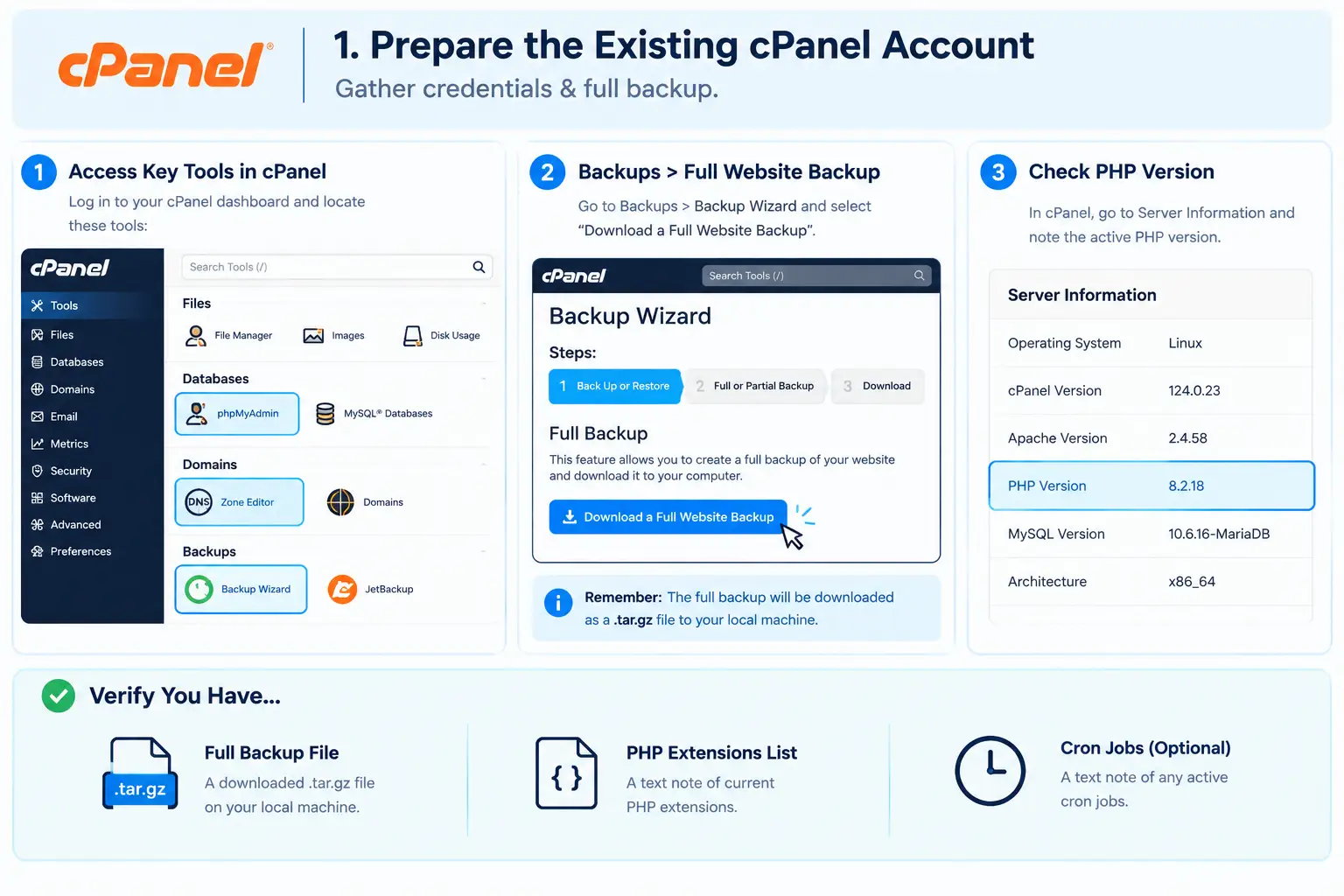
Log in to your existing cPanel account and start by identifying every domain and subdomain that needs to move.
Check the website’s document root so you know exactly where the live files are stored, and identify which databases the website actually uses.
Note down the PHP version currently in use, along with any important PHP extensions your application depends on.
Identify any cron jobs running on the account, and check your email accounts if email is part of the migration.
Record your important DNS records too, since you will need these as a reference later.
Once you have gathered this information, create a full backup before making any further changes.
This backup becomes your safety net throughout the rest of the process.
Step 2: Set Up the CWP Server
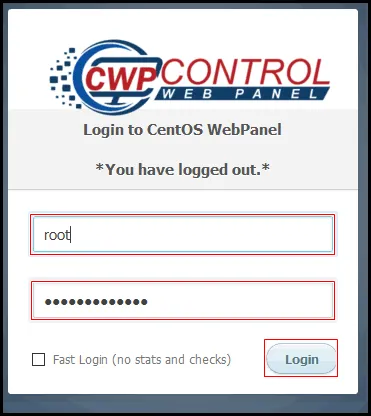
Log in to your new CWP server and confirm it meets CWP’s system requirements before going further.
Configure the server’s hostname, then set up the domain or account you will be migrating.
Check the available disk space and general server resources to confirm they can comfortably handle your website.
Finally, confirm that the PHP versions and extensions your application requires are actually available on the new server, since a mismatch here can cause problems later in the process.
Step 3: Transfer Your Website Files From cPanel to CWP
Locate your website files inside cPanel’s File Manager, then download or transfer them to your local machine or directly between servers.
Upload these files to the correct CWP account and document root, making sure to preserve the existing directory structure exactly as it was.
Check file ownership and permissions once the transfer is complete, since incorrect permissions are a common source of errors after migration.
Make sure hidden files, such as .htaccess, are included in the transfer too, since these are easy to miss but often critical to how a website functions.
Step 4: Create the Database in CWP
Create a new database on your CWP server, then create the corresponding database user.
Assign the appropriate privileges to that user so it can properly access and manage the database.
Import your database backup into this new database, then update your application’s database configuration to match the new details.
For WordPress specifically, this is where you will need to check wp-config.php, updating the database name, username, password and host to match your new CWP environment.
Once everything is in place, test the database connection to confirm your application can actually communicate with it before moving forward.
Step 5: Configure PHP and Other Application Requirements
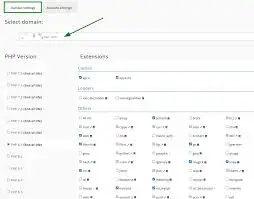
Select the appropriate PHP version for your application on the new server, then enable any required PHP extensions it depends on.
Configure additional PHP settings where necessary, and check upload limits and execution limits, since these can affect how your website behaves under real use.
Throughout this step, the goal is making sure the new environment matches your old server closely enough for the application to run exactly as it did before, without unexpected behavior caused by configuration differences.
Step 6: Recreate Domains, Subdomains and Other Hosting Settings
Add your domains to the CWP server, then recreate any subdomains that existed on the old setup.
Set the correct document roots for each one, and recreate any redirects that were previously in place.
Configure parked or alias domains where applicable, and recreate any cron jobs identified back in Step 1.
Configure any remaining application-specific settings your website relies on to function correctly.
Step 7: Migrate Email Accounts
If email is included in your cPanel to CWP migration, this step deserves careful attention, since changing hosting can accidentally interrupt business email if handled carelessly.
Recreate your email accounts inside CWP, then transfer existing mail where necessary so users do not lose access to their message history.
Recreate any forwarders that were set up previously, and check that mailbox storage limits are configured appropriately on the new server.
Recreate any other relevant email settings, and verify that MX records and other email-related DNS records are ready to be updated as part of the eventual cutover.
Getting this step wrong is one of the fastest ways to disrupt business communication, so it is worth double-checking everything here before moving on.
Step 8: Install and Configure SSL
Verify that your domain resolves correctly within your testing environment, then issue or install an SSL certificate on your CWP server.
Confirm that HTTPS actually works once the certificate is in place.
Check that HTTP-to-HTTPS redirects are functioning as expected, and look carefully for mixed-content issues, where some page elements still load over HTTP even though the page itself loads over HTTPS.
These issues can quietly undermine an otherwise successful migration if left unchecked.
Step 9: Test the Website Before Changing DNS
This stage deserves proper attention, since it is your last real opportunity to catch problems before your live domain gets involved.
Load the website using the new server directly, without relying on DNS yet, and test your important pages one by one.
Test any forms, along with login functionality if your site has user accounts.
Test database-driven features specifically, along with file uploads and outgoing email.
Check that redirects work as intended, and confirm HTTPS loads properly across the site.
Review your server and application error logs for anything unexpected that might not be immediately visible on the front end.
Do not change your nameservers yet if any critical parts of the site have not been fully tested.
It is far easier to fix problems now, while your old hosting is still live and unaffected, than after visitors are already being sent to the new server.
Step 10: Update DNS to Point the Domain to CWP
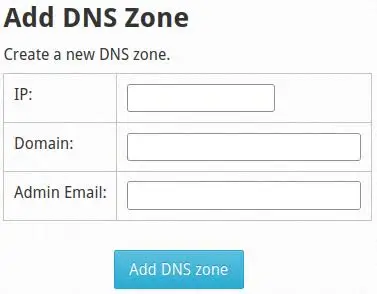
Once testing confirms everything works, it is time for the actual cutover.
Find your new CWP server’s IP address, then decide whether you are updating the domain’s A record directly or changing its nameservers entirely. Update the relevant DNS records accordingly.
Keep in mind that DNS propagation does not happen instantly.
It can take anywhere from a few minutes to around 24 to 48 hours, depending on your registrar and various factors outside your control.
Keep your old cPanel hosting active throughout this transition period, and avoid making major changes to the old site while propagation is still in progress, since visitors may briefly be split between both servers during this window.
Step 11: Verify the Migration After DNS Propagation
Once propagation has had time to settle, confirm that your domain is loading from the new CWP server rather than the old one.
Check HTTPS again, and retest your forms and applications to make sure everything still works correctly under real DNS conditions.
Verify that email delivery is functioning properly, and check your DNS records once more to confirm everything is resolved as expected.
Monitor your error logs for anything unusual, and confirm that all domains and subdomains tied to the account are working correctly.
Take a moment to check overall website performance too, since server differences can sometimes affect load times even when everything else appears to be functioning normally.
Step 12: Cancel the Old cPanel Hosting
Only once you have thoroughly confirmed everything works should you consider canceling your old hosting.
Keep the old account available throughout the transition period as a safety net, and take a final backup of it before making any irreversible changes.
Confirm that DNS has fully propagated and settled, and confirm that both email and website functionality are working exactly as expected on the new server.
Cancel the old hosting only when you are genuinely confident the migration is complete, rather than rushing this final step to save a small amount of money.
Common Problems During cPanel to CWP Migration
A few issues tend to come up repeatedly during this kind of move.
| Problem | Likely Fix |
| Website shows a 500 error | Check for a configuration mismatch or a missing PHP extension, then compare server settings against the old environment. |
| Database connection fails | Verify the database credentials in the application’s configuration file match exactly what was created in CWP. |
| Missing PHP extensions | Enable the required extensions on the new server so affected features or plugins can function correctly. |
| Incorrect file permissions | Reset file and folder ownership and permissions to match what the application expects. |
| .htaccess problems | Confirm the file transferred correctly and check its rules against the old server’s version for missing or altered lines. |
| Website loads but images or files are missing | Recheck the file transfer for completeness, since this usually points to files that did not fully copy over. |
| Email stops working | Recreate any missing DNS records and confirm MX records point to the correct mail server rather than the old one. |
| SSL certificate isn’t working | Confirm the certificate was issued correctly and that the domain is already resolving to the new server. |
| Domain still points to the old server | Check whether DNS propagation has finished, and confirm the DNS change was made correctly in the first place. |
| DNS records weren’t recreated | Compare the new DNS zone against the records noted in Step 1 and add anything missing. |
| Cron jobs aren’t running | Recreate the cron jobs manually in CWP, since these are often skipped during Step 6. |
Get Reliable Hosting From Us!
A complete cPanel to CWP migration is never simply a case of copying website files from one place to another.
It means moving the website itself, its databases, its domains, its email, its server configuration and its DNS settings, then testing everything thoroughly before finally shutting down the old hosting.
If you are looking for hosting where you can manage your websites through a reliable control panel without dealing with the complexity of this kind of migration on your own, Truehost’s available hosting options are worth exploring as you plan your next move.