 Domain SearchInstantly check and register your preferred domain name
 Web Hosting
 cPanel HostingHosting powered by cPanel (Most user friendly)
 WordPress HostingHost your WordPress website with fast, secure, and affordable WordPress hosting in Kenya.
 KE Domains
 Reseller HostingStart your own hosting business without tech hustles
 Windows HostingOptimized for Windows-based applications and sites.
 Free Domain
 Affiliate ProgramEarn commissions by referring customers to our platforms
 Free HostingTest our SSD Hosting for free, for life (1GB storage)
 Domain TransferMove your domain to us with zero downtime and full control
 All DomainsBrowse and register domain extensions from around the world
 .Com Domain
 WhoisLook up domain ownership, expiry dates, and registrar information
 VPS Hosting
 Managed VPSNon techy? Opt for fully managed VPS server
 Dedicated ServersEnjoy unmatched power and control with your own physical server.
 Website Builder
 Online Store BuilderLaunch a professional e-commerce store without writing code.
 Web Design ServiceGet a custom-designed website tailored to your brand and goals. From just KES 15,600
 BlogRead our guides on web hosting, online business, digital marketing, and more
 SupportOur support guides cover everything you need to know about our services
 ContactContact us via chat or email

Many websites start on shared hosting because it’s affordable and easy to set up. But as your business grows, the limits start to show.
And the next move is VPS hosting.
Now, since you need to be strategic about it, you’ll be needing these tips for choosing VPS hosting plan. This is because the right VPS makes a whole difference in performance, security, scalability, and latency.
For one, generally a Virtual Private Server (VPS) gives your website those things already: dedicated resources, better security, improved performance, and the flexibility to grow without paying the high cost of a dedicated server.
It also helps reduce latency, which means visitors can access your site faster and enjoy a smoother experience.
However, with so many options available, it’s easy to end up paying for resources you don’t need or choosing a plan that can’t support your growth.
To help you make the right choice, I have compiled these 7 practical tips for choosing a VPS hosting plan that matches your business needs and supports long-term growth.
Let’s have a look at them.
1) Know Your Budget
Before comparing specs, start with budget, it’s the filter that makes every other decision easier.
VPS hosting in Kenya varies quite a bit depending on the provider, resources included, and whether the plan is managed or unmanaged. Here’s how some common local options compare at entry level:
| Providers | Truehost | HostPinnacle | HostAfrica |
|---|---|---|---|
| Starting Price | KES 1,400/mo | KES 1,000/mo | KES 960/mo |
| Storage Type | NVMe SSD | NVMe SSD | SSD |
| Managed Option | Yes | Yes | No (Self-Managed at entry) |
| M-Pesa Payments | Yes | Yes | No |
| Local Support | Yes | Yes | Limited |
Prices are approximate entry-level figures and subject to change. Always verify on each provider’s website.
Knowing your monthly ceiling upfront helps you filter out plans that are either overkill or too restrictive for where your business is heading.
A KES 1,000–2,500 range works well for most small to mid-sized Kenyan businesses starting out on VPS. Larger platforms with heavy traffic or complex applications will naturally need more, and the cost reflects that.
The goal isn’t to find the cheapest option, it’s to find the plan where the resources match what you’re actually paying for. The remaining tips in this guide will help you figure out exactly that.
2) Assess Your Resource Needs (RAM, CPU, Storage)
Before you choose a VPS plan, take a close look at what your website needs today and what it may need a few months from now.
A plan that works for your current traffic might struggle once your business starts attracting more visitors.
RAM and CPU power play a big role in how smoothly your website performs.
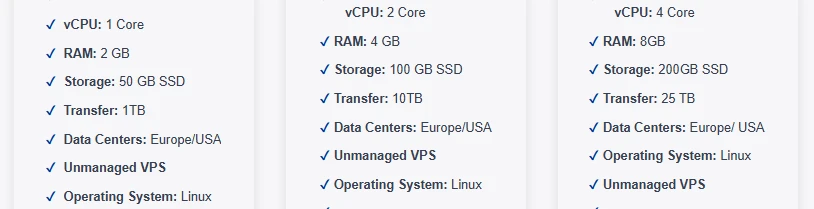
They affect how many people can browse your site at the same time without slow loading speeds or crashes.
If you run a small business website, portfolio, or blog with light traffic, a VPS with 2GB to 4GB RAM and 1–2 vCPU cores is usually enough to get started.
For larger websites, online stores, or platforms with higher daily traffic, you’ll need more resources.
An e-commerce store with many products, heavy plugins, or platforms like WooCommerce often performs better with 4GB to 8GB RAM or higher.
Extra resources help keep checkout pages fast and improve the browsing experience for your visitors.
Storage also deserves attention.
NVMe SSD storage is a better option than traditional hard drives or standard SSDs because it delivers much faster data access speeds.
Faster storage helps your pages load quicker, which is especially important for visitors browsing on mobile connections across Kenya.
3) Choose Between Managed and Unmanaged VPS
Another important step when choosing a VPS hosting plan is deciding between managed and unmanaged hosting.

With a managed VPS, the hosting provider takes care of the technical side of running the server.
This includes software updates, security patches, monitoring, and routine maintenance.
If you’re a business owner, this removes a lot of stress and frees up your time so you can focus on customers, sales, and day-to-day operations instead of server management.
On the other side, an unmanaged VPS gives you full control over the server environment. You handle setup, maintenance, security, and troubleshooting on your own.
This option is usually more affordable and works well for developers or experienced users who want complete control over configurations and server customization.
A simple way to decide is to ask yourself how comfortable you are handling technical issues.
If managing server updates or fixing problems late at night sounds exhausting, a managed VPS is often the better choice for you.
If you already have technical skills or a development team, an unmanaged VPS can give you more flexibility at a lower cost.
4) Prioritize High Uptime Guarantees
A website can only serve customers and generate sales when it’s online.
Frequent downtime can lead to lost revenue, failed transactions, and frustrated visitors who may not return.
That’s why uptime should be one of the first things you check when comparing VPS hosting plans.
A reliable hosting provider should offer you at least a 99.9% uptime guarantee in their Service Level Agreement (SLA). This standard helps reduce interruptions and keeps your website accessible throughout the day.

If your online store or business relies on services like M-Pesa payments, even a short outage can affect customer trust and lead to abandoned carts.
Consistent uptime helps create a smoother experience for visitors and gives your customers confidence that your business is reliable.
At Truehost, VPS hosting is built on stable infrastructure designed to keep websites running smoothly for customers across Kenya and beyond.
5) Ensure Easy Scalability
Business growth can happen quickly; I’m pretty sure you’ve seen it at some point.
A successful marketing campaign here, seasonal promotion there, or sudden increase in traffic can push your website beyond its current limits faster than expected.
Now, a good VPS hosting plan should make it easy to increase resources like RAM, CPU power, or storage without forcing you into a complicated migration process.
Upgrading should feel simple and smooth, not like starting your entire website setup from scratch.
Scalability also helps you avoid paying for large amounts of unused resources too early. You can start with a smaller plan and expand only when your traffic and business needs increase.
6) Check Root Access and OS Options
If you plan to customize server settings, install specific applications, or configure software manually, root access is your friend.
It gives you full control over your VPS environment and allows you to manage the server based on your specific needs.
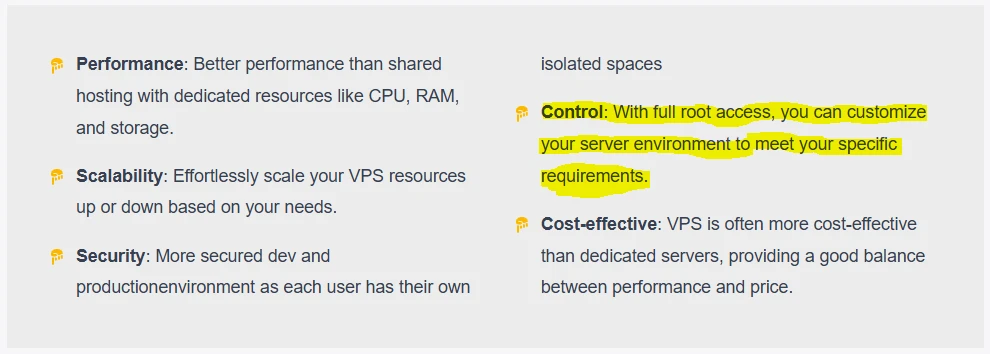
Many developers and advanced users prefer VPS hosting because of this level of control.
It becomes easier to install custom applications, optimize performance settings, or run specialized software that may not work on shared hosting.
You should also check which operating systems the hosting provider supports.
Linux distributions such as Ubuntu and AlmaLinux are popular choices because they are stable, flexible, and often more affordable. A Windows-based server may be necessary if your applications depend on Microsoft technologies.

At Truehost, unmanaged VPS plans include root access and support for popular operating systems, giving users the flexibility to build a server environment that fits their requirements.
7) Evaluate Security and Backup Features
Security is one area you should never overlook when choosing a VPS hosting plan.
A secure server helps protect your website, customer information, and business operations from attacks and unexpected data loss.
Start by checking if the hosting provider includes important security features such as firewalls and DDoS protection. These tools help block malicious traffic and reduce the risk of attacks that could take your website offline.
Backups are just as important.
Automated daily or weekly backups give you a safety net in case your website crashes, files are deleted accidentally, or something goes wrong during an update.
Restoring your website becomes much easier when reliable backups are already in place.
You should also look for free SSL certificates.
SSL encryption protects customer data and helps build trust with visitors, especially for online stores and websites handling payments or personal information.
At Truehost, VPS hosting plans include strong security features and reliable backup options to help businesses run their websites with confidence.
8) Consider Server Location and Support
Server location can have a direct impact on your website speed. The closer the server is to your audience, the faster your website can load for visitors.
If you’re targeting customers in Kenya, choosing a hosting provider with infrastructure close to the region helps reduce latency and improve loading speeds for users in cities like Nairobi, Eldoret, and Kisumu.
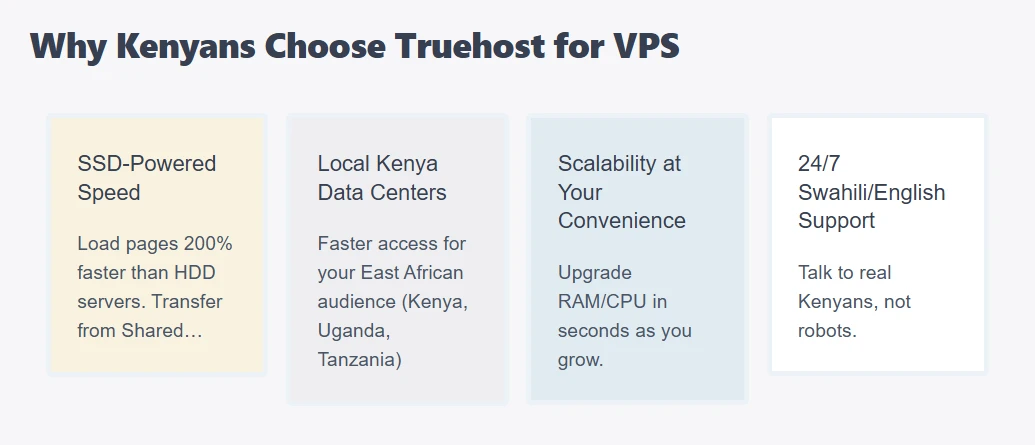
Faster websites create a better browsing experience and can help increase conversions and customer engagement.
Customer support also plays a major role in choosing the right VPS provider.
Technical issues can happen at any time, so access to reliable 24/7 support can save you hours of frustration.
It also helps to work with a provider that understands the local market and can respond quickly when you need assistance.
At Truehost, you get responsive support by people who know Swahili and understand our local context and hosting solutions designed for businesses in Kenya.
Choose Your Plan Today
Choosing the right VPS hosting plan becomes much easier when you focus on the essentials.
Make sure you check all the factors I have listed above. You can actually create a detailed checklist from it to make sure you don’t miss something essential.
Then go through our Truehost VPS hosting plans, which are built for you if you have a growing business, you’re a developer, or you have online stores that need reliable performance, scalable resources, and dependable support.
Find a plan that resonates with your specific needs and your business goals and register right away.
Then enjoy your new hosting and watch your brand grow.