 Domain SearchInstantly check and register your preferred domain name
 Web Hosting
 cPanel HostingHosting powered by cPanel (Most user friendly)
 WordPress HostingHost your WordPress website with fast, secure, and affordable WordPress hosting in Kenya.
 KE Domains
 Reseller HostingStart your own hosting business without tech hustles
 Windows HostingOptimized for Windows-based applications and sites.
 Free Domain
 Affiliate ProgramEarn commissions by referring customers to our platforms
 Free HostingTest our SSD Hosting for free, for life (1GB storage)
 Domain TransferMove your domain to us with zero downtime and full control
 All DomainsBrowse and register domain extensions from around the world
 .Com Domain
 WhoisLook up domain ownership, expiry dates, and registrar information
 VPS Hosting
 Managed VPSNon techy? Opt for fully managed VPS server
 Dedicated ServersEnjoy unmatched power and control with your own physical server.
 Website Builder
 Online Store BuilderLaunch a professional e-commerce store without writing code.
 Web Design ServiceGet a custom-designed website tailored to your brand and goals. From just KES 15,600
 BlogRead our guides on web hosting, online business, digital marketing, and more
 SupportOur support guides cover everything you need to know about our services
 ContactContact us via chat or email
Both run on a VPS, both connect smoothly with WhatsApp and Telegram, and both can automate everyday workflows. So the real question becomes: why does the choice between them even need attention?
Well, the first difference of OpenClaw vs Hermes is the fact that they are built on essentially different ideas about what an AI agent should be.
These two systems approach automation in very different ways.
OpenClaw is built as a wide-reaching orchestration system. It comes with a large skills marketplace where thousands of community-built modules are ready to plug into different platforms and tasks.
This makes it flexible for teams that want to connect many services and run varied operations from one place.
Hermes Agent takes a different route. It focuses on autonomy through a learning loop that improves its performance over time. As it runs your tasks, it gradually refines how it works, reducing the need for manual adjustments and becoming more tailored to your specific workflows.
And if your team runs operations on a VPS, Truehost-hosted OpenClaw delivers better value for multi-channel workflows, but the right answer genuinely depends on what you’re building.
So let’s make your choice informed.
OpenClaw vs Hermes Agent: Comparison Table
| OpenClaw | Hermes Agent | |
|---|---|---|
| Built by | Community (TypeScript) | Nous Research (Python) |
| Launched | Late 2025 | February 2026 |
| GitHub stars | 350,000+ | 140,000+ |
| Skills library | 5,700+ on ClawHub | Self-generated + agentskills.io |
| Messaging channels | 50+ platforms | ~20 platforms |
| Multi-personality | Yes, per channel | Single identity |
| AI models | OpenAI, Anthropic, Ollama | 200+ via OpenRouter |
| User interface | Gateway / CLI | Desktop app + CLI |
| Core design | Static skills you configure | Self-improving loop |
| Skill creation | Manual, human-authored | Autonomous + manual |
| Memory | Markdown files + SQLite | Layered (session, user, procedural) |
| Best for | Broad team ops, governance | Long-term personal workflows |
| Stability | Frequent updates can break instances | Smoother, more beginner-friendly |
| Kenya fit | SMEs, multi-channel teams | Solo operators, devs |
Features Comparison
1) Memory, Skills, and Ecosystem
OpenClaw keeps its memory in Markdown files and SQLite, which makes it easy to inspect and manage directly. Its skills come from ClawHub, a community marketplace with more than 5,700 prebuilt, static skills. Each skill is written by humans, then published for reuse.
The workflow is straightforward: pick a skill, configure it, and run it.
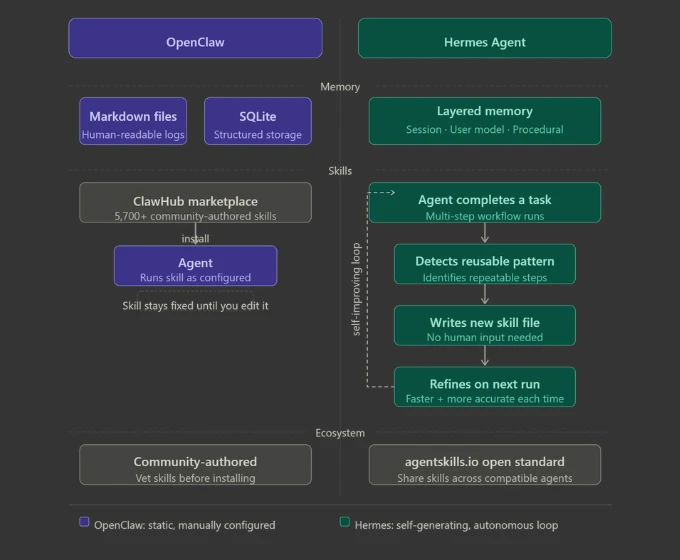
Hermes handles things differently. Its memory is layered, combining session history, user modeling, and procedural memory. Instead of just storing past interactions, it builds an evolving profile of how tasks are performed and how preferences shift over time.
Skills are not imported from a library. Hermes generates them after completing tasks, then refines them each time it encounters similar situations again.
Over repeated use, this creates a compounding effect where the agent becomes more tuned to recurring workflows.
The agentskills.io open standard also allows these skills to be shared across compatible systems, which keeps the ecosystem open rather than locked down.
2) OpenClaw vs Hermes Agent Integrations
OpenClaw connects to more than 50 platforms, including WhatsApp, Telegram, Slack, Discord, Matrix, and Google Chat. One standout feature is multi-personality control.
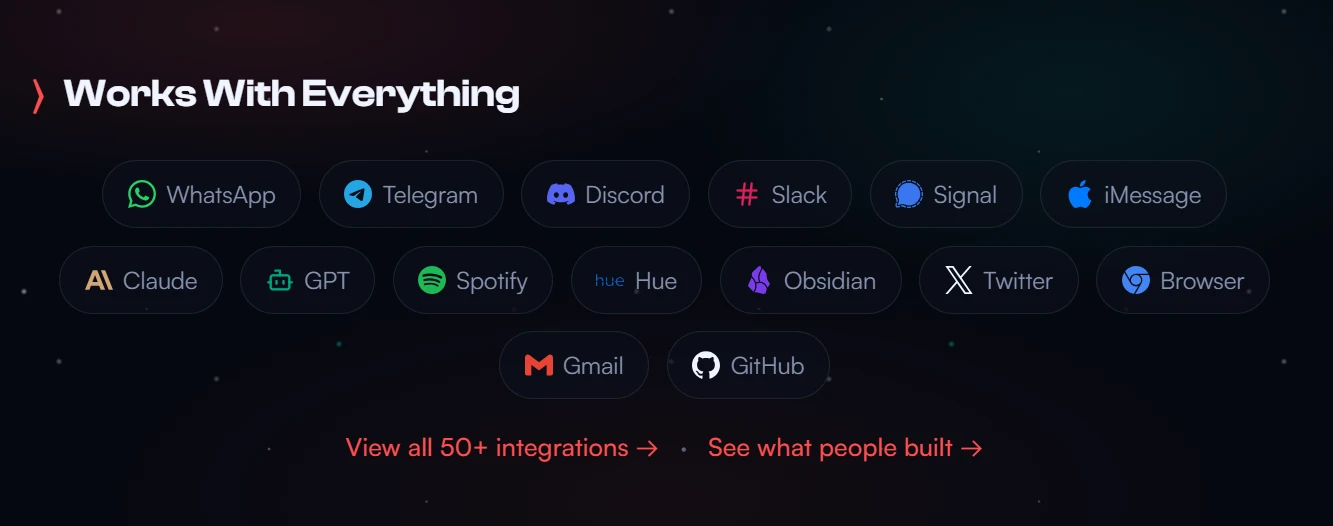
One of its more practical features is multi-personality support: you can run a formal, structured agent on Slack and a friendlier one on WhatsApp, all from the same instance. Each channel gets its own identity.
Hermes integrates with around 20 platforms and keeps a single, consistent identity everywhere it operates. Instead of switching tone or behavior per channel, it maintains one continuous presence across all touchpoints.
That consistency is part of its design, since the agent is meant to develop a coherent understanding of how you operate, not switch personas depending on where the message came from.
3) Learning and Improvement
OpenClaw does not learn on its own. Skills remain exactly as they are written unless someone manually updates them. When workflows change, adjustments have to be made directly inside the relevant skill files.
Hermes takes a different path. It runs a self-improvement loop that activates after completing multi-step tasks.
It identifies repeated patterns, generates new skill files, and refines them over time whenever similar tasks appear again.
Every 15 tasks or so, it evaluates its own performance and updates what it knows. An agent handling customer inquiries in March will be measurably faster and more accurate at the same task in June, without you doing anything.
4) Setup and Customization
OpenClaw gives you precise, auditable control, but that control comes with configuration work. Skills are stored as readable files that can be reviewed, edited, and approved before they are used.
This approach takes more time during setup, but it provides you with clear visibility into what the agent is doing and why. But if you need governance, compliance, or tight operational control, that extra configuration can be a worthwhile trade-off.
Hermes focuses on simplicity. The initial setup is lighter, allowing you to get started with fewer manual adjustments.
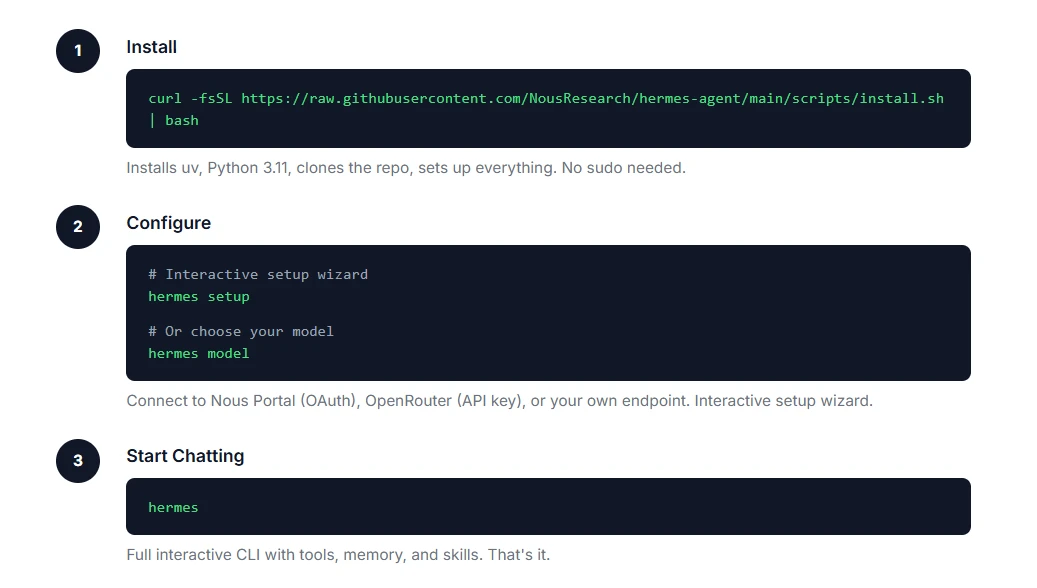
As the agent completes tasks, it learns from those experiences and adapts its behavior over time.
The addition of the Hermes Desktop app also makes management more accessible, reducing the need to spend most of your time in the terminal. If you want a faster path from installation to productivity, Hermes offers a smoother onboarding experience.
5) Model Support
Both OpenClaw and Hermes are open-source and model-agnostic, giving you the flexibility to choose the AI models that best fit your needs.
OpenClaw works with major providers such as OpenAI and Anthropic while also supporting locally hosted models through Ollama. This gives you the option to balance performance, privacy, and operating costs based on your requirements.
Hermes connects to more than 200 models through OpenRouter, including premium and free-tier options available through the Nous Portal. This broader model catalog provides additional flexibility when optimizing for budget, speed, or specialized capabilities.
6) UI and Tools
OpenClaw primarily relies on a gateway interface and command-line tools. The experience is functional and powerful, but it assumes a certain level of comfort with terminal-based workflows.
If you prefer direct access to configurations and system controls, you will likely appreciate this approach.
Hermes has expanded beyond the command line with the introduction of a native desktop application. This creates a more approachable day-to-day experience while still preserving CLI access for advanced users.
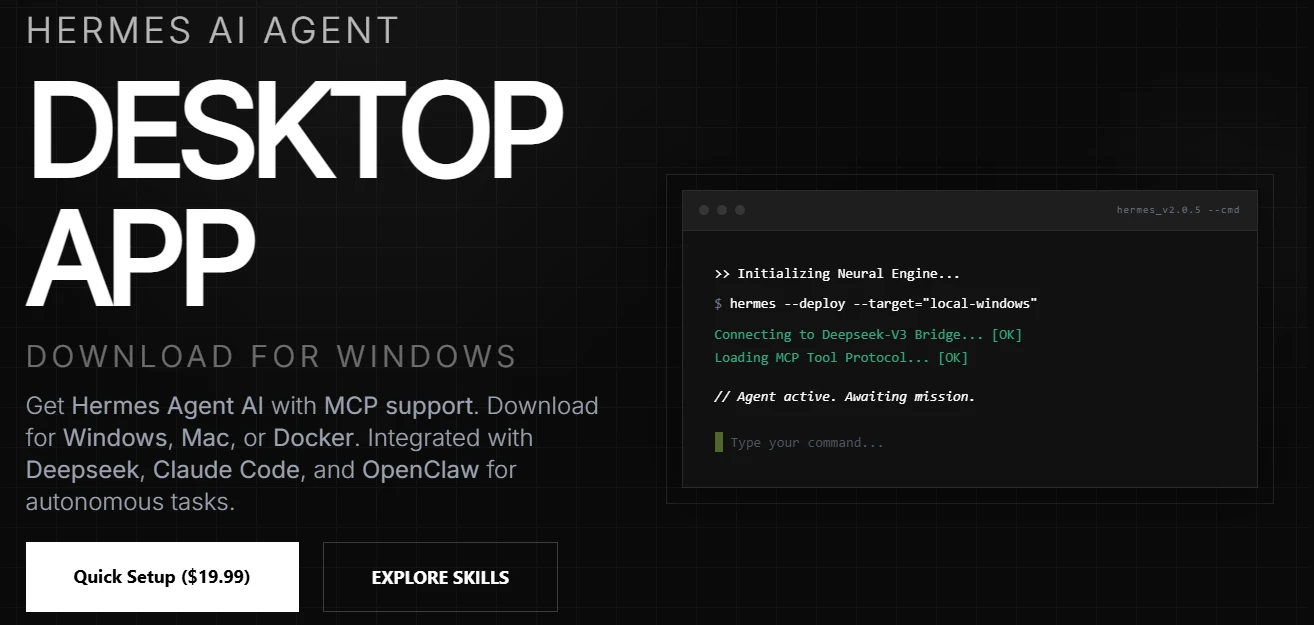
Tasks that would normally require terminal commands can often be managed through a graphical interface, making the platform easier to navigate for a wider range of users.
Both platforms continue to support command-line workflows, but Hermes places a stronger emphasis on user-friendly tooling, while OpenClaw prioritizes direct system control and customization.
Performance and Reliability
The OpenClaw vs Hermes Agent difference becomes even clearer when you look beyond features and focus on day-to-day performance, stability, and long-term operation. While both can automate workflows effectively, they take very different approaches to reliability, adaptability, and scale.
a) Reliability
OpenClaw is a fast-moving project with frequent updates and feature releases.
The advantage here is access to new capabilities and improvements on a regular basis. The trade-off is that updates can occasionally introduce dependency conflicts or require additional maintenance to keep everything running smoothly.
So if you have technical expertise, this is often manageable. However, if you prefer a more hands-off experience, you may find the ongoing maintenance requirements less appealing.
Hermes has earned a reputation for delivering a smoother experience during everyday use. Its smaller codebase and more focused architecture reduce complexity, making it easier to deploy and maintain.
Many users find it more approachable, especially when getting started with AI agents for the first time.
b) Short-Term vs Long-Term
OpenClaw performs particularly well when workflows are clearly defined from the start. You create or install a skill, configure it for a specific purpose, and it executes that task consistently.
This predictability makes it a strong option for you if your business relies on structured, repeatable processes.
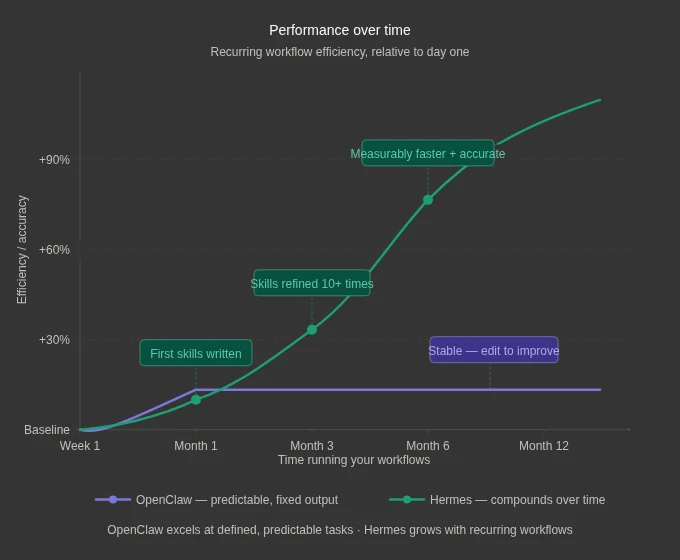
Hermes is designed with long-term improvement in mind. As it completes recurring tasks, it creates and refines skills based on patterns it discovers. The result is a system that gradually becomes more efficient without requiring constant manual adjustments.
For workflows that repeat frequently over weeks or months, this continuous learning process can lead to meaningful gains in speed, accuracy, and automation quality.
c) Resource Usage, Speed, and Scalability
Both OpenClaw and Hermes run comfortably on affordable VPS plans, with most deployments fitting within the $5 to $15 per month range depending on workload and hosting configuration.
For typical business automation tasks, neither platform has a significant advantage in raw resource consumption.
The biggest difference appears when scaling operations.
OpenClaw benefits from a large ecosystem of more than 5,700 skills and integrations across 50+ communication and productivity platforms. This breadth makes it easier to support larger teams, multiple departments, and complex multi-channel workflows from a single deployment.
Hermes scales differently. Its strength comes from becoming more effective over time through its learning system. If you rely heavily on recurring workflows, you may benefit from the efficiency gains that accumulate as the agent continues to adapt and refine its skills.
d) Security
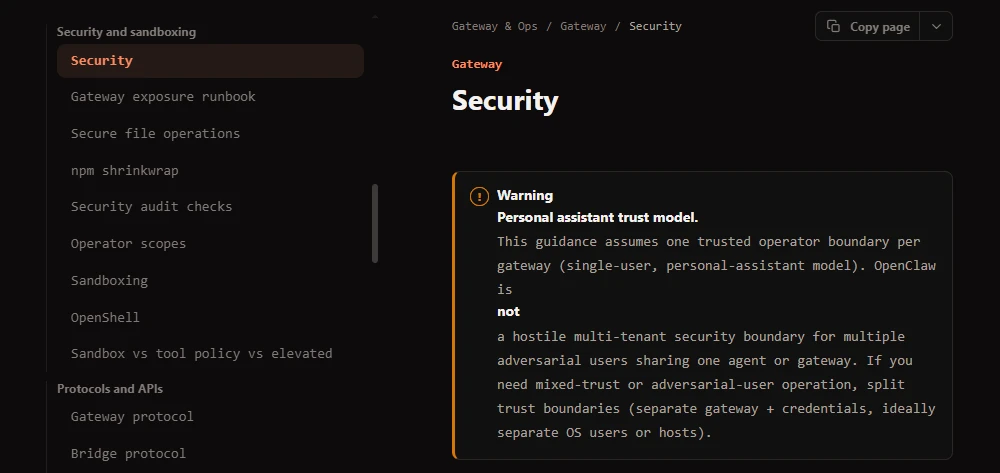
Security is one area where the differences between OpenClaw and Hermes Agent deserve close attention. Both projects take security seriously, but they approach the challenge from different angles.
OpenClaw Security Considerations
OpenClaw experienced a significant security incident this year (2026) with the disclosure of CVE-2026-25253, a vulnerability rated 8.8 on the CVSS scale. The flaw allowed token exfiltration through a malicious link, potentially leading to gateway compromise.
The issue was patched, but it highlighted the importance of keeping deployments updated and following security best practices.
Additional scrutiny came when a Snyk audit identified 1,467 malicious skills within the ClawHub marketplace. Many of these skills combined prompt injection techniques with more traditional malware behaviors.
The affected skills were flagged and addressed, but the findings reinforced the need to carefully review third-party skills before installing them.
For administrators running OpenClaw, security is closely tied to active maintenance. Regular updates, skill reviews, and ongoing monitoring are essential parts of operating the platform safely.
Hermes Security Approach
Hermes adopts a more restrictive, safer-by-default model. Security features are built directly into the platform and include:
- Prompt injection detection
- Credential filtering
- Container hardening
- Scanning for sensitive information within context windows
Because Hermes is a newer project, it has not accumulated the same history of public security disclosures seen in larger and more established ecosystems. Its smaller footprint and reduced reliance on community-contributed skills also limit some common attack vectors.
That does not eliminate risk, but it does reduce the amount of manual security management required for day-to-day operation.
e) Overall Framing
OpenClaw is the more mature platform, offering a larger ecosystem, deeper integrations, and greater flexibility. In return, it requires more active maintenance, especially when managing updates, dependencies, and third-party skills.
Hermes takes a simpler approach. It is designed to run with less manual oversight, includes stronger default security protections, and improves its performance over time through continuous learning.
If your team values broad integrations, predictable workflows, and ecosystem depth, OpenClaw is your right choice.
For those prioritizing ease of management, built-in security, and long-term automation efficiency, Hermes presents a great alternative. One additional advantage for Kenyan businesses is local hosting. Running OpenClaw on Truehost’s Kenya-based infrastructure can reduce latency compared to overseas servers, resulting in faster response times for WhatsApp automations and other real-time workflows.
Which One Should You Choose?
Choose OpenClaw if:
- You need access to thousands of ready-made skills from day one. With more than 5,700 available skills, OpenClaw offers a significant head start for building and deploying automations quickly.
- Your team operates across multiple messaging platforms and needs different agent personalities for each channel.
- You require enterprise-level governance, with human-authored skills that can be reviewed, approved, and audited before deployment.
- You are comfortable performing occasional maintenance, managing updates, and keeping dependencies current.
Choose Hermes Agent if:
- You want an AI assistant that continuously learns from recurring workflows and improves without requiring manual updates.
- You prefer a security-first approach with built-in protections and less reliance on manual patch management.
- You want a simpler setup process with minimal configuration overhead.
- You are interested in serverless deployment options that can help reduce costs during idle periods.
- You are planning for long-term automation gains, where the agent becomes more efficient as it completes similar tasks over time.
The Hybrid Approach
You do not have to commit to a single platform.
Many advanced users combine both tools to take advantage of their strengths. In this setup, OpenClaw acts as the central orchestrator, managing channels, integrations, and workflow routing across the organization.
Hermes operates as a specialized task runner, handling recurring processes that benefit from continuous learning and improvement.
For example, OpenClaw can manage WhatsApp, Telegram, and Slack interactions while maintaining different personalities for each channel. At the same time, Hermes can run competitor monitoring, generate reports, manage follow-ups, and refine its approach with every execution.
Get Started with OpenClaw on Truehost Today
If your business is looking for a production-ready AI agent platform, OpenClaw remains a strong choice, especially when hosted on Truehost.
With OpenClaw Hosting on Truehost, you can deploy your agent quickly without worrying about complex server setup or dependency management.
You get these benefits:
- Kenyan data centers for lower latency and faster local performance
- Affordable hosting plans for businesses of all sizes
- Simple deployment and setup
- Reliable technical support when you need assistance
- Flexible payment options, including M-PESA
If your goal is to launch a powerful multi-channel AI agent with minimal deployment friction, OpenClaw on Truehost provides a practical place to start.