 Domain SearchInstantly check and register your preferred domain name
 Web Hosting
 cPanel HostingHosting powered by cPanel (Most user friendly)
 WordPress HostingHost your WordPress website with fast, secure, and affordable WordPress hosting in Kenya.
 KE Domains
 Reseller HostingStart your own hosting business without tech hustles
 Windows HostingOptimized for Windows-based applications and sites.
 Free Domain
 Affiliate ProgramEarn commissions by referring customers to our platforms
 Free HostingTest our SSD Hosting for free, for life (1GB storage)
 Domain TransferMove your domain to us with zero downtime and full control
 All DomainsBrowse and register domain extensions from around the world
 .Com Domain
 WhoisLook up domain ownership, expiry dates, and registrar information
 VPS Hosting
 Managed VPSNon techy? Opt for fully managed VPS server
 Dedicated ServersEnjoy unmatched power and control with your own physical server.
 Website Builder
 Online Store BuilderLaunch a professional e-commerce store without writing code.
 Web Design ServiceGet a custom-designed website tailored to your brand and goals. From just KES 15,600
 BlogRead our guides on web hosting, online business, digital marketing, and more
 SupportOur support guides cover everything you need to know about our services
 ContactContact us via chat or email
Artificial intelligence is no longer limited to research laboratories or large technology companies. It now helps small teams write, design, analyse data, support customers, build websites, and automate routine work.
That shift is creating practical AI business ideas for people who can connect the technology to a real customer problem.
You do not need to train a new AI model or compete directly with Google, Microsoft, or OpenAI.
A stronger opportunity is often much smaller:
A clinic may need a better appointment system.
A retailer may want faster product descriptions.
A property company may need an assistant that qualifies leads before a salesperson calls them.
The best AI business ideas for 2027 will focus on those clear, valuable outcomes. Clients will pay for saved time, lower costs, faster service, better decisions, and new revenue.
They will rarely pay simply because a service uses AI.
This article breaks down 12 realistic opportunities, the clients you can target, the tools you may need, possible revenue models, and the first steps you can take.
The central idea: Do not start by asking, “What can AI do?” Start by asking, “What expensive, slow, or frustrating task can I improve?”
Why AI businesses should remain attractive in 2027
AI adoption has moved beyond experimentation.
The Stanford AI Index 2026 reported that organisational AI adoption reached 88%, while generative AI reached close to 53% population-level adoption within three years.
McKinsey’s State of AI 2025 survey also found widespread business use, including growing interest in AI agents.
An AI agent is software that can complete a sequence of tasks, such as reading a request, finding information, updating a system, and sending a response.
Demand does not guarantee that every AI project succeeds though. An IBM CEO study found that only 25% of surveyed AI initiatives had delivered the expected return on investment, and only 16% had scaled across the organisation.
That gap creates room for specialised businesses. Companies need people who can:
choose sensible use cases,
connect business tools,
clean up processes,
protect customer data, and
measure results.
The opportunity also extends beyond technical work.
The World Economic Forum Future of Jobs Report 2025 identified AI and big data among the fastest-growing skills, while creative thinking, resilience, flexibility, and other human skills remained important.
What clients are likely to buy
A business owner may have little interest in model names, technical benchmarks, or complicated prompt systems.
They care about results such as:
Responding to customers in minutes instead of hours
Publishing useful content more consistently
Reducing time spent on reports and data entry
Qualifying sales leads before a human follows up
Producing videos without a large studio
Giving staff clearer, repeatable workflows
Launching a website or software product faster
Finding useful information inside company documents
Your offer should make one of those improvements easy to understand.
Quick comparison of the 12 AI business ideas
AI business idea | Lean starting budget | Technical level | Best revenue model | Growth potential |
|---|---|---|---|---|
AI automation consultancy | KSh 15,000–80,000 | Medium | Project fee plus retainer | High |
AI content agency | KSh 7,000–40,000 | Low to medium | Monthly content package | High |
AI website design business | KSh 15,000–90,000 | Medium | Build fee plus care plan | High |
AI chatbot development | KSh 20,000–130,000 | Medium | Setup plus monthly management | High |
AI video production studio | KSh 15,000–105,000 | Medium | Per project or monthly package | High |
AI-powered marketing agency | KSh 20,000–130,000 | Medium | Monthly retainer | High |
AI virtual assistant agency | KSh 7,000–40,000 | Low to medium | Monthly support hours | Medium to high |
AI education and training | KSh 7,000–65,000 | Low to medium | Workshop, course, or membership | High |
AI customer support service | KSh 25,000–195,000 | Medium | Monthly support contract | High |
AI data analysis service | KSh 15,000–105,000 | Medium | Project fee plus reporting retainer | High |
Vertical AI SaaS product | KSh 130,000–1,300,000+ | High | Monthly or annual subscription | Very high |
AI workflow optimisation | KSh 15,000–90,000 | Medium | Audit, implementation, and retainer | High |
1) Start an AI automation consultancy
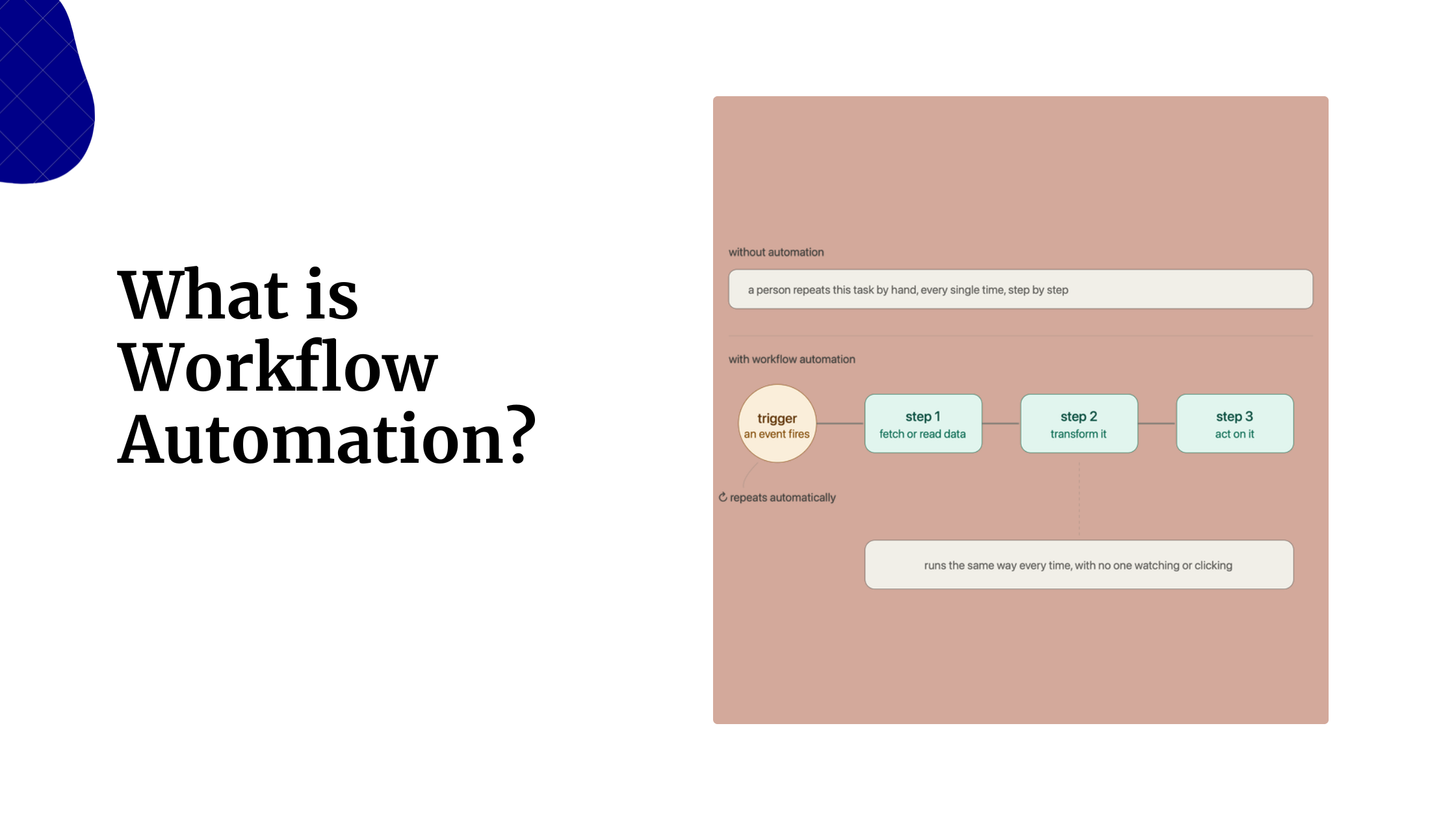
Many companies still run important processes through email, spreadsheets, chat messages, and manual data entry.
Staff may copy the same customer details into several systems, send repetitive follow-ups, or spend hours preparing weekly reports.
An AI automation consultant maps that work and builds a more efficient process. You may connect existing software, add an AI step, and create rules that tell the system what should happen next.
A simple automation could:
capture a website enquiry,
classify the lead,
add it to a customer relationship management system,
notify the correct salesperson, and
schedule a follow-up.
A more advanced workflow could read invoices, extract key details, request approval, and update an accounting system.
Services you can sell
Your service can include:
Process and workflow audits
Lead capture and qualification
Automated email responses
Meeting summaries and action lists
Customer relationship management updates
Invoice and document processing
Internal knowledge assistants
Marketing reporting
Staff notifications and approvals
Automation maintenance
Tools such as n8n [n8n], Make, Zapier, and Microsoft Power Automate can connect business applications.
AI platforms can then classify text, generate drafts, extract information, or decide which approved path to follow.
Who you can serve
Good clients usually have frequent, repeatable tasks and enough volume for small inefficiencies to become expensive.
Possible markets include:
Marketing agencies
Ecommerce stores
Accountants
Recruitment firms
Property companies
Schools
Clinics
Hotels
Logistics companies
Subscription businesses
Pick one industry first. A focused offer such as lead follow-up automation for property agencies is easier to explain than AI automation for everyone.
How to start
Begin with a workflow you understand. Build a demonstration using sample or your own data, then record a short video showing the process before and after automation.
Your first paid engagement can follow four stages:
Document the current process.
Identify delays, repeated work, and error points.
automate one small part with a human approval step.
Measure time saved and errors reduced.
Do not begin with a fully autonomous system. A small workflow is easier to test, explain, and repair.
How you can charge
Common pricing models include:
A fixed workflow audit fee
A setup fee for each automation
A monthly monitoring and maintenance retainer
A support package covering a set number of workflows
A performance-based fee tied to a clearly measurable result
Recurring support matters because APIs change, staff processes evolve, and connected applications may break.
Main risk to manage
An automation can repeat a mistake much faster than a person. Use approval steps for payments, legal documents, account deletion, customer refunds, and other sensitive actions.
Keep logs, restrict access, test unusual cases, and create a manual fallback.
2) Build an AI content creation agency
AI can produce text quickly, but speed alone does not make content useful.
Businesses still need research, strategy, subject knowledge, editing, fact-checking, brand consistency, and a clear reason for publishing.
An AI-assisted content agency combines those human skills with faster production workflows. You can serve clients that need regular content but cannot justify a large in-house team.
What you can offer
Your packages may include:
SEO blog posts
Landing pages
Product and category descriptions
Email newsletters
Social media content
Case studies
Video scripts
Content updates
Content repurposing
Editorial calendars
Content repurposing means turning one strong source into several formats. A webinar could become a blog post, short videos, a newsletter, social posts, and a sales follow-up sequence.
Choose a valuable niche
A general writing agency faces heavy competition. A specialised agency can charge for context and accuracy.
You could focus on:
Web hosting and technology
Personal finance
Property
Healthcare
Education
Legal services
Ecommerce
Travel
Business-to-business software
Local service businesses
Some industries require qualified review because inaccurate claims can cause harm.
Build that review into the process rather than pretending AI removes the need for expertise.
Build a reliable workflow
A useful content workflow may look like this:
Confirm the target audience and business goal.
Research search intent and competing pages.
Gather trusted sources and client information.
Create a detailed brief.
Use AI to support outlining or first-draft work.
Add original examples, experience, and expert input.
Verify facts, links, names, dates, and claims.
Edit for clarity, tone, and natural flow.
format the article for the publishing platform.
Track performance and update weak sections.
The final output should feel intentional. Repetitive phrases, empty introductions, vague examples, and unsupported statistics quickly reveal low-quality production.
How to make the offer stronger
Do not sell a word count. Connect the work to a business result.
For example:
A search growth package can include keyword research, four articles, internal links, and monthly performance reporting.
An ecommerce package can include category descriptions, product templates, buying guides, and email campaigns.
A founder content package can turn interviews into LinkedIn posts, newsletters, and articles.
Clients are more likely to renew when you own a useful process, not merely a writing task.
How you can charge
Possible models include:
Per article or page
Monthly content packages
Editorial management retainers
Content refresh packages
Strategy and research fees
A premium fee for expert interviews or original data
Track editing time closely. A cheap AI draft can become expensive if it takes hours to correct.
Main risk to manage
AI-generated content can contain invented facts, false quotations, weak sources, and copied patterns. Verify every material claim.
You should also agree on how client data, unpublished information, and customer records may be used with third-party tools.
3) Launch an AI website design business
AI website tools can help you create layouts, draft page copy, generate code, suggest images, and prepare search metadata.
That reduces production time, but clients still need someone to plan the site, organise information, and make it useful.
A strong website design business sells a complete online foundation rather than a collection of attractive pages.
What the client actually needs
Most small businesses need a site that helps visitors answer a few basic questions:
What does the company offer?
Who is the service for?
Why should the visitor trust it?
How much does it cost?
How can the visitor buy, book, call, or request a quote?
AI can support production, but you must shape those answers and create a clear path to action.
Services to include
You can package:
Website planning
Copywriting
Responsive design
Domain registration
Web hosting
Business email
Basic SEO setup
Analytics installation
Contact or booking forms
Website maintenance
AI chatbot integration
A professional setup often starts with a domain name, reliable web hosting, and branded business email.
Larger applications may need a VPS as traffic or technical requirements grow.
Best clients to target
Look for businesses where trust and enquiries matter:
Clinics
Law firms
Restaurants
Tutors
Contractors
Hotels
Tour companies
Consultants
Schools
Property agencies
Retailers
Professional associations
You can go narrower. A repeatable website package for dental clinics is easier to deliver than a new process for a different industry every week.
A practical delivery process
Start with a structured questionnaire or short interview. Collect services, prices, frequently asked questions, customer objections, photographs, testimonials, contact details, and required legal pages.
Then:
Plan the site map.
Write the key messages.
Create a simple visual direction.
Build the pages.
Test mobile layouts and forms.
Check speed, accessibility, and search basics.
Connect analytics.
Train the client.
Offer ongoing updates.
Do not send a client a raw AI-generated site and call the project complete. The business value comes from your judgement and quality control.
How you can earn recurring revenue
A website build creates several follow-on services:
Hosting (Reseller or Unlimited Hosting Options)
Security and software updates
Backups
Small content changes
Monthly SEO
Landing pages
Conversion improvements
Analytics reports
Business email support
Create clear care plans with defined limits. Unlimited changes can destroy your margins.
Main risk to manage
AI-generated code can create security, accessibility, licensing, or performance problems. Review code before using it in production.
Keep backups, use established software where practical, and avoid collecting personal data you do not need.
4) Develop AI chatbots and knowledge assistants
Modern AI assistants can respond in natural language and use approved business information to answer questions.
A well-designed assistant can help customers find products, understand policies, prepare for an appointment, or reach the correct human team.
The business opportunity is not simply adding a chat bubble to a website. It is building a reliable support experience around accurate company information.
Types of assistants you can build
You may specialise in:
Website customer service bots
Product recommendation assistants
Internal staff knowledge assistants
Employee onboarding helpers
Booking and appointment assistants
Lead qualification bots
Ecommerce order support
Document search assistants
Voice-based reception assistants
A knowledge assistant often uses retrieval-augmented generation, commonly shortened to RAG.
In plain language, the system searches an approved set of documents before drafting an answer. This can reduce unsupported responses, though it does not remove the need for testing.
Ideal clients
Potential customers include:
Ecommerce stores
Universities
Internet service providers
Banks and insurers
Hotels
Healthcare providers
Property businesses
Government service centres
Software companies
Large employers
Begin in a field with clear, repetitive questions. A narrow knowledge base is easier to test than a bot expected to know everything.
Tools you can explore
Platforms such as Voiceflow, Botpress, and AI model APIs can support development.
The right choice depends on the client’s data, existing systems, channel, budget, and security requirements.
How to build the service
A responsible project should include:
A list of the exact questions the assistant should handle
Approved information sources
A clear refusal and escalation policy
Test conversations, including unusual requests
Analytics showing unanswered questions
A process for updating documents
Human review of sensitive interactions
A fallback when the system is unavailable
You should also define what the bot must never do. It may be allowed to explain a refund policy but not approve a refund.
Revenue models
You can charge for:
Discovery and conversation design
Knowledge base preparation
Integration and testing
Usage and infrastructure
Monthly monitoring
Content updates
Performance reporting
A monthly plan can include a fixed number of document updates, conversation reviews, and improvements.
Main risk to manage
A confident but incorrect answer can damage trust. Display clear limitations, cite sources where useful, and give users a simple route to a person.
Sensitive sectors need stricter controls and qualified oversight.
5) Create an AI video production studio
Video production traditionally requires scripting, voice talent, cameras, editing skills, graphics, and time.
AI can assist with several of those stages, making smaller projects commercially viable.
An AI video studio can serve companies that need regular content but cannot support a full production department.
Services you can provide
Possible offers include:
Short social videos
Product demonstrations
Explainer videos
Training lessons
YouTube production
Podcast clips
Localised video versions
Presentation videos
Sales outreach videos
Event recaps
Localisation means adapting content for another language or market. It can involve translation, captions, a new voice track, examples, prices, and cultural details.
Build around a content system
Random one-off videos create uneven income. A monthly content system is easier for the client to understand and for you to deliver.
For example, a business may send you one recorded interview each month. You turn it into:
One edited long video
Six short clips
One article
Quote graphics
A newsletter
Captions for several platforms
AI may help transcribe, remove filler words, draft clips, generate captions, clean audio, or create visual elements. Human editing decides what is accurate, interesting, and on brand.
Useful tools
Common options include Descript, Runway, ElevenLabs, and AI features in established editing platforms.
Do not choose a tool because its demo looks impressive. Test consistency, export quality, commercial terms, editing control, and client data policies.
How to find clients
Strong markets include:
Coaches and educators
Software companies
Property agencies
Ecommerce brands
Event organisers
Hotels and travel businesses
Recruitment firms
Professional services
Media publishers
Create three sample packages for one industry. A property package might include listing videos, agent introductions, area explainers, and short social clips.
How you can charge
Options include:
A fee per finished video
Monthly production packages
Editing-only retainers
A separate fee for scripting
Localisation per language
Usage rights for custom voice or avatar work
Clarify how many revisions are included and who supplies source footage.
Main risk to manage
Synthetic voices, faces, and realistic scenes can mislead viewers. Get permission before cloning a person’s voice or likeness.
Disclose synthetic media when the context could create confusion, and keep records of licences for music, footage, fonts, and other assets.
6) Build an AI-powered digital marketing agency
Marketing teams manage search, advertising, social media, email, landing pages, reporting, and customer research.
AI can accelerate parts of that work, but it cannot rescue a weak offer or a poor understanding of the customer.
An AI-powered marketing agency should use technology to improve strategy and execution, not to flood channels with generic material.
Services you can combine
Your agency could offer:
Paid search and social advertising
Email campaigns
Landing page creation
Conversion rate optimisation
Marketing analytics
Customer research
Social media management
Creative testing
Lead nurturing
Conversion rate optimisation means improving a page or process so a larger share of visitors completes the intended action, such as purchasing, booking, or requesting a quote.
Select a clear market
Industry focus improves your message and operating process.
Examples include:
Marketing for private schools
Lead generation for property agencies
Ecommerce growth for beauty brands
Search marketing for web hosting companies
Patient acquisition for clinics
Booking campaigns for hotels
A focused agency can reuse research frameworks, reporting templates, landing page patterns, and campaign structures.
Where AI helps
AI can support:
Audience research summaries
Ad concept variations
Search query grouping
Content briefs
Email drafts
Report explanations
Landing page tests
Call and review analysis
Sales lead scoring
Keep a person responsible for final decisions. Advertising platforms can spend money quickly, and automated recommendations may conflict with the client’s actual margins or priorities.
Create an outcome-based offer
A vague promise to “use AI for growth” is hard to trust.
A clearer offer might be:
We help private schools turn search demand into qualified admission enquiries using focused landing pages, paid campaigns, and weekly lead-quality reporting.
That statement identifies the audience, the result, and the core method.
Revenue models
Marketing agencies usually charge through:
A monthly retainer
A fixed campaign fee
A percentage of managed advertising spend
A performance component
Strategy projects
Landing page and creative production fees
Be careful with performance-only deals. Your results may depend on sales teams, pricing, inventory, website quality, and other factors outside your control.
Main risk to manage
AI-generated advertising may include false claims, policy violations, or inappropriate targeting. Review every campaign and keep approval records.
Protect customer lists and analytics data. Do not upload sensitive information into unapproved tools.
7) Run an AI virtual assistant agency
A traditional virtual assistant handles scheduling, email, research, data entry, and other administrative work.
AI can reduce the time spent on routine parts of those tasks, allowing one assistant to support clients more effectively.
You can start alone, document your process, then hire and train other assistants.
Services you can offer
Your agency might handle:
Inbox organisation
Draft responses
Calendar management
Meeting notes
Research summaries
Travel planning
Customer follow-up
Customer relationship management updates
Presentation preparation
Basic bookkeeping support
Document formatting
Social scheduling
Avoid claiming expertise in legal, medical, tax, or financial matters without the required qualifications.
Choose a client type
Different clients need different support.
A founder may need meeting preparation and inbox management. A property agent may need listing uploads and lead follow-up. A consultant may need research, proposals, and appointment scheduling.
Build one package around one busy role.
Create standard operating procedures
A standard operating procedure, or SOP, is a written method for completing a task consistently.
Your SOP should show:
What information is required
Which tool to use
The steps to follow
What needs client approval
How to name and store files
How to report completion
What to do when something goes wrong
AI can help execute the process, but the SOP protects quality when you add team members.
How to start
Offer a limited pilot, such as ten hours of support over two weeks. Track completed tasks and estimate the time saved.
At the end, present a short report:
Area | Before | After |
|---|---|---|
Inbox backlog | 180 unread messages | Priority messages labelled daily |
Meeting follow-up | Often delayed | Draft sent within one business day |
CRM updates | Weekly batch | Updated after each qualified lead |
Specific evidence supports a longer contract.
How you can charge
Use:
Hour bundles
Monthly retainers
Role-based packages
Dedicated assistant plans
Premium after-hours support
Price for responsibility and reliability, not only hours. A well-managed executive inbox carries more risk than basic formatting work.
Main risk to manage
Virtual assistants often access private business information. Use separate accounts, password managers, multi-factor authentication, access logs, and written confidentiality terms.
Remove access immediately when a contract ends.
8) Sell AI education and workplace training
Businesses are buying AI tools faster than many employees can learn to use them safely and effectively.
This creates demand for practical training.
You do not need to teach advanced computer science. Many teams need help writing clear instructions, checking outputs, protecting data, and building repeatable workflows.
Training products you can create
You could sell:
Beginner AI workshops
Prompt writing sessions
Department-specific training
Management briefings
Responsible AI training
Online courses
Team playbooks
Prompt and workflow libraries
Office hours and coaching
Train-the-trainer programmes
A prompt is the instruction or information given to an AI system. Good prompting is less about secret phrases and more about clear context, useful examples, constraints, and a method for checking the answer.
Pick a specific audience
Broad courses compete with free videos. A focused course can solve a clear work problem.
Examples include:
AI for customer support teams
AI for teachers
AI for recruiters
AI for marketers
AI for small accounting firms
AI for nonprofit communications
AI for property sales teams
AI for research assistants
Your examples should match the learner’s real documents, tasks, and risks.
Design training around practice
A useful session should include:
A simple explanation of the tools
Approved and prohibited use cases
A live demonstration
Guided exercises
A review checklist
A workflow participants can use the next day
Follow-up resources
A way to ask questions after training
Avoid delivering two hours of slides with no practice.
Revenue models
You can earn through:
A fee per workshop
A corporate training day rate
A course licence per employee
A monthly learning membership
Private coaching
Custom playbooks
Certification or assessment programmes
Corporate work often requires custom examples, procurement paperwork, and follow-up support. Include that work in your quote.
Prove your value
Measure changes such as:
Time taken to complete a common task
Accuracy against a checklist
Number of approved use cases adopted
Employee confidence before and after training
Reduction in unsafe tool use
Quality of prompts and outputs
Main risk to manage
Tools change quickly. Build the course around durable principles rather than screenshots of one interface.
You should also distinguish between general education and regulated professional advice.
9) Offer AI-assisted customer support outsourcing
Small and growing businesses often struggle to maintain fast customer service across email, live chat, social media, and messaging platforms.
An AI-assisted support company combines automation with trained human agents. AI can sort messages, suggest responses, summarise long conversations, translate text, and retrieve approved answers.
Humans handle judgement, empathy, exceptions, and escalation.
Services you can provide
Your offer may include:
Help desk setup
Chatbot management
Email support
Live chat
Social support
FAQ and knowledge base writing
Ticket classification
Quality reviews
Support analytics
Escalation management
A ticket is a recorded customer request inside a support system. Ticket classification means placing it into a category such as billing, technical support, cancellation, or delivery.
Best clients
This model suits businesses with repeat questions and enough volume to need organised support:
Ecommerce stores
Software companies
Hosting providers
Education platforms
Travel businesses
Subscription services
Delivery companies
Property platforms
Online marketplaces
Start with one channel and a limited support window before promising 24-hour coverage.
Build a support knowledge base
A knowledge base contains approved answers, policies, instructions, and troubleshooting steps.
Good content should include:
A clear title
The problem or question
Step-by-step guidance
Screenshots where useful
The date last reviewed
The owner responsible for updates
Related articles
An escalation rule
The knowledge base improves both AI responses and human agent consistency.
How to price the service
Common models include:
Per support agent
Per ticket volume band
Per hour of coverage
Monthly managed support
A setup fee plus ongoing operations
Premium charges for weekends or multiple languages
Do not quote only on message volume. Complexity, response-time targets, channels, languages, and escalation duties affect the real workload.
Metrics to track
Track:
First response time
Resolution time
Customer satisfaction
Reopened tickets
Escalation rate
Answer accuracy
Common contact reasons
Cost per resolved request
AI should improve these measures without making support feel cold or evasive.
Main risk to manage
Customers may share personal, financial, or account information. Use role-based access, secure systems, retention rules, and client-approved AI tools.
Never allow an automated response to invent an account action that did not happen.
10) Provide AI data analysis and reporting
Many businesses have data in spreadsheets, advertising platforms, sales systems, websites, and finance tools.
The problem is rarely a total lack of data. It is the lack of a clear, trusted answer.
An AI-assisted data analyst cleans information, checks definitions, finds patterns, and explains what the numbers mean.
Services you can sell
Possible projects include:
Marketing performance reports
Sales dashboards
Customer retention analysis
Product performance
Website analytics
Budget and variance reporting
Inventory forecasting
Survey analysis
Competitor price monitoring
Management scorecards
A dashboard is a visual view of selected metrics. A metric is a defined measurement, such as monthly revenue, conversion rate, or customer churn.
Choose a decision, not a dashboard
Clients do not need more charts if the charts do not support a decision.
Start by asking:
What decision will this report support?
Which metric defines success?
Who owns each data source?
How often does the answer need to update?
What action should happen when a metric changes?
A weekly marketing report might help a team move budget between campaigns. A customer retention report might identify users who need support before they cancel.
Skills and tools
Useful foundations include:
Microsoft Excel
Google Sheets
SQL
Power BI
Tableau
Looker Studio
Python
Statistics
Data visualisation
Business communication
AI can help draft queries, explain anomalies, and summarise findings. You still need to validate calculations and understand the business definition behind every metric.
How to start
Create a sample project with public or fictional data. Show the full process:
Raw data
Cleaning steps
Metric definitions
Analysis
Visuals
Findings
Recommended actions
Limitations
A transparent method builds more trust than a polished dashboard with unclear numbers.
Revenue models
You can charge for:
A one-time analysis
Dashboard implementation
Monthly reporting
Data cleaning
Metric design
Team training
Ongoing decision support
Retainers work well when the client needs regular interpretation, not merely an automated report.
Main risk to manage
AI can produce plausible but incorrect formulas, queries, and explanations. Recalculate important results, test edge cases, and reconcile totals to trusted source systems.
Do not expose personal or commercially sensitive data in public tools.
11) Build a focused AI SaaS product
Software as a Service, usually shortened to SaaS, is software customers access online and pay for through a subscription or usage plan.
A focused AI SaaS product can scale beyond client services because many customers use the same core system. It also carries higher technical, support, and financial risk.
Start with a narrow problem
Avoid building a general AI platform with dozens of weak features. Find a repeated task for a specific group.
Examples include:
An assistant that turns inspection notes into property reports
A tool that checks ecommerce product listings for missing information
A platform that summarises customer calls for small sales teams
A service that converts school policies into parent-friendly answers
A dashboard that explains web analytics to small businesses
A tool that creates hosting support replies from approved documentation
A system that organises tender documents for contractors
A content update assistant for specialist publishers
The narrower the first use case, the easier it is to interview users, test accuracy, and explain the value.
Validate before building
Talk to potential users before writing significant code.
Ask them to show you:
How the task is completed now
How often it occurs
What errors cost
Which software is involved
Who approves the result
What data is sensitive
What they already pay
Why previous tools failed
A positive comment is not strong validation. Better signals include a paid pilot, a signed letter of intent, access to sample data, or several users agreeing to test the product.
Choose a simple first version
A minimum viable product, or MVP, is the smallest version that proves the central value.
Your MVP may require:
User accounts
A clear input
One AI-assisted process
An editable output
Basic billing
Usage limits
Error reporting
Simple analytics
Data deletion controls
Do not build team permissions, mobile apps, dozens of integrations, and advanced reporting before proving the core workflow.
Infrastructure and cost control
AI products often pay model providers based on usage. You need to understand:
Cost per request
Average requests per customer
Storage costs
Support costs
Payment fees
Failure and retry rates
Gross margin
Gross margin is the revenue left after the direct cost of providing the service. A product can attract users and still lose money if every customer consumes more AI resources than their subscription covers.
As technical needs grow, a managed VPS can provide more control than entry-level shared hosting, though the right infrastructure depends on the application.
Revenue models
Options include:
Monthly subscriptions
Annual plans
Usage-based billing
Per-seat pricing
Paid setup
Enterprise contracts
API access
Keep pricing connected to value and cost. Unlimited plans are risky when usage has a direct expense.
Main risk to manage
A SaaS business must handle security, uptime, billing, support, data deletion, and changing AI behaviour.
Create clear terms, usage limits, monitoring, backups, and a process for responding to incidents.
12) Become an AI workflow optimisation specialist
Some companies already pay for several AI tools but still see little improvement. Employees may use different methods, copy sensitive data into unapproved services, or produce work that needs extensive correction.
An AI workflow optimisation specialist helps the company move from scattered tool use to a controlled operating system.
What the work involves
You may:
Audit current AI use
Map important workflows
Identify duplicated subscriptions
Define approved tools
Build prompt templates
Create review checklists
Develop internal policies
Train teams
Set performance measures
Review results after implementation
This work sits between consulting, operations, training, and change management.
A useful audit structure
Review each workflow across five areas:
Area | Question |
|---|---|
Business value | What measurable result should improve? |
People | Who performs, reviews, and owns the task? |
Process | Which steps are slow, repeated, or unclear? |
Technology | Which tools and integrations are required? |
Risk | What could go wrong, and how will it be detected? |
Do not recommend AI for every step. Sometimes a clear form, better template, or simpler approval rule solves the problem more reliably.
Potential clients
This service can help:
Agencies
Professional service firms
Retail groups
Schools
Healthcare administrators
Publishers
Software companies
Customer support teams
Sales organisations
Nonprofits
Mid-sized companies can be attractive because they have repeated processes but may lack a dedicated AI operations team.
How to package the service
A three-stage offer is easy to understand:
Stage 1: Audit
Map tools, tasks, risks, and opportunities.
Stage 2: Implementation
Build a small number of approved workflows, templates, and controls.
Stage 3: Adoption
Train staff, monitor use, and improve the process based on evidence.
How you can charge
Charge for:
A fixed audit
Implementation projects
Staff training
Policy development
A monthly optimisation retainer
Quarterly governance reviews
Use a baseline before changing the workflow. Without a “before” measurement, it is hard to prove improvement.
Main risk to manage
Employees may resist a process they believe threatens their jobs or adds surveillance. Explain the goal clearly, involve the people doing the work, and show how the new method removes frustrating tasks.
Responsible adoption is as much a people project as a technology project.
Which AI business idea should you choose?
The strongest option depends on your existing skills, access to customers, tolerance for risk, and preferred business model.
Start with the skill you already have
You can build from your current experience:
A writer can start an AI content agency.
A marketer can offer AI-assisted campaigns and reporting.
A designer can sell faster website production.
A developer can build chatbots, automations, or SaaS.
A teacher can create workplace training.
An administrator can run a virtual assistant service.
An analyst can build reports and dashboards.
A customer support specialist can manage AI-assisted service operations.
AI should extend your advantage rather than force you to start from zero.
Match the idea to your preferred income model
Service businesses usually reach revenue faster. Product businesses may scale further but require more development, support, and patience.
Your priority | Ideas to consider |
|---|---|
Start with very little money | Content, virtual assistance, training |
Earn recurring service revenue | Marketing, website care, support, automation |
Use strong technical skills | Chatbots, automation, SaaS |
Teach and work with teams | Training, workflow optimisation |
Build a scalable product | Vertical AI SaaS |
Work with data | Reporting and analysis |
Use creative skills | Video production, content, web design |
Look for painful, frequent, valuable problems
A strong problem has three qualities:
It happens often.
It costs time, money, or lost customers.
The customer can approve a budget to fix it.
A task that occurs once a year may not support a subscription. A task that occurs 200 times a day may support a valuable service.
How to validate an AI business idea before spending heavily
You do not need a finished brand, office, or complex website to test demand.
Talk to potential customers
Interview at least ten people in the same target group. Ask about their current process rather than presenting your idea immediately.
Useful questions include:
Show me how you complete this task today.
Which part takes the longest?
What usually goes wrong?
How often does it happen?
What happens when it is delayed?
Which tools have you tried?
Who would approve a new solution?
What result would make the project worthwhile?
Listen for repeated problems and existing spending.
Sell a service before building software
A manual service can test demand for a future product.
For example, before building an AI reporting platform, produce the report manually for three clients. You will learn which data sources matter, which explanations confuse users, and which recommendations create value.
That knowledge reduces product risk.
Run a paid pilot
A pilot is a limited trial with a clear goal, timeframe, and success measure.
A good pilot agreement defines:
The workflow being tested
The client’s responsibilities
The data you may access
The output you will deliver
The review process
The success metric
The fee
What happens after the pilot
Free trials often attract polite interest. A modest paid pilot tests real willingness to buy.
How to get your first AI business client
Your first client rarely comes from a perfect logo. It usually comes from trust, relevance, and a clear demonstration.
Create one specific offer
Use this simple structure:
I help [type of client] improve [measurable result] by fixing [specific process].
Examples:
I help property agencies respond to new leads within five minutes using an approved follow-up workflow.
I help clinics turn common patient questions into a reliable website knowledge assistant.
I help ecommerce stores publish accurate category and product content at scale.
I help small marketing teams replace manual weekly reports with a decision-focused dashboard.
Build a useful demonstration
Use fictional or public data. Do not expose a real company’s private information.
A demonstration can include:
A two-minute screen recording
A before-and-after workflow map
A sample dashboard
A chatbot using public documentation
A redesigned web page
A small content package
A workshop preview
Show the outcome quickly.
Start with warm connections
Contact former colleagues, suppliers, clients, local businesses, professional groups, and industry associations.
Do not send a long message about AI. Mention a specific problem you noticed and offer a small, relevant demonstration.
Turn results into proof
After a successful pilot, document:
The original problem
The change you made
The timeframe
The measurable result
The client’s quotation
The limits of the project
Ask for permission before publishing names, screenshots, or data.
A simple 30-day launch plan
You can move from idea to first offer without building everything at once.
Days 1–5: Choose the problem
Select one industry.
List repeated tasks.
Interview potential customers.
Choose one problem with clear value.
Days 6–10: Build the offer
Define the result.
Set the project boundaries.
Choose the tools.
Estimate direct costs.
Create a simple price.
Days 11–15: Create proof
Build a demonstration.
Record a short explanation.
Prepare a one-page service description.
Create a basic website or landing page.
Set up professional email.
Days 16–23: Reach potential clients
Contact warm connections.
Send targeted outreach.
Share useful examples.
Offer a paid pilot.
Record objections and questions.
Days 24–30: Deliver and improve
Complete the pilot.
Measure the outcome.
Gather feedback.
Fix weaknesses.
Ask for a testimonial or referral.
Convert the service into a repeatable package.
Common mistakes when starting an AI business
Selling the technology instead of the result
“AI-powered solutions” says very little. Explain the customer problem and measurable improvement.
Trying to serve every industry
A narrow starting market improves your message, examples, delivery process, and referrals.
Trusting every AI output
Review facts, calculations, code, links, and customer-facing messages. AI confidence is not proof of accuracy.
Automating a broken process
If the original workflow is unclear, automation can make the confusion faster. Simplify first.
Ignoring direct usage costs
Model requests, storage, automation runs, support, and video generation can reduce your margin. Track cost per customer.
Uploading sensitive data without approval
Create a data policy. Use approved tools and collect only the information required for the task.
Offering unlimited work
Define request limits, revision rounds, support hours, and response times.
Depending on one software provider
Keep exports, documentation, backups, and a fallback plan. Tools can change features, prices, or access rules.
Hiding the use of AI when disclosure matters
Be transparent when synthetic media, automated decisions, or AI-generated communication could mislead a person.
Failing to measure the starting point
Record the current time, cost, error rate, or conversion rate before making changes. That gives you evidence of impact.
How to use AI responsibly in your business
Responsible use protects your clients and your reputation.
At a practical level, you should:
Define approved and prohibited uses
Minimise personal data
Restrict system access
Keep logs of important actions
Test unusual and harmful inputs
Use human approval for sensitive decisions
Explain limitations to users
Monitor performance after launch
Create an incident response process
Delete data when it is no longer required
Rules differ by country and industry. Seek qualified legal or compliance advice for regulated work.
AI Business Ideas FAQs
What is the best AI business to start in 2027?
The best option is one that matches your existing skills and solves a frequent problem for a specific customer group.
For a fast start, services such as content, virtual assistance, website design, training, and automation usually require less capital than building software.
Do you need coding skills to start an AI business?
No. Several ideas in this article rely more on writing, marketing, teaching, operations, design, or customer support.
Coding becomes more important for custom integrations, complex chatbots, and SaaS products.
How much money do you need to start?
A service business may begin with a domain, website, business email, and a small number of software subscriptions. A lean starting budget could be below KSh 40,000, especially when you already own a computer and begin with free or entry-level software plans.
A SaaS product can require far more because of development, testing, infrastructure, support, and AI usage costs.
Can you start an AI business alone?
Yes. Many service businesses can begin with one person.
Document your process early so you can delegate delivery, quality review, sales, or administration as demand grows.
Which AI business has the highest income potential?
A successful SaaS product can scale to many customers, giving it high potential. It also has a higher failure risk.
Specialised agencies and consultancies can also become highly profitable, especially when they sell recurring services and develop expertise in a valuable industry.
Which idea is easiest for a beginner?
AI-assisted content, virtual assistance, simple website design, and beginner training can be accessible when they build on skills you already have.
Easy to start does not mean easy to master. Quality and reliability still separate strong providers from low-cost competitors.
How can you compete when clients already have access to AI tools?
Access to a tool is not the same as a working business process.
You compete through industry knowledge, implementation, quality control, integrations, training, accountability, and measurable results.
Should you build an AI app or start with a service?
A service is often the safer first step. It brings you close to customers and reveals what they will pay to solve.
You can turn the repeated parts into software after you understand the workflow.
Can AI businesses generate recurring income?
Yes. Maintenance, reporting, support, content production, website care, software subscriptions, and workflow optimisation can all produce recurring revenue.
The service must continue delivering value each month.
What are the biggest risks?
Common risks include inaccurate outputs, privacy breaches, security failures, unexpected usage costs, misleading synthetic content, copyright disputes, and dependence on one provider.
Use contracts, testing, human review, access controls, and clear client communication.
Will AI replace these businesses?
AI will change the tools and reduce the value of basic production. It will increase the value of clear judgement, trusted implementation, industry expertise, and responsibility.
Build your business around the customer outcome, not one feature that another tool may copy.
How do you price an AI service?
Calculate your software, labour, support, risk, and acquisition costs. Then connect the price to the result and the client’s alternatives.
Use a paid pilot when the work is new. After several projects, turn the process into defined packages.
Final thoughts
The strongest AI business ideas for 2027 will not win because they use the largest model or the newest tool. They will win because they solve a clear problem safely, consistently, and at a price the customer understands.
Start with one audience and one painful workflow. Speak to real customers, deliver a small paid pilot, measure the result, and improve the process.
You can expand into an agency, consultancy, training company, or software product after you have proof. The first goal is simpler: help one customer achieve a result worth paying for.