 Domain SearchInstantly check and register your preferred domain name
 Web Hosting
 cPanel HostingHosting powered by cPanel (Most user friendly)
 WordPress HostingHost your WordPress website with fast, secure, and affordable WordPress hosting in Kenya.
 KE Domains
 Reseller HostingStart your own hosting business without tech hustles
 Windows HostingOptimized for Windows-based applications and sites.
 Free Domain
 Affiliate ProgramEarn commissions by referring customers to our platforms
 Free HostingTest our SSD Hosting for free, for life (1GB storage)
 Domain TransferMove your domain to us with zero downtime and full control
 All DomainsBrowse and register domain extensions from around the world
 .Com Domain
 WhoisLook up domain ownership, expiry dates, and registrar information
 VPS Hosting
 Managed VPSNon techy? Opt for fully managed VPS server
 Dedicated ServersEnjoy unmatched power and control with your own physical server.
 Website Builder
 Online Store BuilderLaunch a professional e-commerce store without writing code.
 Web Design ServiceGet a custom-designed website tailored to your brand and goals. From just KES 15,600
 BlogRead our guides on web hosting, online business, digital marketing, and more
 SupportOur support guides cover everything you need to know about our services
 ContactContact us via chat or email
Free hosting costs nothing, so why would anyone pay for hosting at all?
It’s a fair question, and for certain projects, the honest answer is that you genuinely don’t need to.
Free hosting can be perfectly usable for small, simple websites.
The limitations start to matter once a website needs more storage, more traffic headroom, more features, or more support than a free plan was ever designed to provide.
This isn’t really a case of free being bad and paid being good.
It’s more a question of matching the plan to what your website actually needs right now.
This guide compares free hosting vs paid hosting across resources, domains, SSL, email, backups, support, performance, scalability and cost, so you can make the call based on your own situation rather than a blanket rule either way.
Neither option is automatically the right choice for everyone.
A free plan can be exactly what a small personal project needs, while the same plan would hold back a growing business almost immediately.
Working through each factor below should make it clearer which side of that line your own website actually falls on.
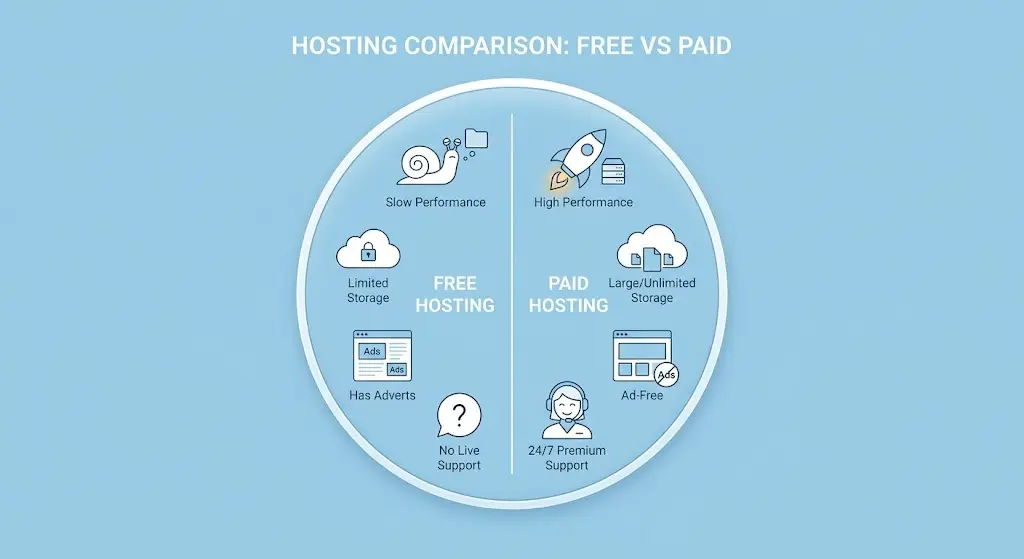
Free Hosting vs Paid Hosting: What’s the Difference?
| Feature | Free Hosting | Paid Hosting |
|---|---|---|
| Hosting cost | KSh 0 | Paid monthly or annually, from around Kshs 2,500/mo with Truehost |
| Storage | Usually limited | More depending on plan |
| Websites | Usually limited | Multiple sites on some plans |
| Bandwidth | Usually limited | Higher or unlimited depending on plan |
| Custom domain | Depends on provider | Usually supported |
| SSL | May be included | Usually included |
| Limited or unavailable | More accounts and mailboxes | |
| Backups | Limited | Usually included on many plans |
| Support | Limited | Broader support |
| Scalability | Limited | Easier to upgrade |
It’s worth stressing that the exact features on either side of this table depend heavily on the specific provider and plan involved.
Not every free plan looks the same, and not every paid plan automatically includes everything listed here either.
Free Hosting vs Paid Hosting: 7 Differences Worth Knowing
1) Storage and Resources
Free hosting plans tend to come with fairly tight storage limits.
Truehost’s own free plan, for example, currently offers 1 GB of SSD storage and 1 GB of bandwidth.
That’s genuinely enough for a basic site with a handful of pages and modest images.
But it gets restrictive fast once you’re running a larger WordPress site, anything media heavy, or more than one project at a time.
Paid shared hosting opens this up considerably.
Truehost’s Starter plan currently includes 30 GB of SSD storage, with Pro stepping up to 50 GB and Unlimited offering unmetered SSD storage altogether.
The jump from 1 GB to 30 GB alone changes what’s realistically possible on a site, from a handful of pages to a fully built out business website with a real media library.
It’s worth running a rough estimate of your own storage needs before assuming either tier automatically fits.
A text heavy blog with a handful of optimized images might comfortably fit within even the free plan’s 1 GB for quite a while.
Whereas a photography portfolio or a site with embedded video content will bump up against that ceiling within weeks rather than months.
2) Number of Websites
Free plans typically restrict you to a single website, which makes sense given how limited the underlying resources already are.
Trying to run several sites off a 1 GB allowance would leave almost nothing for any of them.
Paid shared hosting generally allows more.
Truehost’s current paid plans range from up to 10 websites on Starter, to 30 on Pro, and unlimited on the Unlimited plan.
For anyone managing more than one project, whether that’s a personal site alongside a business one, or several client sites, this alone often justifies moving to a paid plan.
3) Domain Names
It’s worth being clear that hosting and a domain aren’t the same thing, even though they often get bundled together in marketing.
Free hosting doesn’t automatically mean the domain itself is free too.
Truehost’s free hosting currently requires a domain that’s either registered new through Truehost or transferred over to them, rather than letting you connect an existing domain managed elsewhere.
That’s a detail worth checking carefully with any free hosting provider, since the domain conditions attached to a free plan can shape the whole setup more than people expect going in.
This condition isn’t unique to Truehost either.
Plenty of free hosting providers attach similar strings to their offers.
Whether that’s requiring the domain to be registered through them specifically, restricting certain domain extensions, or limiting how the domain can later be transferred elsewhere.
Reading these terms before committing avoids discovering a restriction only after you’ve already built out the site on top of it.
4) Email Accounts
There’s a real difference between using [email protected] for business and relying on a free Gmail or Yahoo address instead.
A custom domain email looks more professional and builds more trust with customers, which counts for a lot when you’re trying to establish credibility for a new business.
Truehost’s free plan currently includes one email account, which covers a single basic address but not much beyond that.
Its paid shared plans, by comparison, advertise unlimited email accounts.
Which counts for a lot with any business expecting to set up addresses for multiple staff, departments or roles down the line.
5) Backups
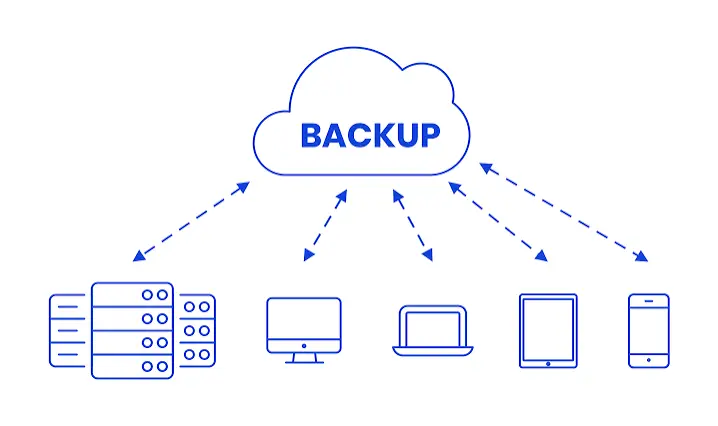
Backups count for more than most people realize until the day they actually need one.
A lost database, a broken update, or a hacked site can undo months of work in an instant, and backups are what let you recover from that rather than starting over from scratch.
Free hosting plans tend to offer limited or less frequent backups.
Truehost’s free plan, for instance, currently runs backups once a week rather than daily.
Paid plans generally offer broader backup options, often including daily automated backups.
Though it’s worth not assuming every paid provider automatically includes this, since backup policies still vary by provider and plan tier even once you’re paying.
A week between backups might be perfectly fine for a site that barely changes, but it becomes a real gap for anything updated regularly.
Whether that’s a blog publishing new posts or a store adding products.
Losing even a few days of changes to a restore point from the previous week is a frustrating way to find out your backup frequency didn’t match how often your site actually changes.
6) Support
Support looks noticeably different between free and paid tiers, and it’s one of the areas where the gap tends to show up fastest in practice.
Truehost’s free hosting currently provides email or ticket support along with knowledge base access, rather than the 24/7 live chat support available on some of its paid plans.
For a simple personal project, email or ticket support is often perfectly fine, since issues tend to be infrequent and rarely urgent.
For a business website where downtime or a broken feature could actually cost money.
Having faster, more immediate support available becomes a lot more valuable, which is part of what paid hosting is buying beyond just the extra resources.
It’s worth thinking about how comfortable you are troubleshooting things yourself too.
Someone confident reading through a knowledge base article and fixing a minor issue on their own might never miss live chat support at all.
Someone less familiar with hosting generally will likely find that faster, more direct support saves real time and stress whenever something does go wrong.
7) Scalability
What happens when your traffic grows, your storage fills up, or your website’s requirements simply outgrow what you started with?
This is really where the free versus paid question comes to a head.
Free hosting works well as a genuine starting point, a way to test an idea or get something basic online without spending anything.
But it isn’t built to grow with you.
Paid hosting gives you considerably more room to scale, both in terms of raw resources and in terms of having clear upgrade paths available.
Truehost currently offers several shared hosting tiers specifically for this reason.
Making the move from Starter to Pro to Unlimited a straightforward next step whenever a site’s needs actually call for it, rather than requiring a full migration to a completely different provider.
This staged approach also means you’re never paying for far more than you need at any given point.
Starting small and moving up a tier as your website actually grows tends to work out better financially than guessing upfront and either overpaying for unused capacity or underestimating and running into limits within months.
Is Free Hosting Good Enough for a Website?

This really depends on what the website is actually for, rather than having one answer that applies to everyone equally.
A personal blog, a simple portfolio, a small test project, or a landing page you’re using to validate an idea can all work perfectly well on free hosting, at least to start.
Truehost itself positions its free plan as suited to simple sites specifically, and is upfront that ecommerce isn’t recommended on it, largely because an online store needs more storage, more bandwidth, stronger security features, and more reliable support than a free tier is built to provide.
For anything handling customer payments, storing a growing product catalog.
Or representing a business that depends on the website actually staying online and working properly, free hosting tends to fall short fairly quickly.
The limitations that are a non-issue for a hobby blog become real obstacles the moment real money or a business reputation is riding on the site.
When Should You Move From Free to Paid Hosting?
A handful of practical signs tend to point toward it being time to upgrade:
- Your website needs more storage than your current plan allows
- You need to host multiple websites rather than just one
- You need several professional email accounts rather than just one
- Traffic is increasing and starting to approach your plan’s limits
- You need more CPU, RAM or general server resources
- You’re running or planning to run an online store
- You want broader backup options, more frequent backups, or faster support
- The website has genuinely become important to your business or project, rather than just a side experiment
Any one of these on its own might not be enough to justify the switch immediately, but a few showing up together is usually a clear enough signal that a free plan has reached its limit.
There’s no single trigger that applies to every website equally.
A personal blog might tick two or three of these boxes and still be fine staying on a free plan for a while longer.
While a business site hitting even one, like running out of storage ahead of a product launch, might need to move sooner rather than later.
Free or Paid Hosting?
Bringing this back to your own situation: free hosting removes the monthly or annual hosting bill entirely.
But it also comes with clearly defined resource and feature limits that aren’t going anywhere. Paid hosting starts to make a lot more sense once those limits actually start getting in the way of what you’re trying to do.
There’s no need to overpay for resources you don’t currently need, and there’s equally no need to stay on a free plan once it’s genuinely holding your website back.
The free hosting vs paid hosting decision really comes down to being honest about where your website is right now, and where it’s realistically headed over the next year or so.
If your website is outgrowing what free hosting can offer, whether that’s storage, email, backups, or simply needing more reliable support, Truehost’s paid shared hosting plans are worth exploring.
The free option remains a solid place to start or to test something small, but when a site needs more room to grow, moving to a paid plan gives it exactly that.