 Domain SearchInstantly check and register your preferred domain name
 Web Hosting
 cPanel HostingHosting powered by cPanel (Most user friendly)
 WordPress HostingHost your WordPress website with fast, secure, and affordable WordPress hosting in Kenya.
 KE Domains
 Reseller HostingStart your own hosting business without tech hustles
 Windows HostingOptimized for Windows-based applications and sites.
 Free Domain
 Affiliate ProgramEarn commissions by referring customers to our platforms
 Free HostingTest our SSD Hosting for free, for life (1GB storage)
 Domain TransferMove your domain to us with zero downtime and full control
 All DomainsBrowse and register domain extensions from around the world
 .Com Domain
 WhoisLook up domain ownership, expiry dates, and registrar information
 VPS Hosting
 Managed VPSNon techy? Opt for fully managed VPS server
 Dedicated ServersEnjoy unmatched power and control with your own physical server.
 Website Builder
 Online Store BuilderLaunch a professional e-commerce store without writing code.
 Web Design ServiceGet a custom-designed website tailored to your brand and goals. From just KES 15,600
 BlogRead our guides on web hosting, online business, digital marketing, and more
 SupportOur support guides cover everything you need to know about our services
 ContactContact us via chat or email

Did you know that choosing server location can make a huge difference in how your website performs?
For one, it affects how quickly your pages load, how smooth the experience feels for visitors, how well your site ranks on Google, and even how many customers stay long enough to take action.
A server is like the home to your website. The farther it is from your visitors, the longer data takes to travel between the server and their devices. That delay may only be a few seconds, but online, it’s a reason to scroll away.
This is especially worse for that person using mobile devices in Kenya, where connection speeds can vary depending on the network and location.
That is why server location should never be an afterthought.
A nearby server usually means faster loading speeds, better user experience, and stronger local SEO performance. Why? Search engines pay attention to website speed, and visitors are far more likely to stay on a site that responds quickly.
Beyond speed, the right location helps with privacy laws. Kenya’s Data Protection Act requires careful handling of personal information, and keeping data local can make compliance simpler.
The key is choosing a server location that matches your audience, business goals, and future growth plans.
Step-by-Step Process for Choosing Server Location
1) Analyze Your Target Audience and Traffic Sources
Start by checking where most of your visitors come from. Tools like Google Analytics or Matomo can show you the countries and cities driving traffic to your website.
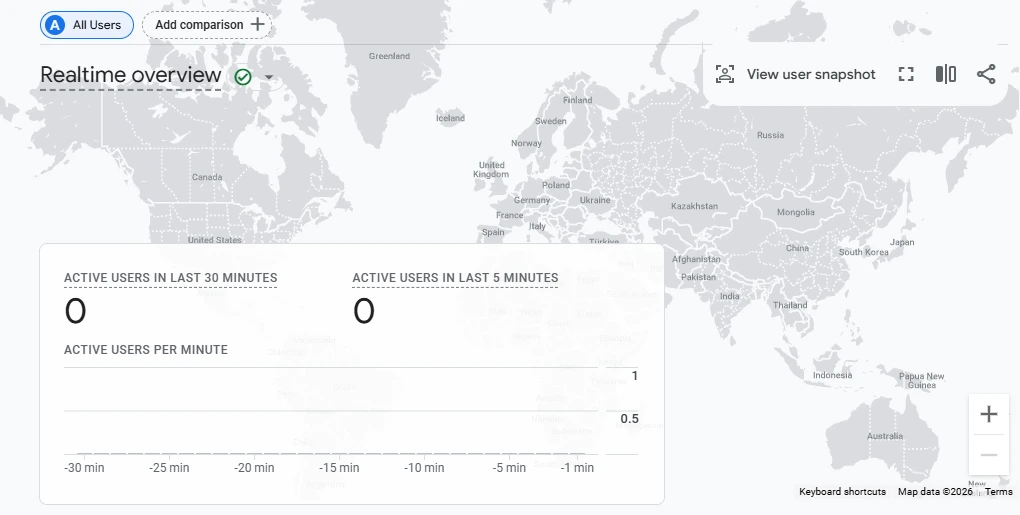
This step helps you in choosing server location that keeps your site fast for the people who visit it most.
If the majority of your audience is in Kenya or East Africa, hosting closer to that region usually improves loading speeds and reduces delays.
On the other hand, if a large percentage of your visitors come from Europe or the US, it may make sense to host closer to those regions or use a CDN to balance performance.
The shorter the distance between your server and your users, the faster your website responds.
2) Define Your Website’s Technical and Content Needs
Your website type also plays a big role in server location decisions.
A simple blog or company website has different needs compared to an e-commerce store, video platform, or media-heavy site.
Websites with large images, videos, or high traffic often perform better with a mix of local hosting and a CDN such as Cloudflare to improve speed across different locations.
You should also consider expected traffic, uptime requirements, payment processing, and customer data storage.
In Kenya, where many users browse on mobile devices and network quality can vary, optimized local hosting can improve overall performance and user experience.
3) Evaluate Legal, Compliance, and Data Privacy Requirements
Server location can also affect how you handle customer data and privacy requirements.
In Kenya, the Data Protection Act requires businesses to manage personal information responsibly, especially when handling customer accounts, payments, or sensitive records.
If your audience includes customers from regions like Europe or the United States, you may also need to comply with regulations such as GDPR or CCPA.
Choosing a server location that aligns with your audience can help reduce compliance challenges and improve trust.
It is also important to confirm exactly where your hosting provider stores data. At Truehost, businesses can choose Kenya-based hosting options for better local compliance and performance.
4) Assess Infrastructure, Reliability, and Network Quality
A good server location is not only about distance. The quality of the data center also affects your website’s reliability and speed.
Look for providers with strong uptime guarantees, stable power systems, secure facilities, and reliable network connections.
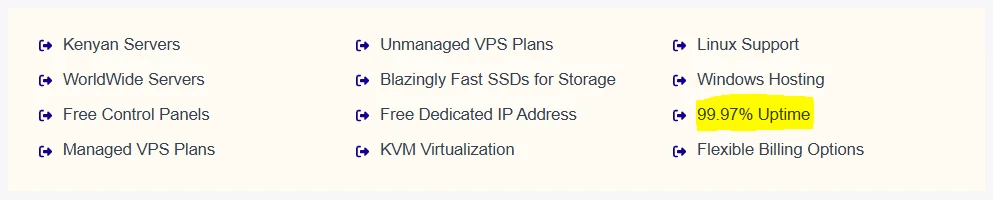
Features such as direct peering with local internet providers and backup systems help keep websites online even during outages or traffic spikes.
Kenya-based data centers can provide excellent performance for local audiences, especially for businesses targeting users within East Africa.
5) Factor in Cost, Scalability, and Support
The best option should balance performance, pricing, and long-term flexibility.
Local hosting can sometimes reduce costs while giving you faster support within your time zone and convenient payment methods like M-PESA.
You should also check how easily your hosting plan can grow with your business.
A provider that offers simple upgrades, CDN integration, VPS hosting, and dedicated servers makes it easier to scale when traffic increases.
At Truehost, businesses can start with affordable shared hosting and upgrade later as their needs expand.
6) Research and Compare Hosting Providers’ Server Options
Before choosing a hosting provider, check the exact server locations they offer.
Some providers advertise fast hosting but do not clearly show where their servers are located.
It also helps to read reviews from businesses with a similar audience or website type. Real-world feedback can give you a better idea of uptime, support quality, and speed consistency during peak traffic hours.
Given the option, you can choose hosting options designed for local performance while still supporting global accessibility.
7) Test Performance and Make the Decision
Once you narrow down your options, test performance before fully committing.
Tools like GTmetrix, Pingdom Website Speed Test, and Google PageSpeed Insights can show how your website performs from different regions.
Run tests from locations where your visitors are based.
If most of your audience is in Kenya, a local server should normally deliver faster response times.
Some hosting providers also offer trial periods or money-back guarantees, giving you time to evaluate performance properly.

For businesses targeting both local and international audiences, combining a Kenya-based server with a CDN like Cloudflare can improve global loading speeds while keeping strong local performance.
Why Server Location Makes a Difference in Performance and Your Business
Server location directly affects latency, which is the time data takes to travel between your website and visitors.
The farther the server is from users, the slower the loading speed can become. Faster websites usually perform better in Google search results and support stronger Core Web Vitals scores.
It also affects user experience. Many internet users in Kenya browse on mobile devices and mobile data connections, so slow websites can quickly increase bounce rates and reduce conversions.
Beyond speed, server location influences compliance, security, operating costs, and reliability.
Local servers in Nairobi or other Kenya-based data centers often work best for businesses targeting local audiences, while international server locations may suit companies with larger global traffic.
Common Server Location Options and When to Choose Each
Different server locations work better for different types of websites. The best choice usually depends on where your audience is located and how your website is used.
a) Local Servers (Kenya/Nairobi Data Centers)
Local servers are usually the best option for businesses targeting customers in Kenya.
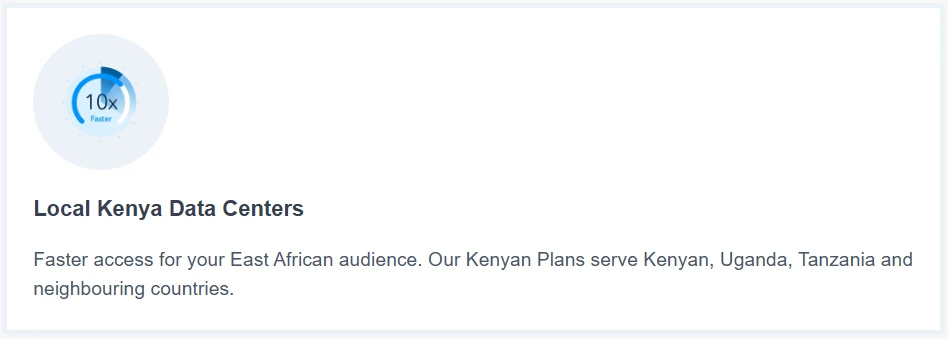
They offer lower latency, faster loading speeds, and a smoother experience for local visitors. They can also help simplify compliance with Kenya’s data protection regulations.
This setup works well for:
- Kenyan businesses and startups
- Local e-commerce websites
- Schools, blogs, and company websites
- Businesses targeting East African users
b) Regional Servers (Europe or Africa Hubs)
Regional server locations can work well if your audience is spread across multiple African countries or includes users in Europe.
These locations often provide a balance between performance, availability, and international reach.
This option is suitable for:
- Regional businesses serving multiple countries
- Websites with mixed African and European traffic
- Growing businesses expanding beyond Kenya
c) Global Hosting with a CDN
If your audience is international, combining a primary server with a CDN can improve performance across different regions.
A CDN stores copies of your website content in multiple locations, helping pages load faster for users worldwide.
Many businesses still keep their main server in Kenya while using services like Cloudflare to improve global speed.
| Server Location Option | Best For | Main Advantages | Possible Limitations |
|---|---|---|---|
| Kenya/Nairobi Servers | Local Kenyan audience | Faster local speeds, lower latency, easier compliance | May not be ideal for distant global traffic |
| Regional Servers | East Africa or Europe-focused traffic | Balanced international reach | Slightly higher latency for Kenyan users |
| Global + CDN Setup | International audiences | Better worldwide performance | Can cost more depending on setup |
Practical Tips When Choosing Server Location
One of the biggest mistakes website owners make is assuming all hosting providers offer the same performance.
Always confirm the actual server location instead of relying on marketing claims.
Testing is also important. Use speed testing tools regularly, especially after your website traffic starts growing. A setup that works well today may need adjustments later as your audience expands.
It also helps to plan ahead. Choose a hosting provider that allows easy upgrades and supports CDN integration if you expect your website to grow over time.
Price should not be the only deciding factor. Cheap hosting can sometimes lead to slower speeds, poor uptime, or limited support.
Local support, flexible upgrades, and payment options like M-PESA can make a big difference for Kenyan businesses.
Choose a Host With Kenyan Data Centers
Choosing the right server location becomes much easier once you focus on your audience, website needs, and long-term growth plans. A faster website can improve user experience, search visibility, and customer trust.
At Truehost, businesses can choose from shared hosting, VPS hosting, and dedicated server options designed for reliable local performance.
We also support flexible upgrades as your website grows.
You can explore our available hosting packages with data centers in Kenya or globally and choose one that fits your business needs and future plans.
A well-placed server helps your website stay fast, reliable, and ready to support your business as it grows.