 Domain SearchInstantly check and register your preferred domain name
 Web Hosting
 cPanel HostingHosting powered by cPanel (Most user friendly)
 KE Domains
 Reseller HostingStart your own hosting business without tech hustles
 Windows HostingOptimized for Windows-based applications and sites.
 Free Domain
 Affiliate ProgramEarn commissions by referring customers to our platforms
 Free HostingTest our SSD Hosting for free, for life (1GB storage)
 Domain TransferMove your domain to us with zero downtime and full control
 All DomainsBrowse and register domain extensions from around the world
 .Com Domain
 WhoisLook up domain ownership, expiry dates, and registrar information
 VPS Hosting
 Managed VPSNon techy? Opt for fully managed VPS server
 Dedicated ServersEnjoy unmatched power and control with your own physical server.
 Website Builder
 Online Store BuilderLaunch a professional e-commerce store without writing code.
 Web Design ServiceGet a custom-designed website tailored to your brand and goals. From just KES 15,600
 BlogRead our guides on web hosting, online business, digital marketing, and more
 SupportOur support guides cover everything you need to know about our services
 ContactContact us via chat or email
Dedicated servers still hold close to 28% of the global hosting market share. That number surprises a lot of people.
Cloud hosting often gets treated as the default choice for every business. The truth is simpler than the marketing suggests.
A dedicated server gives you one physical machine, built just for you. Cloud hosting gives you a network of virtual resources pulled from multiple machines at once.
This article breaks down performance, cost in Kenyan shillings, control, and growth potential. Use it to pick the setup that fits your business.
Dedicated Server vs Cloud Hosting
| Factor | Dedicated Server | Cloud Hosting |
|---|---|---|
| Hardware | One physical machine, just for you | Virtual resources are spread across many machines |
| Performance | Consistent, no resource sharing | Strong, but shared with other accounts |
| Cost in Kenya | Fixed, Ksh 9,100 to Ksh 16,800 per month | Pay-as-you-go or fixed cloud plans between Ksh 2,000 to 7,000 per month |
| Control | Full root access, total hardware control | Root access, Managed environment, less hardware access |
| Security | Single-tenant, hands-on setup required | Provider-managed firewalls and DDoS protection |
| Uptime | Depends on one machine; repairs take time | Node failover keeps sites online during faults |
| Setup time | Days since hardware needs configuring | Minutes, since no physical setup is needed |
| Maintenance | Your team, unless you pay for managed support | Often included by the provider |
| Growth | Requires new hardware, takes time | Add resources instantly through a control panel |
| Data residency | Clear, fixed physical location | Depends on the provider, confirm before signing up |
| Best for | Steady heavy traffic, strict compliance needs | Variable traffic, quickly growing, or budget-conscious businesses |
Dedicated Server vs Cloud Hosting: Performance Compared

Dedicated servers offer the most consistent performance of the two, since all hardware resources belong to a single user.
There is no request queuing and no delay caused by other accounts competing for the same CPU or memory. This setup works best for heavy computing tasks or high-frequency transactions, where every millisecond counts.
Cloud hosting performs well, too, but it handles load differently. Instead of relying on one machine’s raw capacity, it spreads traffic across several servers.
This works especially well during sudden spikes, such as a Nairobi online store running a Black Friday sale. For most everyday websites, this difference in performance goes unnoticed. It only becomes clear under heavy, sustained load.
Dedicated Server vs Cloud Hosting: Cost in KES
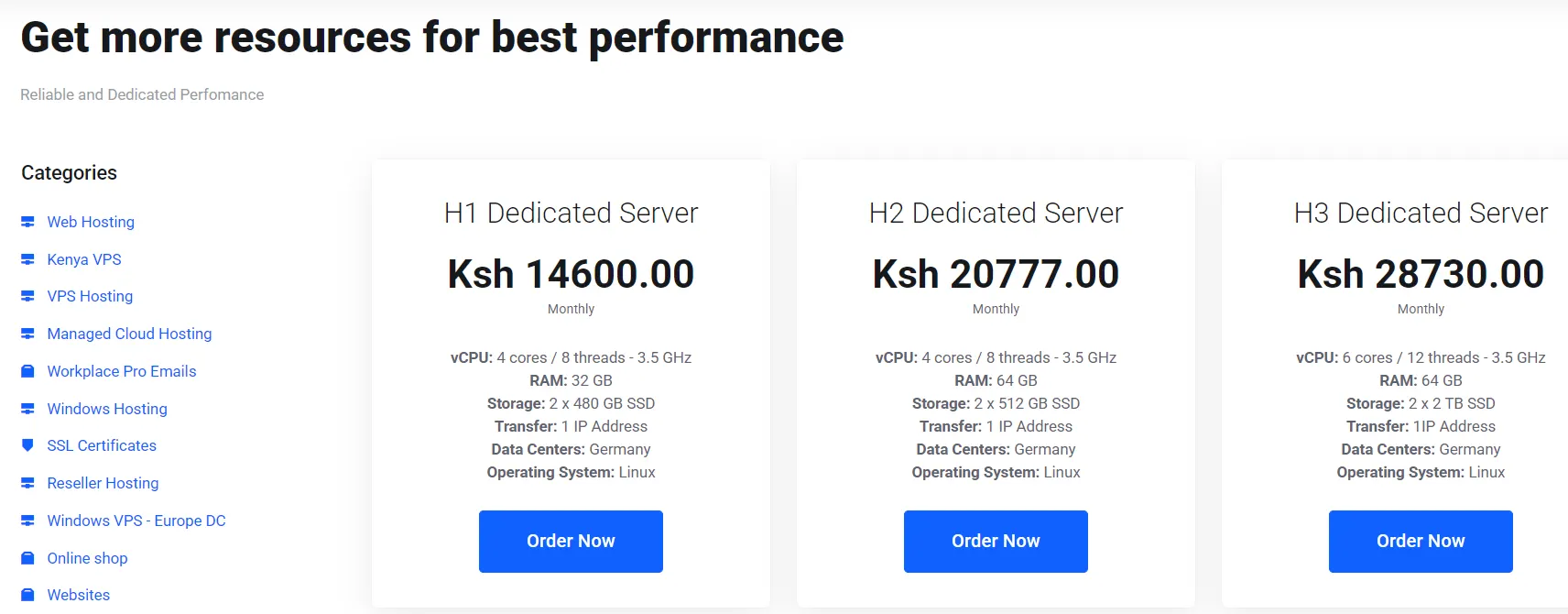
Dedicated servers in Kenya typically range from about Ksh 9,100 to Ksh 16,800 per month. The price depends on the specifications you choose. You pay a fixed rate every month, whether you use the full capacity or not.
Cloud hosting works on a different pricing model. Some Kenyan providers offer fixed monthly cloud plans, while others charge based on actual usage.
Either way, you avoid paying for capacity you never touch. If your traffic stays predictable and heavy, a dedicated server can cost less over the months.
Cloud usage fees can add up quickly during busy periods. If your traffic changes often, cloud hosting usually saves you money. You are not locked into paying for peak capacity all year.
Dedicated Server vs Cloud Hosting: Control and Security
A dedicated server gives you full root access, meaning you control every setting on the machine.
You choose the operating system, manage firewall rules, and install custom software without restriction. This level of control suits businesses with strict compliance needs.
That includes SACCOs, fintech platforms, and healthcare providers handling patient records.
Cloud hosting takes a managed approach to security. Most Kenyan cloud hosts include firewalls, DDoS protection, and regular backups by default.
Your account also stays isolated from other customers on the same network. A compromised neighboring account does not put your data at risk.
For businesses that want strong security without managing every setting themselves, cloud hosting offers a good middle ground.
Dedicated Server vs Cloud Hosting: Growth and Flexibility
Growing on a dedicated server means adding physical hardware, and that takes time to order, install, and configure. If your business grows quickly, this delay can leave you short on resources right when you need them most.
Cloud hosting grows differently. You can add CPU cores, RAM, or storage through a control panel, often within minutes and with no downtime.
Picture a Nairobi retailer running a flash sale. Cloud hosting can absorb the extra visitors instantly, while a dedicated server would need a hardware upgrade request first.
Some businesses eventually use both. They run core systems on a dedicated server and handle traffic spikes with cloud resources on the side.
Dedicated Server vs Cloud Hosting: Uptime and Disaster Recovery
Cloud hosting usually wins on uptime. If one physical machine in the network fails, another node picks up the workload right away.
Your website stays online while the provider fixes the problem in the background. Most cloud providers also run automated backups and snapshot tools, so restoring lost data takes minutes rather than hours.
A dedicated server works differently. Your site runs on one physical machine, so that a hardware failure can take it offline. It stays down until someone repairs it.
You can reduce this risk with your own backup plan or a standby server. That setup takes extra budget and technical effort, though.
For businesses that cannot afford any downtime, this gap between the two options carries real weight.
Dedicated Server vs Cloud Hosting: Setup Time and Maintenance
Cloud hosting deploys quickly. Most providers can activate a new cloud server within minutes, since no physical hardware needs to be shipped or installed.
This suits businesses that need to launch quickly or test new projects without long setup delays.
A dedicated server takes longer to set up. A technician needs to configure the physical machine before it goes live.
Maintenance also falls on different shoulders, depending on the plan. Unmanaged dedicated servers put patching, monitoring, and updates entirely on your team.
Managed dedicated plans shift that work to the provider, though they usually cost more. Cloud hosting tends to include more maintenance support by default, which suits businesses without a dedicated IT team.
Dedicated Server vs Cloud Hosting: Data Residency for Kenyan Businesses
Kenya’s Data Protection Act, 2019, lets the Cabinet Secretary require certain data to stay on a server inside Kenya.
This applies mainly to data tied to state interests or revenue protection. Still, it signals a wider push toward local storage for sensitive information.
Dedicated servers hosted locally give you a clear answer on where your data physically sits, which makes compliance conversations simpler. Cloud hosting can also meet this requirement.
Your provider just needs to confirm the physical location of the servers behind your account.
Before you choose either option, ask your host where the underlying hardware lives. This counts most if you handle government, financial, or health data.
Which One Should You Choose?
Your choice comes down to three things: traffic pattern, budget, and compliance needs.
If your traffic stays steady and heavy, a dedicated server gives you the control you need. The same applies if you handle sensitive data under strict rules.
If your traffic changes often, or your budget is still tight, cloud hosting gives you room to adjust without overspending.
You are also not locked into one choice forever. Many Kenyan hosting providers let you switch from cloud to dedicated, or the other way around, when your needs change.
FAQs
Is a dedicated server better than cloud hosting?
Neither option beats the other outright. A dedicated server offers more consistent performance and full hardware control, while cloud hosting offers flexibility and lower upfront cost. The better choice depends on your traffic and budget.
Can a dedicated server run out of resources like cloud hosting can?
Yes, but differently. A dedicated server has a fixed amount of CPU, RAM, and storage. Once you hit that limit, you need a hardware upgrade. Cloud hosting can add resources on demand instead.
Do I need a dedicated server for a high-traffic website in Kenya?
Not always. If your traffic stays heavy and predictable, a dedicated server can offer better value and performance. If your traffic changes often, cloud hosting can handle spikes without a hardware upgrade.
What Is a Dedicated Server?
A dedicated server is a single physical machine reserved for one client. Nobody else shares its hardware, storage, or bandwidth. This setup gives you root-level access.
You can install any software, change the operating system, and adjust security settings without asking anyone for permission. Single-tenancy also removes what hosting engineers call the “noisy neighbor” problem. On shared or virtual setups, another user’s traffic spike can slow your site down. That never happens on a dedicated server.
What Is Cloud Hosting?
Cloud hosting works differently. Instead of one physical machine, your website draws resources from a network of virtual servers spread across multiple physical machines.
If one server in that network runs into trouble, another picks up the load right away. Most cloud hosting plans in Kenya bill on a pay-as-you-go basis. You only pay for the resources you actually use.
What are the downsides of cloud hosting?
Cloud hosting can cost more during heavy, sustained usage compared to a fixed dedicated server plan. You also share the underlying physical infrastructure with other customers, even though your resources stay isolated.
Can I switch from a dedicated server to cloud hosting later?
Yes. Most Kenyan hosting providers, including Truehost, support migration between hosting types as your business needs change.
Which option has better uptime, cloud hosting or a dedicated server?
Cloud hosting usually offers better uptime. Its multi-server setup lets one node take over instantly if another fails. A dedicated server can go offline until repairs finish.
Does Kenya’s Data Protection Act require hosting data locally?
Not for most businesses. The Cabinet Secretary can require local storage for certain data tied to state interests or revenue protection. Always confirm your host’s data center location if you handle sensitive records.
Get The Best Dedicated Hosting
Dedicated servers buy you consistency. Cloud hosting buys you flexibility. Neither one wins in every situation.
The right pick depends on how your traffic behaves and how your business plans to grow.
Before you decide, compare Truehost’s dedicated server and cloud hosting plans. Check current pricing in KES and find the specifications that fit your business.