 Domain SearchInstantly check and register your preferred domain name
 Web Hosting
 cPanel HostingHosting powered by cPanel (Most user friendly)
 WordPress HostingHost your WordPress website with fast, secure, and affordable WordPress hosting in Kenya.
 KE Domains
 Reseller HostingStart your own hosting business without tech hustles
 Windows HostingOptimized for Windows-based applications and sites.
 Free Domain
 Affiliate ProgramEarn commissions by referring customers to our platforms
 Free HostingTest our SSD Hosting for free, for life (1GB storage)
 Domain TransferMove your domain to us with zero downtime and full control
 All DomainsBrowse and register domain extensions from around the world
 .Com Domain
 WhoisLook up domain ownership, expiry dates, and registrar information
 VPS Hosting
 Managed VPSNon techy? Opt for fully managed VPS server
 Dedicated ServersEnjoy unmatched power and control with your own physical server.
 Website Builder
 Online Store BuilderLaunch a professional e-commerce store without writing code.
 Web Design ServiceGet a custom-designed website tailored to your brand and goals. From just KES 15,600
 BlogRead our guides on web hosting, online business, digital marketing, and more
 SupportOur support guides cover everything you need to know about our services
 ContactContact us via chat or email
When you find yourself having built an app that works perfectly on your laptop… but mysteriously slows down, crashes, or gets time out once it’s live, it’s time you looked closely to your API hosting.
Well, choosing the right API hosting provider is more than just a technical checkbox on your deployment list.
It’s the invisible engine behind your app’s performance, reliability, and scalability.
When your APIs are fast, your users barely notice, and that’s exactly the point. But when they’re slow or unreliable? Suddenly everyone notices.
In short, your API is the bridge between systems, users, and data. And that bridge needs to be strong, secure, and ready to handle traffic spikes at 2 AM without breaking a sweat.
So how do you choose the right provider?
In this guide, I’ll take you through what developers really need to look at when choosing an API hosting provider to help you make a confident decision.
We’ll cover:
- What API hosting actually involves
- What options are on the table
- How to choose a provider that makes sense in Kenya’s tech ecosystem
Let’s get right into it.
What Is API Hosting?
API hosting is about giving your application programming interface a stable place to run so other apps, websites, or devices can connect to it over the internet.
The hosting provider handles the behind-the-scenes work like servers, networking, security, and scaling, so your API stays online and responds quickly as traffic grows.
In simple terms, it’s a reliable home for your API that’s available around the clock.
When API hosting is done well, users get fast responses, downtime is rare, and your system can handle sudden spikes without falling over.
For Kenya’s mobile-first apps and fintech-heavy products, hosting closer to users often makes a noticeable difference in speed and reliability.
Types of API Hosting
Different API hosting setups suit different projects, budgets, and levels of control.
Here are the main options developers usually consider.
1) Self-Hosted (VPS or Dedicated Servers)
Self-hosting means running your API on your own virtual private server or dedicated machine with full control over the setup.

This option gives you predictable costs for steady workloads and strong control over data and configuration.
The responsibility is heavier though, since you manage security, updates, and scaling yourself, but for many Kenyan developers, hosting on a local VPS stands out.
Lower latency for East African users and easier KES billing often make it a practical and cost-effective choice.
2) Cloud Hosting (IaaS / PaaS)
With cloud hosting, you run your API on virtual servers or managed platforms from providers like Amazon Web Services, Google Cloud, or Microsoft Azure.
These platforms come with built-in tools for scaling, monitoring, and traffic management.
This approach works well for applications that need flexibility and the ability to grow quickly.
The trade-off is cost, which can rise fast as usage increases, and latency if your users are far from the nearest data center.
3) Serverless Hosting (Function-as-a-Service)
Serverless hosting runs your code only when requests come in.
Services like AWS Lambda, Google Cloud Functions, and Vercel take care of scaling automatically and charge based on execution time.
It’s a good fit for APIs with unpredictable traffic or event-driven logic.
The main downsides are occasional delays on the first request and limits on how long or how heavy each function can be.
4) Platform-as-a-Service (PaaS)
PaaS options such as Heroku, Render, and Fly.io simplify deployment by handling most infrastructure tasks for you.
They’re popular with small teams and startups because setup is quick and the developer experience is smooth.
As traffic grows, though, costs can increase and you have less control over the underlying system.
5) API-as-a-Service (APIaaS)
With APIaaS platforms like RapidAPI and Zuplo, much of the work is done for you.
These services manage deployment, authentication, analytics, and documentation in one place.
They’re useful when you need to launch a public API fast or share it with partners.
The trade-off is reduced flexibility and higher costs once usage scales.
Why API Hosting is Cruicial for Developers in Kenya
In Kenya today, API powers M-Pesa integrations, digital lending tools, super apps, and countless fintech features people rely on daily.
Now, if hosting is stable and fast, everything feels seamless. If it’s not, users feel the friction immediately.
For instance, services like M-Pesa handle tens of millions of transactions every day, and a growing share flows through developer integrations on the Daraja API platform.
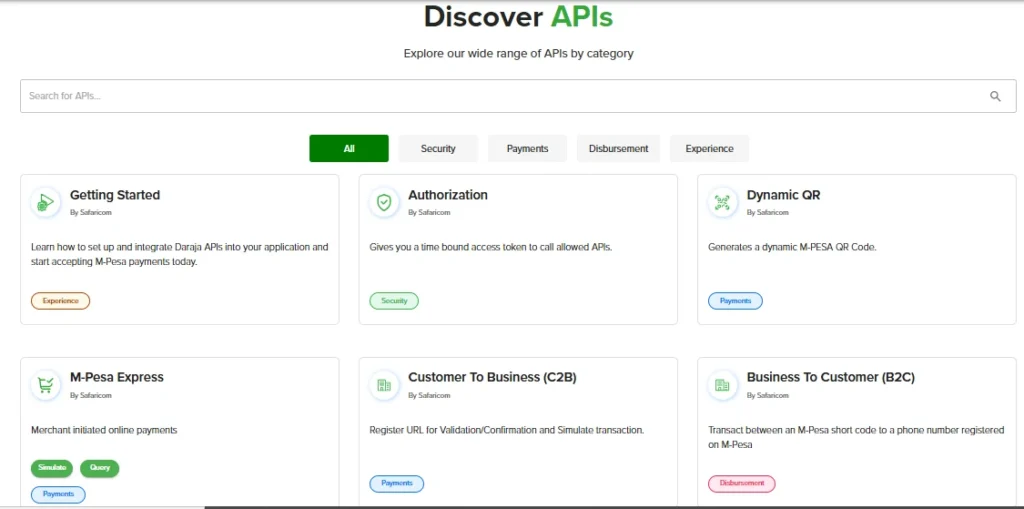
That means APIs sit at the center of payments, credit scoring, remittances, and embedded finance.
So, slow response times or failed requests don’t just cause technical issues. They also damage trust in a market where users expect instant results.
Latency is another big factor.
Hosting overseas can add 150–300 milliseconds of delay compared to roughly 20–50 milliseconds with local hosting.
On mobile networks, that difference is noticeable. It can affect checkout completion, real-time transfers, and overall user satisfaction.
There are also practical concerns like USD billing and forex fluctuations, time zone gaps for support, and increasing attention on data privacy and sovereignty.
Local API hosting often reduces latency, keeps costs predictable in KES, and simplifies compliance.
In short, solid API hosting is what allows your app to scale during traffic spikes, process transactions reliably, and deliver the fast experience Kenyan users now expect by default.
What Developers Should Look for When Choosing an API Hosting Provider
1) Speed and Location
Latency shows up faster than most people expect.
Hosting your API on servers based in Nairobi or nearby African regions keeps response times low for users in places like Nairobi, Mombasa, and Kisumu.
When everything runs overseas, even a small delay can make apps feel sluggish, especially for mobile-first users.
2) Traffic Spikes
Your API may be calm most days, then suddenly get slammed during promotions, salary days, or peak usage hours.
Auto-scaling, load balancing, and quick resource upgrades help your system stay stable instead of going offline when demand jumps.
3) Security
APIs are a common attack target.
Solid providers offer protection like DDoS mitigation, web application firewalls, rate limiting, and HTTPS by default.
You’ll also want proper support for API keys, OAuth, or JWT. Security issues break both systems and user trust.
4) Performance
Fast storage (SSD or NVMe), generous bandwidth, support for modern protocols like HTTP/2 or HTTP/3, and caching options all help your API respond faster while reducing backend load.
5) Developer Tools
Developer-friendly hosting gives you SSH or root access when you need it, works well with frameworks like Node.js, FastAPI, or Go, and includes monitoring, logs, and easy deployment workflows.
The goal is to spend time building features, not wrestling infrastructure.
6) Pricing
Transparent pricing in KES, reasonable data transfer costs, and flexible plans go a long way.
USD billing and surprise fees can quietly eat into budgets, especially when exchange rates shift.
7) Support
When something breaks, fast help is important.
24/7 support in our time zone, ideally from teams familiar with Kenyan networks and payment flows, can save hours of downtime.
8) Control and Compliance
For sensitive workloads like fintech or health data, having full control is often essential.
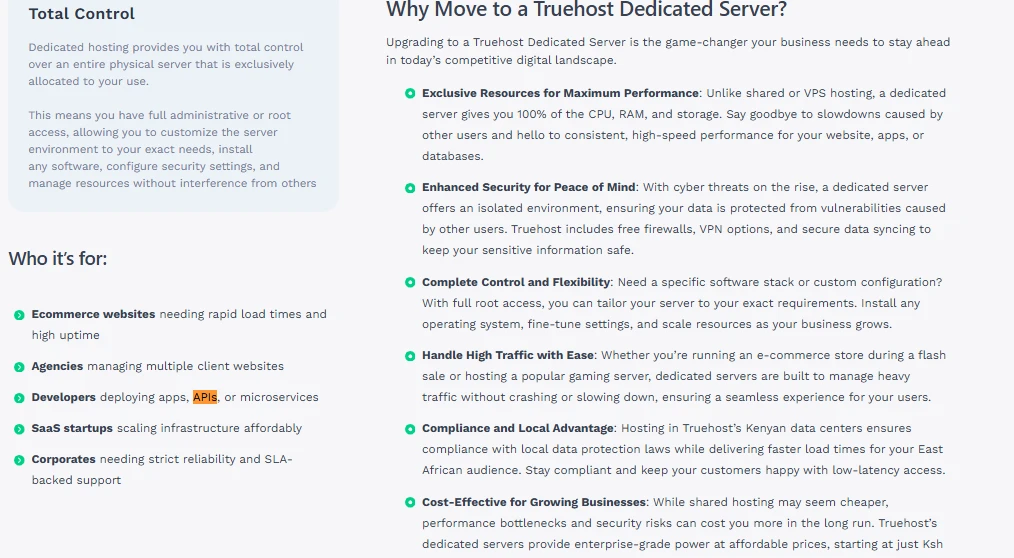
Self-hosted VPS or dedicated servers make it easier to keep data local and meet compliance expectations.
A simple way to decide is to test for yourself: check latency from different locations, deploy a small prototype, and watch how it behaves under real traffic.
API Hosting Options Kenyan Developers Use in 2026
Different hosting options solve different problems. The key is knowing what each one does well, and where it may fall short locally.
Global Cloud Platforms
Providers like Amazon Web Services offer massive scale, endless services, and proven reliability. They’re powerful, especially for complex systems or global products.
The downside for Kenyan teams is latency when servers are far away, plus USD billing that can climb quickly as traffic grows.
DigitalOcean sits at the simpler end of the spectrum. It’s popular for clean interfaces, predictable pricing, and quick deployments. It works well for many APIs, though local data center options are limited.
Cloudflare focuses on speed at the edge. It’s excellent for caching, security, and protecting APIs from abuse. On its own, it’s often paired with another hosting setup rather than replacing it entirely.
These platforms are solid, but many Kenyan developers eventually feel the friction around latency, billing, or regional support.
Local VPS and Dedicated Servers
This is where providers built for the local market stand out.
At Truehost, VPS and dedicated servers are designed with Kenyan developers in mind.
Our VPS hosting gives you a balance of control and affordability.
Plans start low, include SSD storage, full root access, and run from Nairobi data centers, so your API responds quickly to local users.
You can deploy Node.js, Python, or any custom stack and scale resources as your project grows.
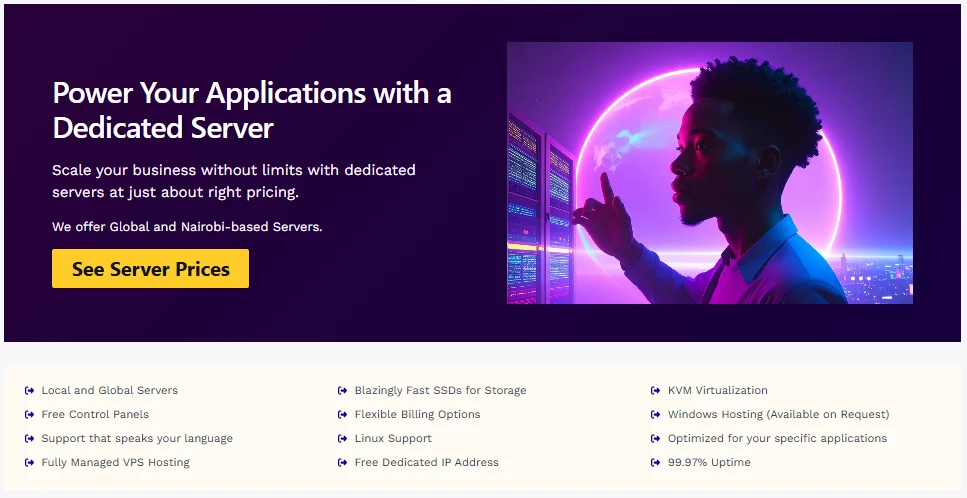
For heavier workloads, dedicated servers offer exclusive hardware.
You get consistent performance, large SSD storage, high RAM, and complete control over the environment.
This setup works well for production APIs handling payments, real-time processing, or steady high traffic.
Local support in English and Swahili, along with KES billing, removes many of the usual headaches around time zones and currency surprises.
How to Get Started with the Right API Hosting
Begin by looking at your own project clearly.
- How much traffic do you expect today?
- How much could it grow in six months?
- Does your API need ultra-low latency for payments or real-time updates?
- Do you require custom server configurations?
Those answers shape everything.
Next, test latency from within Kenya. Simple ping or traceroute tools can show you how quickly a server responds from Nairobi, Mombasa, or Kisumu. The numbers tell you more than marketing pages ever will.
After that, compare providers side by side. Look beyond the headline price. Check what’s included.
Once you’ve narrowed it down, deploy a small working version of your API. Install your framework, configure SSL, set up rate limiting, and run a few real requests through it.
Monitor performance. Watch response times. See how the server behaves under light stress.
As users grow, scale gradually. Upgrade resources, optimize queries, add caching, and keep monitoring.
Hosting should support your growth, not hold it back.
Wrapping Up
Choosing API hosting is about fit.
The right setup matches your workload, while keeping latency low, security tight, costs predictable, and control in your hands.
In Kenya, local infrastructure often delivers a clear advantage.
Serverless works well for quick experiments. VPS and dedicated servers offer deeper control and steady performance for production systems. Each path can work; what matters is how well it aligns with your goals.
We built Truehost with these realities in mind, including fast local access, straightforward billing, and support that operates in your time zone.
If you’re ready to host your API properly, explore the VPS or dedicated plans and take the first step.
A fast, dependable API make your system better, and your users stay.