 Domain SearchInstantly check and register your preferred domain name
 Web Hosting
 cPanel HostingHosting powered by cPanel (Most user friendly)
 WordPress HostingHost your WordPress website with fast, secure, and affordable WordPress hosting in Kenya.
 KE Domains
 Reseller HostingStart your own hosting business without tech hustles
 Windows HostingOptimized for Windows-based applications and sites.
 Free Domain
 Affiliate ProgramEarn commissions by referring customers to our platforms
 Free HostingTest our SSD Hosting for free, for life (1GB storage)
 Domain TransferMove your domain to us with zero downtime and full control
 All DomainsBrowse and register domain extensions from around the world
 .Com Domain
 WhoisLook up domain ownership, expiry dates, and registrar information
 VPS Hosting
 Managed VPSNon techy? Opt for fully managed VPS server
 Dedicated ServersEnjoy unmatched power and control with your own physical server.
 Website Builder
 Online Store BuilderLaunch a professional e-commerce store without writing code.
 Web Design ServiceGet a custom-designed website tailored to your brand and goals. From just KES 15,600
 BlogRead our guides on web hosting, online business, digital marketing, and more
 SupportOur support guides cover everything you need to know about our services
 ContactContact us via chat or email
Python powers everything from lightweight APIs to massive web platforms, automation tools, AI applications, and SaaS products. Frameworks like Django, Flask, and FastAPI have made it easier than ever to build scalable applications quickly.
But hosting Python applications is not always straightforward.
Some hosting providers only support basic Python scripts. Others restrict frameworks, limit server access, or make deployment unnecessarily complex. The best Python hosting depends on what you are building, your technical skills, and how much control you need.
In this guide, we’ll compare five of the best places to host Python projects, from beginner-friendly platforms to fully customizable VPS environments.
Comparison table
| Provider | Type | Starting Price | Best For | Skill Level |
| Truehost VPS | VPS | From ~KSh 560/mo | Full-control Python / AI / custom stacks | Advanced |
| DigitalOcean App Platform | PaaS | $5/mo (paid tier) | Django, Flask, SaaS, startups | Intermediate |
| Railway | PaaS | $5/mo (Hobby) | Rapid prototyping, MVPs, side projects | Beginner–Mid |
| PythonAnywhere | Managed cloud | Free → $10/mo | Students, beginners, small apps | Beginner |
| Hostinger VPS | VPS | ~$4.99/mo | Full-control Python / AI/custom stacks | Intermediate–Advanced |
1) Truehost VPS
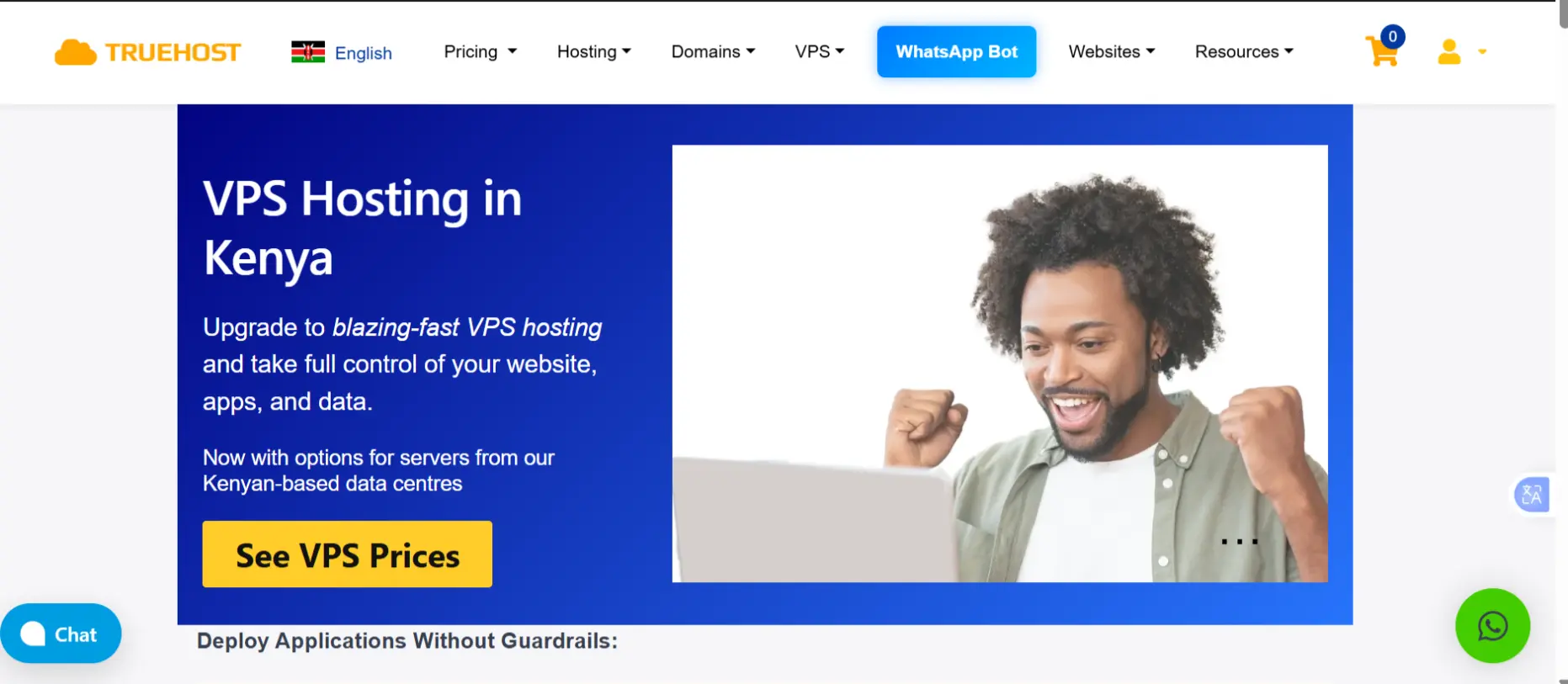
Kenya-based VPS hosting with full root access and local support
Starting from around KSh 560/month
Truehost is an affordable VPS option for developers in Kenya and East Africa, offering full server control without the high cost of international providers.
You get a Linux server (Ubuntu or CentOS) with full root access, so you can install any Python version, set up virtual environments, and configure your stack exactly how you want.
It works well for Django, Flask, FastAPI, and Docker-based deployments, with no restrictions on how you build your environment.
You also get local convenience with M-Pesa payments and Kenya-based support, making it easier to get help when you need it.
Features
- Full root access with complete control over your Python environment
- Install any Python version, framework, or dependency you need
- Choice of Ubuntu or CentOS operating systems
- Dedicated CPU, RAM, and SSD resources
- Supports Docker, Nginx, virtual environments, and custom server setups
- Managed VPS plans are available if you prefer less server maintenance
- M-Pesa payment support
- Data center locations in Kenya, Europe, and the US
Pros
- Very affordable starting pricing for local developers
- Renewal prices remain consistent
- Excellent flexibility for Python projects
- Works well for Django, Flask, FastAPI, and AI/ML deployments
- Local support team familiar with the East African market
Cons
- Unmanaged VPS plans require some Linux/server knowledge
- No one-click deployment system like Railway or Heroku-style platforms
- Documentation is still smaller compared to the larger global providers
Best for: Python developers in Kenya and East Africa who want complete control over their hosting environment; custom Django, Flask, FastAPI, or AI/ML deployments; projects needing specific Python versions or server-level customization at locally-competitive prices.
2) DigitalOcean App Platform
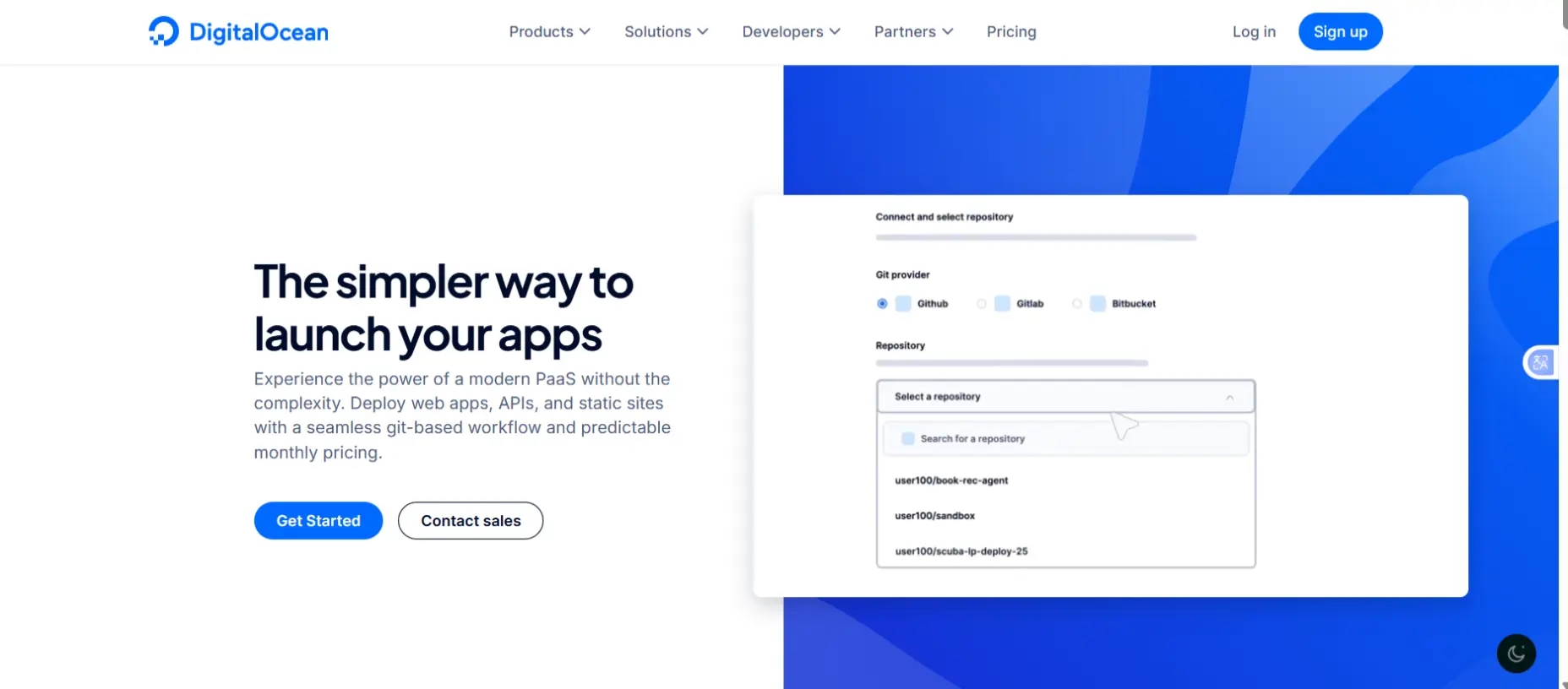
Fully managed PaaS that auto-deploys Python apps from Git
Starting from around $5/month
DigitalOcean App Platform makes deploying Python applications much simpler. You connect your GitHub, GitLab, or Bitbucket repository, and the platform automatically detects frameworks like Django or Flask, builds the app, and deploys it with a live URL.
One of its biggest strengths is scalability. You can start small on an affordable shared-CPU plan, then scale resources independently as your application grows. Dedicated CPU plans also support autoscaling, helping your app handle traffic spikes automatically without manual server management.
Features
- Auto-detects Python apps and deploys directly from Git, no YAML configuration needed
- Built-in SSL certificates, global CDN, and DDoS mitigation are included on all plans
- Managed PostgreSQL, MySQL, and Redis databases integrated directly in the dashboard
- Built-in CI/CD with staging, production, and preview environments per pull request
- Autoscaling available on dedicated-CPU plans
- Background workers and cron jobs are supported alongside web services
- Supports Dockerfile or container registry images for teams that want full build control
Pros
- Beginner-friendly but genuinely production-ready
- Strong balance of simplicity and infrastructure power
- Transparent, predictable, modular pricing
- New accounts receive $200 in credits for 60 days
Excellent managed database integration
Cons
- Less low-level control compared to a raw VPS
- Costs can grow with databases and multiple services
- No free tier for dynamic Python apps (only static sites)
Best for: Startups and SaaS products built on Django or Flask; developers who want Git-push deployment without managing servers; projects that will need managed databases, background workers, and autoscaling as they grow.
3) Railway
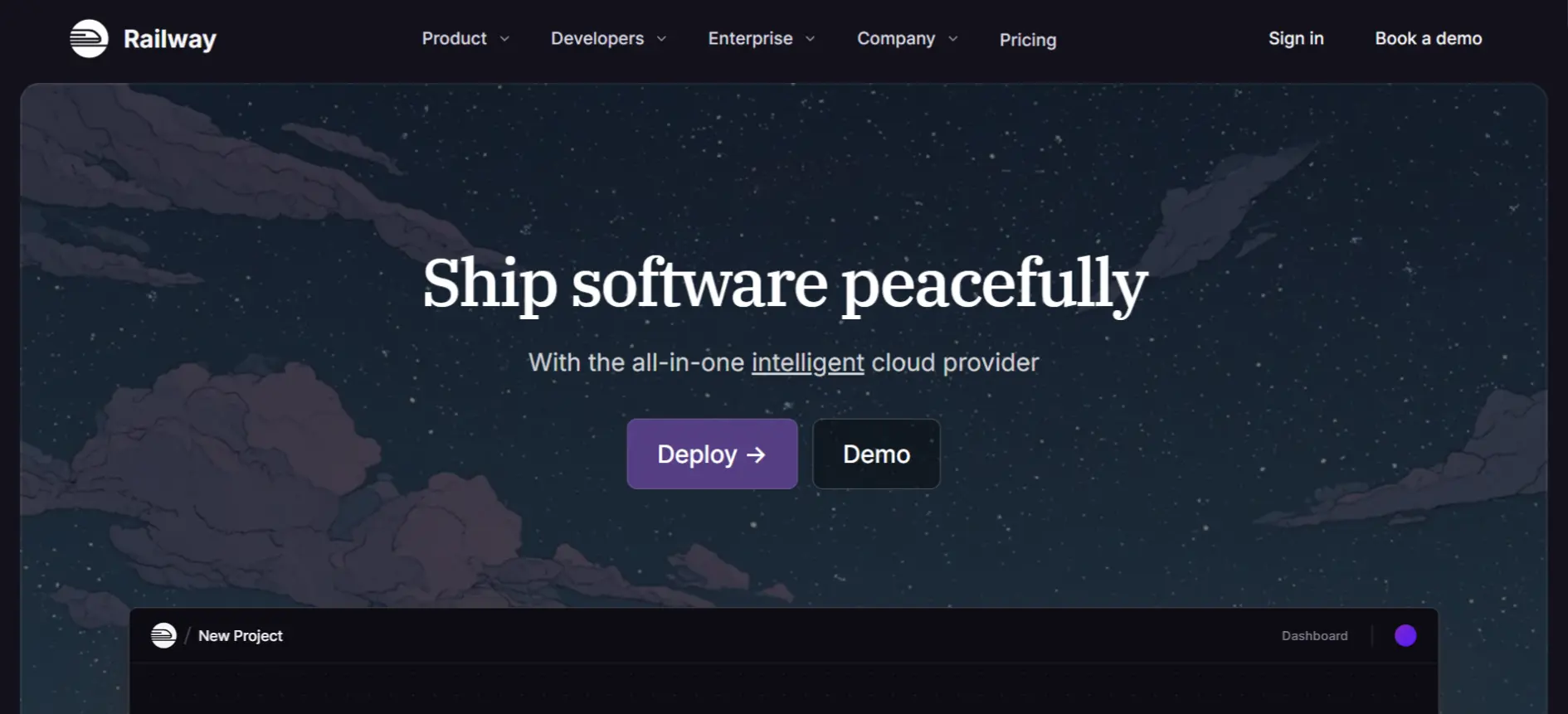
Usage-based cloud platform for fast Python deployments
From $5/month
Railway is a developer-friendly platform that turns a Python repository into a live app in minutes. You simply connect GitHub, and it automatically detects your project, installs dependencies, and deploys, no Dockerfile or complex setup required.
It uses a usage-based pricing model, with a $5/month Hobby plan that includes $5 in usage credits, which is often enough for small to medium apps.
New users get a $5 trial credit for 30 days, after which a paid plan is required.
Features
- Auto-detects Python frameworks (Django, Flask, FastAPI), no Dockerfile required
- One-click managed databases: PostgreSQL, MySQL, MongoDB, Redis
- Usage-based billing with included monthly credits ($5 on Hobby, $20 on Pro)
- Preview environments are automatically deployed for each pull request
- Real-time usage dashboard so you always know what you are spending
- Private networking between services within a project
- Custom domains with automatic SSL certificates
Pros
- Fastest setup experience of any provider on this list
- Clean, modern developer UI
- All database types are included under the same billing model
- Real-time cost monitoring prevents bill surprises
Cons
- Usage-based costs can grow unpredictably at scale
- Databases consume the same resource pool as apps
- No permanent free tier
- Less infrastructure control than VPS options
Best for: Rapid prototyping, MVPs, and side projects where deployment speed counts most; solo developers and small teams who want to ship quickly without thinking about infrastructure.
4) PythonAnywhere
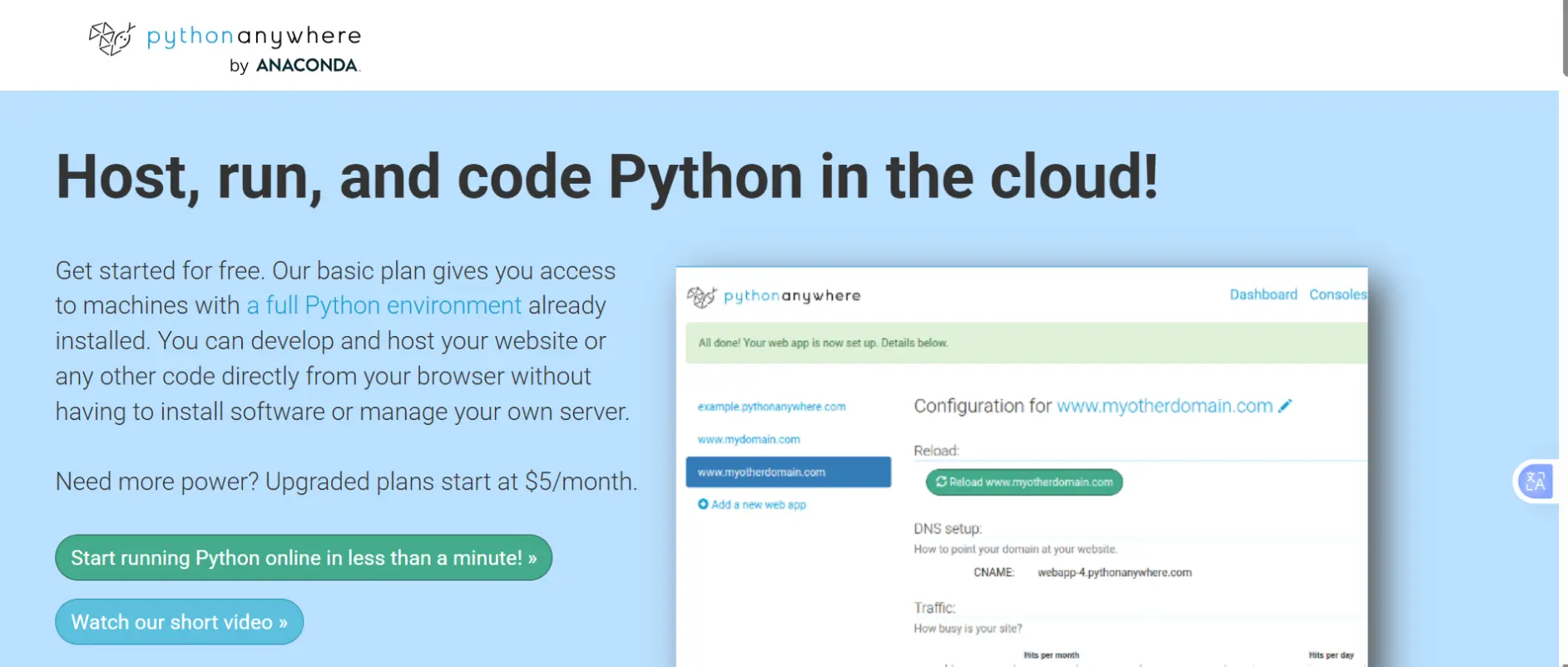
The only hosting platform built exclusively for Python
Free → $10/month
PythonAnywhere is a hosting platform designed specifically for Python, making deployment extremely simple.
You don’t manage servers or write Dockerfiles; you just write Python code in your browser and deploy directly.
The free plan lets you run one small web app on a subdomain, while the paid Developer plan (about $10/month) offers more resources and flexibility.
It’s especially useful for beginners building their first Flask or Django apps.
Features
- Full browser-based development environment, code, run, and deploy without installing anything locally
- Multiple Python versions supported simultaneously (Python 3.9 through 3.13)
- One-click deployment for Django and Flask web applications
- Built-in Bash console, Jupyter notebooks, and scheduled tasks
- Free tier includes one web app on a subdomain with 512 MB storage
- Paid Developer tier at $10/mo adds custom domains, more CPU, and more storage
Pros
- Easiest Python deployment experience available anywhere
- Genuinely useful free tier for learning and small projects
- No server management required at any tier
- Browser IDE means you can code from any device
Cons
- Limited flexibility, no full ASGI support (FastAPI with WebSockets is constrained)
- Free tier has restricted outbound internet access
- Not suitable for high-traffic or resource-intensive production apps
- No Docker or container support
Best for: Students learning Python web development; educators running workshops; small Flask and Django apps that do not need heavy traffic; anyone deploying their first web app.
5) Hostinger VPS
High-performance NVMe VPS with templates that speed up Python setup
From ~$4.99/month
Hostinger VPS Hosting offers affordable VPS plans with strong performance for Python developers.
The entry plan includes 1 vCPU, 4 GB RAM, and fast NVMe SSD storage, which helps speed up virtual environments, app startup times, and database performance.
You also get OS templates like Ubuntu, making it quicker to set up and deploy Python applications.
Features
- Full root access, install any Python version via pyenv, manage environments with venv or conda
- NVMe SSD storage across all plans for faster reads, writes, and imports
- Pre-configured server templates (Ubuntu, Django-ready configurations) to reduce setup time
- Up to 16 GB RAM and 200 GB NVMe storage on higher KVM plans
- Multiple global data center locations to reduce latency for your audience
- Daily backups and DDoS protection included
- AI assistant (Kodee) for VPS troubleshooting within the Hostinger panel
Pros
- Excellent price-to-performance ratio globally
- NVMe storage is meaningfully faster than standard SSD VPS plans
- Generous RAM allocation on entry plans versus competitors
- Strong documentation and video tutorials
Cons
- Requires technical knowledge to configure a Python environment from scratch
- Renewal prices higher than introductory rates on longer-term plans
- No managed Python-specific environment like PaaS platforms
Best for: Developers who want full VPS flexibility without paying premium prices; production Django or FastAPI deployments that need dedicated resources; projects outgrowing shared hosting that are not yet ready for enterprise cloud pricing.
What to look for in Python web hosting
Not all hosting features matter equally for Python apps. These are the key things that actually affect performance and day-to-day development.
i) Python & framework support
Make sure the host supports modern Python 3.x (like 3.12/3.13) and your framework needs. Django and Flask rely on WSGI, while FastAPI and async apps need ASGI support; not all providers handle both well.
ii) Deployment experience
Git-based deployment is now standard. Better platforms also offer auto-deploys, preview environments, and Docker support. If you don’t want to manage servers (Gunicorn, Nginx, systemd), a PaaS is easier than a VPS.
iii) Scalability & performance
VPS hosting requires manual upgrades when you outgrow resources, while PaaS platforms can autoscale automatically. Also, check support for background tasks like Celery workers if your app needs them.
iv) Pricing structure
Watch out for low intro prices that jump on renewal. Usage-based platforms can also surprise you if apps scale unexpectedly. Always check long-term costs, not just starting prices.
v) Database & integrations
Most Python apps need PostgreSQL. VPS hosting requires manual setup, while PaaS platforms offer managed databases. Also, check for Redis support if you need caching or sessions.
Python Web Hosting FAQ
Do all web hosts support Python?
No. Many shared hosts have limited or outdated Python support. VPS/PaaS options above provide better compatibility.
Is free Python hosting worth it?
Yes for learning, prototypes, or low-traffic apps (e.g., PythonAnywhere free tier or DO static). Production needs usually require paid plans for reliability, custom domains, and resources.
VPS vs. PaaS for Python: What’s better?
PaaS (DO App Platform, Railway, PythonAnywhere): Faster deployment, less maintenance, ideal for most developers.
VPS (Truehost, Hostinger): Maximum control and customization, better for complex, specific, or high-control needs. Choose based on your DevOps comfort.
Getting Started with Python Web Hosting
The best hosting platform depends on what you are building.
If you want maximum flexibility and server-level control, VPS hosting providers like Truehost and Hostinger are strong options.
If you prefer simplicity and fast deployments, platforms like DigitalOcean App Platform, Railway, and PythonAnywhere can dramatically reduce setup complexity.
Before choosing a provider, consider:
- Your technical skill level
- Your application’s scalability needs
- Whether you need server-level customization
- Your monthly budget
- Your long-term growth plans
The right hosting environment makes deploying and scaling Python applications much easier.
If you want full control over your Python environment, custom server configurations, and scalable VPS resources, Truehost VPS Hosting gives you the flexibility to deploy Django apps, Flask APIs, FastAPI projects, AI workloads, and more on your own terms.