 Domain SearchInstantly check and register your preferred domain name
 Web Hosting
 cPanel HostingHosting powered by cPanel (Most user friendly)
 WordPress HostingHost your WordPress website with fast, secure, and affordable WordPress hosting in Kenya.
 KE Domains
 Reseller HostingStart your own hosting business without tech hustles
 Windows HostingOptimized for Windows-based applications and sites.
 Free Domain
 Affiliate ProgramEarn commissions by referring customers to our platforms
 Free HostingTest our SSD Hosting for free, for life (1GB storage)
 Domain TransferMove your domain to us with zero downtime and full control
 All DomainsBrowse and register domain extensions from around the world
 .Com Domain
 WhoisLook up domain ownership, expiry dates, and registrar information
 VPS Hosting
 Managed VPSNon techy? Opt for fully managed VPS server
 Dedicated ServersEnjoy unmatched power and control with your own physical server.
 Website Builder
 Online Store BuilderLaunch a professional e-commerce store without writing code.
 Web Design ServiceGet a custom-designed website tailored to your brand and goals. From just KES 15,600
 BlogRead our guides on web hosting, online business, digital marketing, and more
 SupportOur support guides cover everything you need to know about our services
 ContactContact us via chat or email

Start using Localforce for GBP
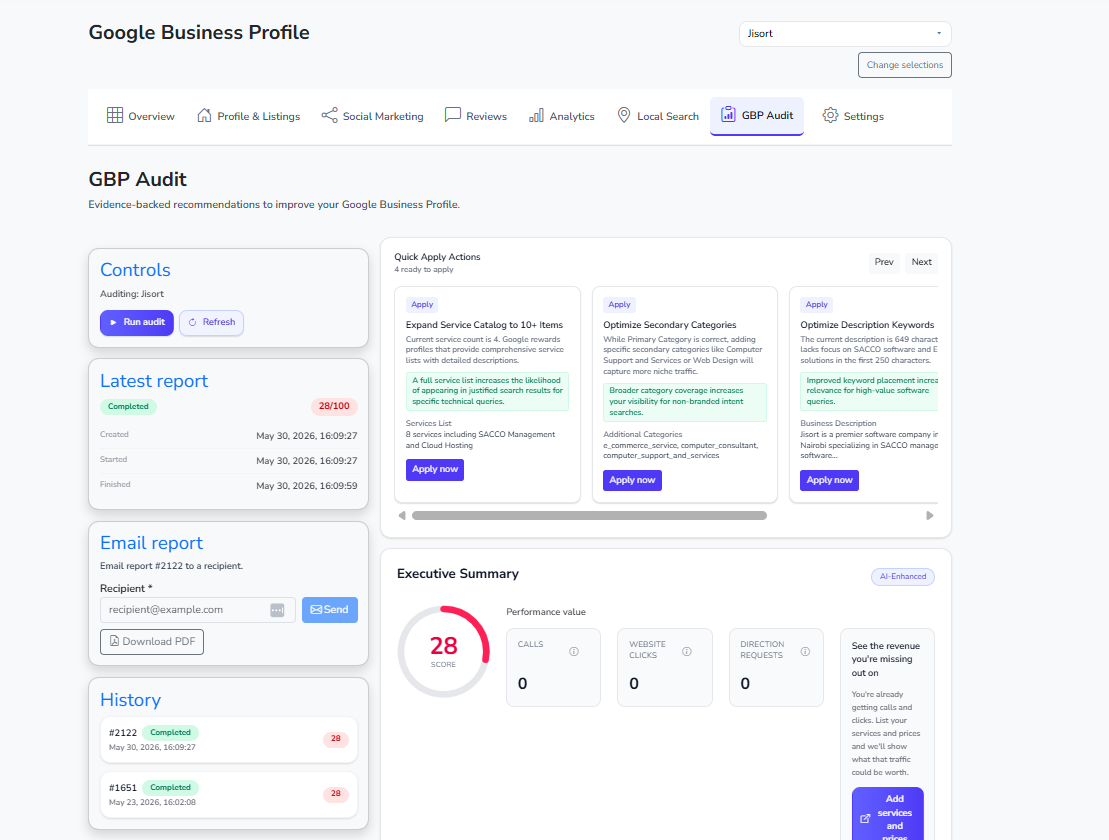
When someone in Nairobi searches ‘plumber near me,’ ‘best dentist in Nairobi,’ ‘driving school near me,‘ or ‘restaurant in Westlands,‘ Google Maps can determine which businesses get the first calls, visits, WhatsApp messages and other enquiries.
For a local business in Kenya, appearing prominently on Google Maps isn’t simply about visibility. It puts your business in front of people who are actively looking for what you sell.
Google itself has documented the strong connection between location-based mobile searches and visits to physical businesses. See Google’s research on local search behaviour
The important question is:
How do you get your business to the top of Google Maps?
From our research, Google primarily evaluates local businesses using three broad ideas:
Relevance: How closely does your business match what someone searched for?
Distance: How close is the business to the location relevant to the search?
Prominence: How established, trusted and authoritative does Google believe the business is?
You cannot completely control distance. But you can substantially improve the signals that influence relevance and prominence.
Here is where to start.
1. Audit Your Current Google Maps Ranking
Before changing anything, establish where you currently stand.
Search results can differ significantly between locations. A business may rank well when someone searches from Kilimani but poorly when the same search happens from Westlands, Parklands or another part of Nairobi.
Start with the Truehost Free Local SEO Audit:
Run Your Free Google Maps Audit
The objective is to identify weaknesses in your local search presence before deciding what to fix.
Think of it as your Google Maps starting point.
2. Fully Optimize Your Google Business Profile
Your Google Business Profile is one of the most important assets in your local SEO strategy.
Make sure it contains accurate and complete information, including:
- Business name
- Primary business category
- Relevant secondary categories
- Physical location or service area
- Telephone number
- Website
- Opening hours
- Services
- Business description
- Photos
- Products, where applicable
Choosing the correct business category is particularly important.
A dental clinic should not simply select a broad healthcare category if a more accurate dental category exists. The same applies to plumbers, electricians, restaurants, driving schools, salons, lawyers, mechanics and other Kenyan businesses.
The more clearly Google understands what your business does, the easier it becomes to match your business with relevant searches.
For a deeper walkthrough, read:
How to Optimize Your Google Business Profile
3. Target the Searches Your Kenyan Customers Actually Make
Don’t optimize for industry language that customers rarely use.
Think about actual searches such as:
‘driving school Nairobi‘
‘plumber in Westlands‘
‘dentist near me‘
‘car hire Nairobi‘
‘salon in Kilimani‘
‘Kinyozi near me’
‘best restaurant in Mombasa‘
Your Google Business Profile, website pages, services and content should make it easy for Google to understand the relationship between your service + location and therefore how well you will help the customer.
Instead of trying to rank for everything, identify the searches most likely to produce paying customers.
4. Get More Genuine Google Reviews
Reviews are among the most visible trust signals on Google Maps.
When customers compare three businesses, a company with a strong collection of recent, genuine reviews can immediately look more credible.
Create a simple process for asking satisfied customers for reviews. You have to ask!
For example, after completing a service, send the customer your Google review link through WhatsApp, SMS or email.
Don’t manufacture reviews or offer misleading incentives for positive ratings.
The objective should be a steady stream of genuine customer feedback, consistency !.
Also respond to your reviews, responses help other reviews to review, it also boost credibility.
Responses show prospective customers—and Google—that the business is active and paying attention.
5. Keep Your Business Information Consistent Across the Internet
Google doesn’t evaluate your business profile in isolation.
Your business information may appear on your:
- Website
- Facebook page
- Instagram profile
- Business directories
- Industry websites
- Local directories
- News articles
- Association listings
Your basic information—especially your business name, location and contact details—should remain consistent.
If one website says your business is in Kilimani, another says Westlands and another shows an old phone number, you create unnecessary uncertainty.
Build a consistent digital footprint.Google punishes inconsistency.
6. Build a Website That Supports Your Google Maps Presence
Google Maps optimization and website SEO work together.
Suppose you run an electrical company serving Nairobi.
Your website should clearly explain:
Who you are.
What electrical services you provide.
Where you provide them.
How customers can contact you.
For businesses serving several areas, useful location-specific pages can also help establish relevance.
But avoid creating hundreds of nearly identical pages where only the location name changes. Each page should genuinely help someone looking for that service in that area.
Learn more about the broader signals affecting local visibility:
7. Add Fresh Photos Regularly
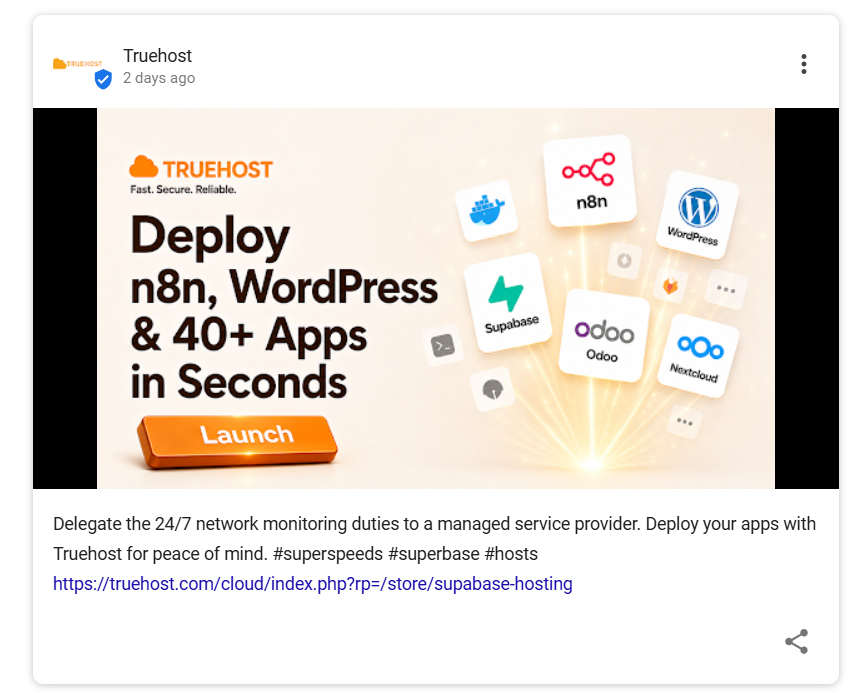
Photos make your profile more useful to customers and provide evidence that the business is active.
Depending on the business, upload:
- Storefront photos
- Office photos
- Team photos
- Completed projects
- Products
- Equipment
- Before-and-after project photos
- Customer-facing areas
A plumber might upload completed installations.
A restaurant might upload meals and its dining area.
A driving school might upload its vehicles and training facilities.
A salon or kinyozi might showcase completed work.
Don’t treat your Google Business Profile as something you create once and forget. This is why OLITT and Truehost has Localforce to automate uploading of posts and photos.
8. Create Content Around Local Customer Questions
Your website can strengthen your local authority by answering questions your customers repeatedly ask.
A Nairobi plumber might publish:
How much does a plumber cost in Nairobi?
A driving school might answer:
How much does driving school cost in Kenya?
A moving company could publish:
How much does it cost to move houses in Nairobi?
These pages can attract organic Google traffic while reinforcing what your company does and where it operates.
9. Earn Local Links and Mentions
Prominence matters.
If respected websites, organizations, directories, media publications and industry sources mention your business, those references can strengthen your online authority.
Look for legitimate opportunities through:
- Professional associations
- Suppliers
- Local publications
- Community organizations
- Industry directories
- Partnerships
- Events
- Sponsorships
A link from a relevant Kenyan website can be considerably more meaningful than dozens of random low-quality links.
10. Keep Your Google Business Profile Active
Google Maps optimization isn’t a one-day exercise.
Businesses change.
Competitors improve.
Reviews accumulate.
Search behaviour changes.
Continue updating your profile with accurate hours, services, photographs and other relevant information.
Monitor your rankings and compare your presence with competitors.
For the complete ranking-factor breakdown, read:
Latest Google Maps Ranking Factors Explained
And for the full step-by-step process:
Can You Get Your Business Into Google’s Top 3 Map Results?
There is no legitimate button you can press to guarantee the #1 Google Maps position.
But you can systematically improve the signals Google uses to determine which businesses deserve greater visibility.
The formula is straightforward:
Better profile + stronger reviews + accurate information + locally relevant website + stronger authority + continuous optimization.
The businesses that execute these fundamentals consistently give themselves a much stronger chance of appearing when nearby customers search.
Find Out What’s Stopping Your Business From Ranking
Don’t start by guessing.
Start by finding the gaps in your current Google Maps presence.
Use Truehost’s free Local SEO audit to see where your business stands and what may need improvement. For deep understanding on SEO, read visit Truehost Kenya local SEO Product page.
It takes only a few minutes to get started.