 Domain SearchInstantly check and register your preferred domain name
 Web Hosting
 cPanel HostingHosting powered by cPanel (Most user friendly)
 WordPress HostingHost your WordPress website with fast, secure, and affordable WordPress hosting in Kenya.
 KE Domains
 Reseller HostingStart your own hosting business without tech hustles
 Windows HostingOptimized for Windows-based applications and sites.
 Free Domain
 Affiliate ProgramEarn commissions by referring customers to our platforms
 Free HostingTest our SSD Hosting for free, for life (1GB storage)
 Domain TransferMove your domain to us with zero downtime and full control
 All DomainsBrowse and register domain extensions from around the world
 .Com Domain
 WhoisLook up domain ownership, expiry dates, and registrar information
 VPS Hosting
 Managed VPSNon techy? Opt for fully managed VPS server
 Dedicated ServersEnjoy unmatched power and control with your own physical server.
 Website Builder
 Online Store BuilderLaunch a professional e-commerce store without writing code.
 Web Design ServiceGet a custom-designed website tailored to your brand and goals. From just KES 15,600
 BlogRead our guides on web hosting, online business, digital marketing, and more
 SupportOur support guides cover everything you need to know about our services
 ContactContact us via chat or email
Affiliate programs are built on a simple idea: you recommend someone else’s product or service and earn a commission when it works.
You don’t need to create your own product, manage inventory, handle customer complaints, or deal with shipping.
You simply promote, while the business takes care of everything else.
In this piece, I’m going to answer the question, how do affiliate programs work?
We’ll break down the key players, how tracking works with cookies and attribution, the different commission models, and proven channels for promoting offers.
You’ll also learn how to earn with Truehost’s affiliate program, including strong opportunities in domain registration for the Kenyan market.
How Affiliate Programs Operate
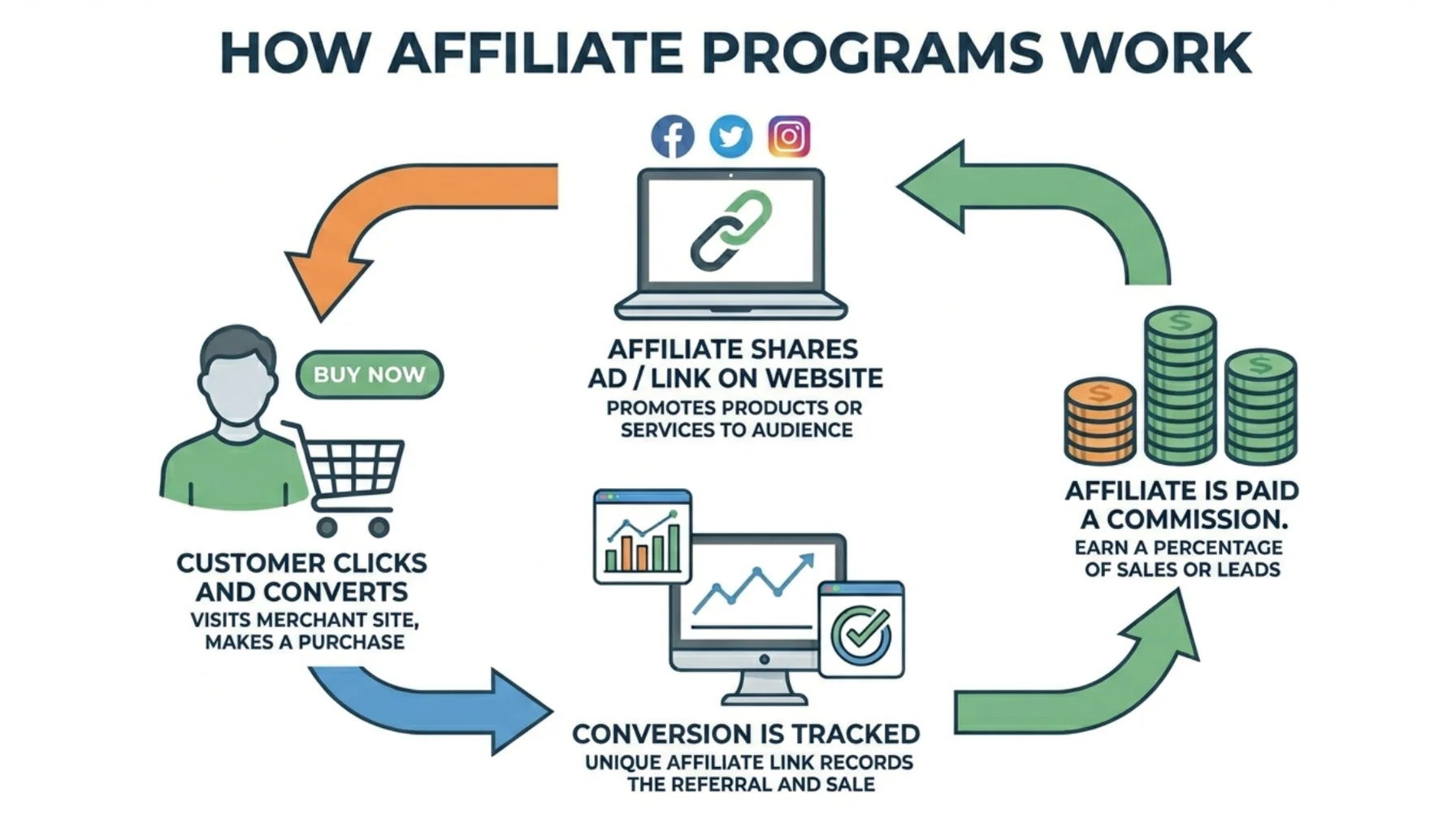
Affiliate transactions rely on a simple yet powerful three-player ecosystem.
At its core, everything works together to keep tracking accurate and payouts reliable for you, the business, and the customer.
The Three Key Players
Every affiliate transaction involves three clear roles working in sync:
- The merchant (seller or product creator) develops and sells the product or service. They handle fulfillment, manage customer support, and run all backend operations.
- The affiliate (promoter or marketer) creates content or campaigns to recommend the offer. You use personalized tracking links to send people to the product.
- The buyer (consumer) discovers the product through your content, clicks your link, and completes the desired action. That action triggers your commission.
Once a purchase or qualifying action happens within the cookie window, typically 30–90 days, the system automatically tracks it and processes your payment.
How Tracking Works Step by Step
You share your unique affiliate link. From there, everything runs quietly in the background:
- Someone clicks your affiliate link
- A tracking cookie is placed in their browser
- The cookie stores your affiliate ID and the exact click time
- The attribution window (cookie duration) determines how long your referral stays active
- You earn a commission if the user completes a purchase or required action within that window
Most cookie durations sit around 30 days. Some programs go as short as 24 hours, while others offer lifetime tracking.
A longer window gives your recommendation more time to convert especially for products people need to research before buying.
Most programs also follow the last-click rule. This means the most recent affiliate link clicked gets full credit for the sale.
The Role of Affiliate Networks
Many affiliate programs run through established networks like ShareASale, CJ Affiliate, and Amazon Associates.
These platforms handle the technical side so you don’t have to.
They take care of:
- Accurate tracking
- Clear reporting dashboards
- Fraud prevention
- Timely payments
They act as the reliable middle layer so you focus on creating great content while the merchant handles the product and the buyer enjoys a smooth experience.
Once a qualifying action happens, the system automatically attributes the sale and processes your commission.
You simply check your dashboard to see earnings grow.
This transparent process builds trust. You know exactly how and when you earn, while merchants gain sales without upfront advertising costs.
Types of Affiliate Marketing: Your Level of Connection to the Products
Affiliate marketing isn’t one-size-fits-all. Your approach depends on how closely you connect with the products you promote.
a)Unattached
You promote products without personal experience or deep expertise. This often involves paid ads or simple link placements, with little trust built around the product itself.
b) Related
You operate within a niche you understand. While you may not have used every product, your content aligns with your audience’s interests and expectations.
c) Involved
You have hands-on experience with the product. You recommend it based on real results and share honest insights. This approach builds stronger trust and typically leads to higher conversions.
How Affiliate Marketers Earn Money
Affiliate income depends on the actions your audience takes. Here are the four main ways you get paid:
1) Pay Per Sale (PPS)
The most common model. You earn when someone makes a purchase.
- 5–15% for physical products
- 20–50%+ for digital products
- $100–$1,000+ for high-ticket or recurring offers
2) Pay Per Lead (PPL)
You earn when someone becomes a lead like signing up for a free trial, filling out a form, or requesting a quote. This works especially well for SaaS, B2B, and service-based offers.
3) Pay Per Click (PPC)
You earn a small amount per click (usually $0.05–$2). This model is less common today due to fraud risks and stricter rules.
4) Pay Per Install (PPI)
You earn when someone downloads and installs an app or software typically $0.50–$5+, depending on the product and region.
To track performance, affiliates rely on key metrics:
- CPA (Cost Per Acquisition): These are earnings per completed action
- EPC (Earnings Per Click): These are based on average revenue per 100 clicks
Affiliate marketing offers serious earning potential. Top performers reach six or even seven figures annually.
Check out our article on how to become an affiliate marketer.
What to Expect at Different Levels
Beginners:
- Typically earn $0–$1,000/month in the first year.
- Focus on learning the ropes, building an audience, and testing offers.
Intermediate:
- Earnings jump to around $8,000/month (~$96,000/year).
- By now, you’re refining traffic sources, improving conversions, and scaling campaigns.
Advanced:
- Top affiliates in strong niches like finance, e-learning, and health can make $10,000–$15,000+ per month.
- Consistency, smart niche selection, and high-converting offers are key.
Factors That Drive Growth
- Traffic: More visitors = more potential sales.
- Conversions: Optimizing for clicks and purchases multiplies your income.
- Niche Selection: Some niches are more profitable than others.
- Consistency: Regular content, campaigns, and testing pay off over time.
Proven Channels for Promoting Affiliate Offers
Successful affiliates distribute their links across multiple platforms to maximize reach and conversions:
1) Blogging and SEO-Driven Content Sites
Blogging is a long-term traffic powerhouse. Evergreen articles and guides continue generating visitors for years, thanks to strong SEO.
How it works:
- Create helpful, in-depth content that solves real problems for your audience.
- Optimize posts for search engines to attract organic traffic.
- Naturally include your affiliate links within recommendations.
Example:
- “How to Register an Affordable .co.ke Domain Name in Kenya”
- “Best Web Hosting Options for Kenyan Businesses”
Readers arrive with high purchase intent, which naturally boosts conversions. Your blog keeps working even while you sleep.
2) Social Media Platforms
Social media lets you meet audiences where they spend time. Tailor your strategy to each platform for the best engagement.
Proven approaches:
- Instagram: Use visuals, reels, stories, and swipe-up links. Lifestyle content and product tips work best.
- TikTok: Short demos, before-and-afters, and trend-driven content grab attention.
- Facebook: Build community in groups, spark discussions, and use live sessions for deeper connections.
- Pinterest: Idea pins, visual boards, and gift guides attract buyers looking to discover products.
Tips: Post consistently, include clear calls to action, and always disclose affiliate links to maintain trust.
3) YouTube and Video Platforms
Video builds trust and helps people see products in action.
Effective formats:
- Comparisons, unboxings, and long-term reviews
- ‘Best of’ roundups
- Tutorials and practical guides
Affiliate integration: Place links in video descriptions, mention them in the content, and pin key links in comments. Over time, these videos rank in search and generate ongoing traffic.
4) Email Marketing
Email gives you direct access to your audience, no algorithms to limit reach.
Strategies:
- Welcome sequences for new subscribers
- Curated newsletters and seasonal campaigns
- Product launch alerts
Pro tip: Segment your list by interests to send targeted recommendations. Subscribers who trust you are far more likely to convert.
5) Podcasting
Podcasts create authentic, ongoing connections with listeners.
Promotion methods:
- Pre-roll, mid-roll, or post-roll mentions
- Dedicated episodes or interviews
- Q&A sessions featuring products
Include affiliate links in show notes and mention any special discounts during episodes. Storytelling and trust make this channel especially powerful.
6) High-Traffic Media and Review Websites
Large media and review sites help you reach established audiences.
Opportunities:
- Banner placements and embedded links
- Guest posts and paid product features
- Reviews on trusted editorial platforms
This works best after you’ve built a content portfolio elsewhere it amplifies your credibility and reach.
Diversifying across these channels ensures stability. If one platform changes its rules, others continue to drive results.
Start with one or two that match your strengths, then expand as your audience grows.
If you are interested in learning the best-paying web hosting affiliate programs, check our guide.
Get Started with Truehost
Truehost offers an affiliate program designed for creators in Kenya and across East Africa.
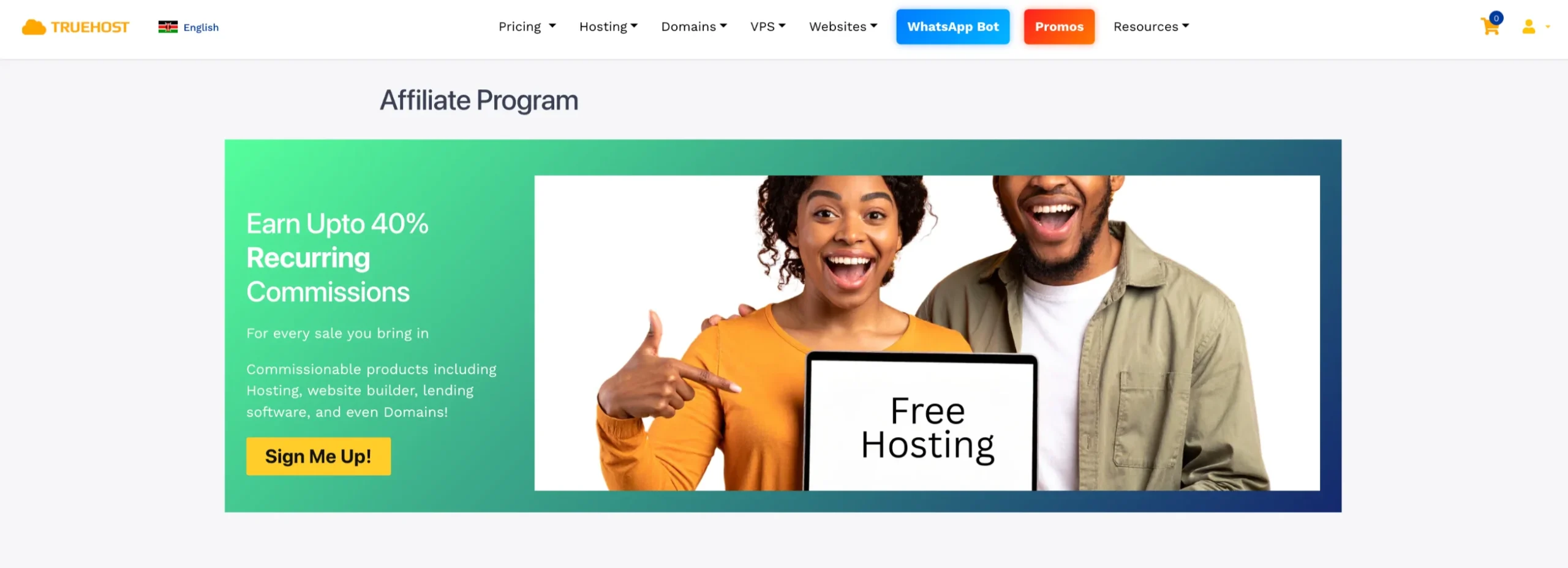
You earn commissions by promoting digital tools people already need, like web hosting, domain registration, website builders, and online stores.
Some products offer commissions of up to 40%, and hosting plans can generate recurring income as long as the customer remains active.
Getting started is simple:
- Sign up for free
- Activate your account
- Get your unique referral links
Domain registration is one of the easiest entry points.
You help individuals and businesses secure their domains while earning commissions in the process.
Ready to turn your recommendations into income? Register a domain with us, start your blog, and become a Truehost affiliate too.
Start promoting today and build a steady stream of commissions that grow with your audience.
Visit our affiliate program now and claim your links.
See also our article on how to make money blogging in Kenya.