 Domain SearchInstantly check and register your preferred domain name
 Web Hosting
 cPanel HostingHosting powered by cPanel (Most user friendly)
 WordPress HostingHost your WordPress website with fast, secure, and affordable WordPress hosting in Kenya.
 KE Domains
 Reseller HostingStart your own hosting business without tech hustles
 Windows HostingOptimized for Windows-based applications and sites.
 Free Domain
 Affiliate ProgramEarn commissions by referring customers to our platforms
 Free HostingTest our SSD Hosting for free, for life (1GB storage)
 Domain TransferMove your domain to us with zero downtime and full control
 All DomainsBrowse and register domain extensions from around the world
 .Com Domain
 WhoisLook up domain ownership, expiry dates, and registrar information
 VPS Hosting
 Managed VPSNon techy? Opt for fully managed VPS server
 Dedicated ServersEnjoy unmatched power and control with your own physical server.
 Website Builder
 Online Store BuilderLaunch a professional e-commerce store without writing code.
 Web Design ServiceGet a custom-designed website tailored to your brand and goals. From just KES 15,600
 BlogRead our guides on web hosting, online business, digital marketing, and more
 SupportOur support guides cover everything you need to know about our services
 ContactContact us via chat or email
You have a blog. Or you want to start one.
Either way, you’ve probably asked yourself the same question: Can this thing make me money?
Short answer: Yes.
Long answer: It depends on what you do. Some Kenyan bloggers earn KSh 100,000+ per month. Others have been writing for years and still can’t pay for their own hosting.
What’s the difference?
It’s not talent. It’s not luck. It’s knowing the right ways to monetize.
This is not a get-rich-quick guide. I have insights from bloggers and digital marketers. I gathered 9 proven ways to make money blogging in Kenya.
No hype. Just real methods: putting food on the table and paying rent into the bank.
Before We Get to Making Money…
If you are serious about blogging in Kenya, you need a .co.ke domain. It speaks volumes to your audience and assures them you understand Kenyan pain points.
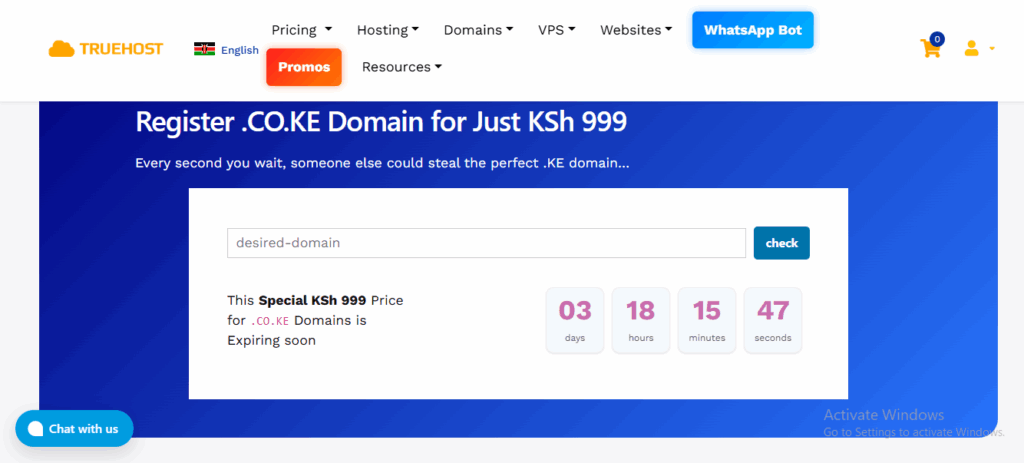
At Truehost, a .co.ke domain costs KSh 999 for new registration, KSh 1,200 for renewal, and KSh 1,000 to transfer an existing domain.
For hosting, do not overcomplicate it. Start with the WebHosting Starter plan. You can get it for KSh 188 per month when billed triennially, or KSh 500 month-to-month if you prefer flexibility.
This plan supports up to 10 websites, handles 25,000 monthly visitors, includes free SSL and daily backups, and includes unlimited email accounts. Everything you need to build a professional blog that gets you paid.
So, why insist on having the best hosting and domain registrar in Kenya? Because fast-loading sites convert visitors into buyers.
Truehost has data centers in Nairobi, so your Kenyan audience experiences sub-3-second load times even during peak Safaricom traffic. That is the speed you can bank on.
Now, let’s get into the money.
9 Proven Ways to Make Money Blogging in Kenya
You’ve probably heard of successful bloggers in Kenya, such as Jackson Biko, who earn six figures and thought, “How can i get there?”
I’ll give you 9 proven ways to start:
1) Truehost Affiliate Program
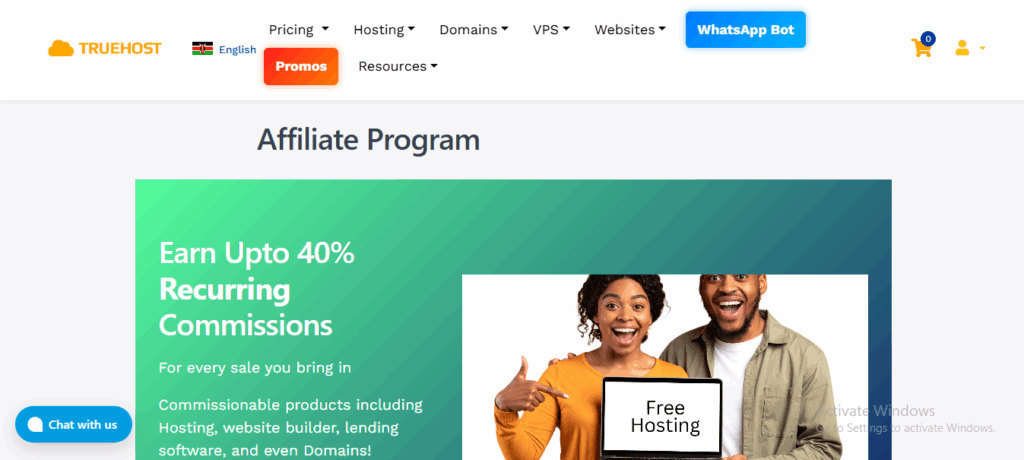
We’ve seen how you need reliable hoisting to get your website up. Now, someone starting a blog, a chama wanting a website, or a small business opening an online shop needs hosting.
And every single time someone buys hosting through your link, you earn commission.
Let me plug you,
The Truehost Affiliate Program pays you up to 40% in recurring commissions. Notice the word recurring. This is not a one-time payment.
When your referral renews their hosting next year, you earn again. And the year after that.
Let me highlight some of the real numbers in a simple way:
| Product | Commission rate | Example price plan | You earn |
| Web hosting | 25% | Ksh 2500 | Ksh 625 |
| VPS hosting | 25% | Ksh 7560 | Ksh 1890 |
| Website builder | 40% | Ksh 2550 | Ksh 1020 |
| Online shop | 40% | Ksh 5500 | Ksh 2200 |
An example of a success case is Michael, who started as a web designer. He now earns more from Truehost referrals than from his actual design work.
You do it this way:
Sign up at Truehost’s affiliate registration page. It is free. Once logged in, click the Affiliates tab on your dashboard and activate your account. You will get a unique tracking link.
Share this link on your blog posts about starting a website, in YouTube video descriptions, on WhatsApp groups, or even on Twitter. When someone clicks and buys, you earn.
Expert tip: Write a blog post titled “How I Started My Blog in Kenya” or “Best Web Hosting for Kenyan Small Businesses.” Include your affiliate link naturally within the content. This converts much better than a random link in your sidebar.
The payout threshold is KSh 3,500, and payments are sent via M-Pesa or bank transfer. No forex headaches. No waiting months for international checks.
2) Display Advertising

You have seen those banner ads on websites. They annoy some people, but they pay bills.
Google AdSense is still the most accessible advertising program for Kenyan bloggers. However, the game has changed.
You cannot just slap ads on a poorly written blog with ten visitors a day and expect results.
What you need:
To make real money from display ads, you need traffic. Consistent traffic. At least 10,000 page views per month is where you start seeing meaningful figures.
How much can you earn?
A Kenyan blog earns KSh 13-39 per 1000 page views, depending on the niche. To achieve the desired 6-figure monthly earnings from ads alone, you need millions of page views.
Apart from AdSense:
Kenyan bloggers are also exploring alternatives. Ezoic and Mediavine are popular but have stricter traffic requirements.
For smaller sites, local ad networks are emerging, though they still lag behind global options in pay rates.
3) Affiliate Marketing Besides Hosting
While hosting affiliate programs offers the highest recurring commissions, there are dozens of other affiliate opportunities for Kenyan bloggers.
For instance,
Jumia Affiliate Program pays a 2%-13% commission, depending on the product category. Electronics pay lower rates; fashion and beauty pay higher rates.
A fashion blogger can write a post about “Top 10 Affordable Dinner Dresses in Kenya,” link to Jumia, and earn every time a reader buys. The key is relevance. Do not promote pressure cookers on a smartphone blog.
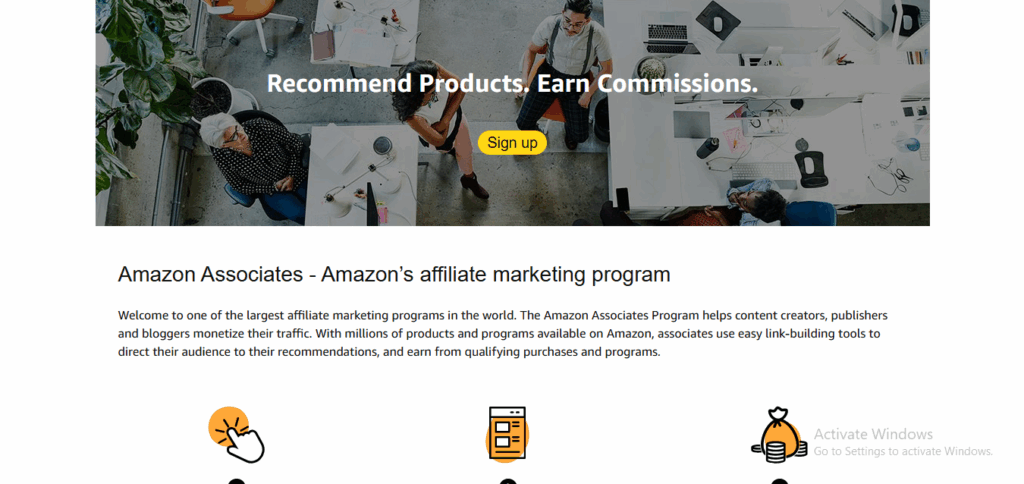
If you want to earn some dollars, try Amazon Associates
Amazon still works for Kenyans, but you need a Payoneer account to receive payments. Commissions are modest (1% to 10%), but the variety of products means there is something for every niche.
How to succeed at affiliate marketing:
- Do not be the person who just dumps links.
- Write genuine reviews.
- Compare products.
- Explain why you recommend something.
- Kenyan readers are smart. They know when you are just chasing a commission versus when you actually used the product.
4) Selling Digital Products
Here is something many Kenyan bloggers overlook. You do not always need to promote other people’s products. You can create your own.
Digital products have zero manufacturing cost, zero shipping cost, and infinite inventory. You create it once, sell it a thousand times.
What sells well in Kenya?
- E-books
- Templates and planners
- Printable art
- Online courses
You do not need a complex e-commerce setup. Simple tools, such as direct M-Pesa payments with manual email delivery, work well for beginners.
Also, do not undervalue your work. KSh 200 for an e-book feels cheap, but you need to sell a lot. KSh 800 to KSh 1,500 is a sweet spot for digital guides.
5) Sponsored Content and Brand Collaborations
When your blog has an established audience, brands will pay you to write about them.
This is not affiliate marketing. With sponsored content, you get paid upfront regardless of whether anyone buys. You are essentially renting your platform to a brand for exposure.
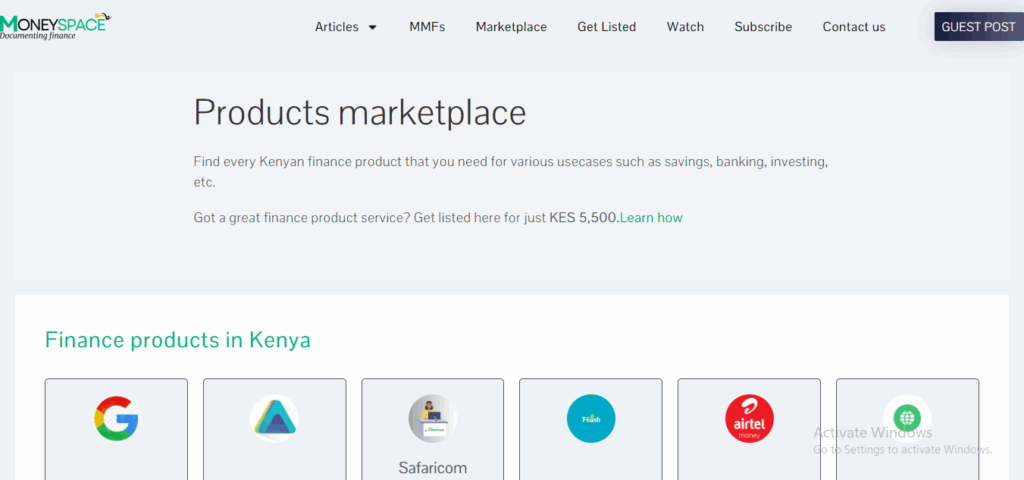
Successful blogs like Moneyspace Ke are even charging for listings. They list finance product services for Ksh 5500.
Who pays?
Banks launching new products, telecom companies, beauty brands, event organizers, hotels, restaurants, and tech companies. Basically, any business that wants to reach your specific audience.
Rates range from Ksh 6,000 to Ksh 25,000 depending on website traffic.
How to get sponsored:
- Do not wait for brands to email you. Create a media kit. This simple PDF introduces your blog, audience demographics, traffic stats, and engagement rates. List your services and prices.
- Pitch brands that align with your content.
6) Freelance Writing Services
Your blog is also your portfolio. When you consistently publish quality content, people notice. They will hire you to write for them.
Who needs freelance writers?
- Corporate websites that need blog content
- Digital marketing agencies managing multiple client blogs
- International publications looking for Kenyan voices
- Other bloggers who hate writing but need content
- How much do freelance writers earn in Kenya?
Freelance writers are paid based on experience and the quality of their pitch.
Payment can be per article (KSh 500-KSh 5,000+, depending on length and complexity), or per word (KSh 1-KSh 30) for premium clients.
Where to find clients:
- Upwork and Fiverr
- Local Facebook groups
- Medium
- Cold pitching
You can also check out websites that consistently provide leads for clients, such as Sure Media Agency.
7) Paid Memberships and Subscriptions
Some content is too valuable to give away for free.
If you have built a loyal community around your blog, consider a membership model. Readers pay a recurring fee (monthly or yearly) to access premium content.
You can try this for membership models in Kenya:
- Private communities: A WhatsApp group or Telegram channel where members get exclusive advice, networking opportunities, or Q&A sessions with you.
- Premium articles: In-depth guides, case studies, or industry reports that go beyond your regular free content.
- Early access: Members get your content 24 to 48 hours before non-members.
For example, KSh 300-1,000 per month is reasonable for most niches. If you have 100 members paying KSh 500 per month, that is KSh 50,000 in recurring income.
8) Consulting and Coaching
Your blog establishes you as an authority. Authority leads to consulting opportunities.
When you write extensively about a topic, readers begin to see you as an expert. They will pay you for one-on-one advice.
Examples:
- A parenting blogger offering one-hour consultations for new mothers struggling with sleep training.
- A career blogger reviewing CVs and conducting mock interviews.
- A tech blogger advising small businesses on which software tools to adopt.
- A travel blogger creating custom Kenya itineraries for foreign tourists.
How to price consulting:
Hourly rates for Kenyan consultants range from KSh 2,000 to KSh 15,000+, depending on your experience level and niche. Package deals are more effective than pure hourly billing.
9) Selling Physical Products
Yes, through your blog.
Blogs do not have to be purely digital. Your blog can serve as a storefront for physical products.
What can you sell?
- Merchandise: T-shirts, hoodies, mugs with your blog’s logo or catchphrases.
- Handmade crafts: If you blog about DIY or crafts, sell your creations.
- Curated products: A beauty blogger sourcing and selling hard-to-find skincare products.
You do not need a massive inventory. Start small. Pre-orders allow you to gauge demand without tying up capital.
Use Jumia or Kilimall for fulfillment if you do not want to handle shipping yourself.
Also, try Facebook Marketplace and Instagram Shops, which integrate easily with blogs. You can embed product catalogs directly into your site.
Final Take
You don’t need to do everything. Pick one method and start.
The Truehost Affiliate Program is the easiest entry point. No traffic needed. Just share your link. Every sign-up pays you.
But…Your blog needs to be up. A .co.ke domain is KSh 999 at Truehost. Hosting starts at KSh 188/month. Free SSL and daily backups included.
Successful bloggers started exactly where you are. They just launched.
Your turn.