 Domain SearchInstantly check and register your preferred domain name
 Web Hosting
 cPanel HostingHosting powered by cPanel (Most user friendly)
 WordPress HostingHost your WordPress website with fast, secure, and affordable WordPress hosting in Kenya.
 KE Domains
 Reseller HostingStart your own hosting business without tech hustles
 Windows HostingOptimized for Windows-based applications and sites.
 Free Domain
 Affiliate ProgramEarn commissions by referring customers to our platforms
 Free HostingTest our SSD Hosting for free, for life (1GB storage)
 Domain TransferMove your domain to us with zero downtime and full control
 All DomainsBrowse and register domain extensions from around the world
 .Com Domain
 WhoisLook up domain ownership, expiry dates, and registrar information
 VPS Hosting
 Managed VPSNon techy? Opt for fully managed VPS server
 Dedicated ServersEnjoy unmatched power and control with your own physical server.
 Website Builder
 Online Store BuilderLaunch a professional e-commerce store without writing code.
 Web Design ServiceGet a custom-designed website tailored to your brand and goals. From just KES 15,600
 BlogRead our guides on web hosting, online business, digital marketing, and more
 ContactContact us via chat or email

If you already sell online, put your Black Friday and Cyber Monday offers on a dedicated page on your existing domain.
A URL like yourshop.example/black-friday/ gives you one place to send shoppers from WhatsApp, email and ads. It also keeps your usual products and checkout within reach.
A separate domain can earn its keep when you need a short address for print or radio, or when a joint campaign needs an identity of its own. Those are different jobs:
- Use a page on your existing store when it already owns the product, stock, checkout and delivery journey.
- Use a redirect domain when you need a short address for a flyer, poster or radio spot.
- Use a separate storefront only when the campaign needs its own catalogue, checkout and customer support.
The address should shorten the path to payment. It should not make the customer search for the product again.
Follow the customer from the offer to the order
Imagine you run a homeware shop in Nairobi.
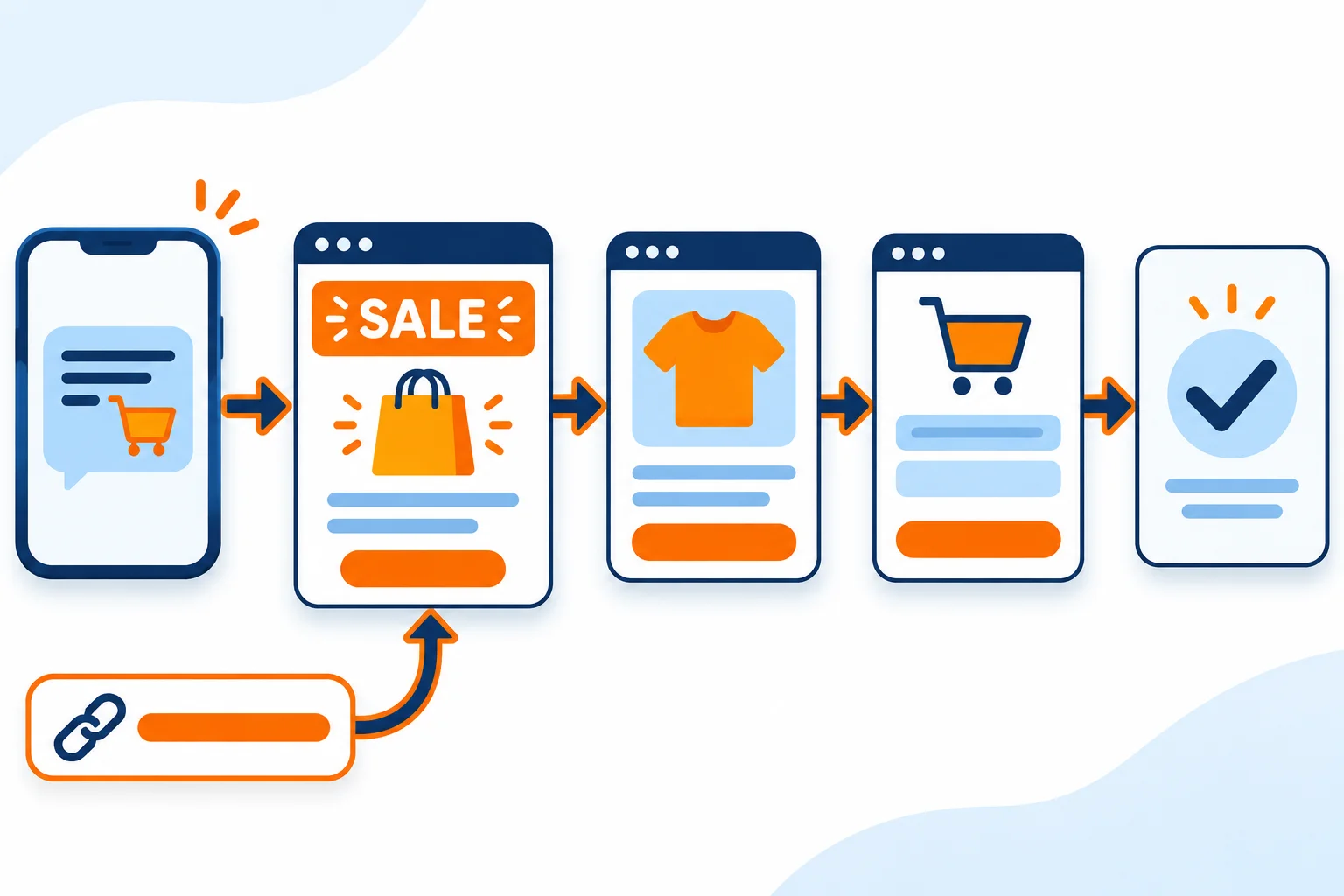
On Friday morning, a customer taps a WhatsApp message offering a discount on a cookware set. A low-friction journey looks like this:
- The sale link opens the exact campaign page.
- The page shows the same product and offer that the message promised.
- The basket keeps the campaign price and shows delivery charges.
- Checkout shows the available payment methods.
- The confirmation tells the customer whether payment went through and what happens next.
Now imagine the same message opens a new campaign site.
She picks the cookware set there, but the buy button sends her to your main store homepage. She has to find the product again and check whether the discount still applies.
The campaign site gave you room for a different design, but the handoff added work for the customer.
The handoff is the deciding factor.
If your store can host the campaign design and take the order in the same journey, put the design inside the shop. If a campaign partner needs to host the page elsewhere, agree where each buy button goes and who fixes a broken product link on sale day.
Choose the address that fits the campaign
| Setup | Example | When it fits | What to check |
|---|---|---|---|
| Sale page on your store | yourshop.example/black-friday/ | Your existing shop handles stock, checkout and delivery. | Products link to the right listing and the campaign price carries through. |
| Campaign subdomain | deals.yourshop.example | A separate platform needs to host the campaign while your store handles orders. | Shoppers can go from the offer to the correct product or basket, and your reporting follows the handoff. |
| Separate domain that redirects | yourshopdeals.example → yourshop.example/black-friday/ | You need a short address people can type after seeing a poster or hearing a radio spot. | The short address opens the intended sale page on mobile. Someone owns the domain and its renewal. |
| Separate storefront | kampanjasale.example | A joint campaign or independent brand needs its own catalogue, checkout and customer support. | Someone owns stock updates, payment reconciliation, fulfilment and returns after the event. |
A subdomain keeps your brand name visible while giving the campaign a distinct address.
If that subdomain sends customers back to your main shop, link to the exact product or offer. A buyer who clicks Shop this deal should arrive somewhere they can act on it.
A forwarding domain solves a narrower problem.
Suppose your flyer has room for a short web address and your existing sale URL is hard to read aloud. Use the short domain on the flyer and point it to the store’s sale page.
Send the direct store link where people can already tap it. If you only want to compare flyer traffic with WhatsApp traffic, use different campaign tags on the same destination.
If you are still naming the shop, review our domain ideas guide before choosing the campaign address. Check spelling and availability through our domain search.
Decide whether the two sales need separate pages
If the same prices and products run continuously from Friday through Monday, keep one page for the campaign and state the deadline in East Africa Time.
If only the offer changes at midnight, you can still keep one page and replace the offer when the next one begins. Customers who reopen Friday’s message on Monday can still find the offer.
If Friday’s sale covers cookware and Cyber Monday has a separate offer on appliances, give each event a stable page when customers need different links or terms.
Make both easy to find from your sale hub. In either setup, link to the page before the event and reuse its address next year. Follow Google’s sale guidance.
Check the handoff before you send the link
Open the exact link your customers will receive on a phone.
Follow it to an order confirmation using your store’s test checkout or an approved test order. Check that the offer price survives the move from the campaign page to the basket.
Also check that buyers can see delivery charges and that the confirmation tells them how to get help.
If a campaign page you control sends shoppers to a separate checkout you also control, verify that your analytics connects the visit to the purchase before launch.
For example, open a tagged campaign link, complete a test order and see whether the purchase appears under the expected campaign.
If you plan to keep several campaign addresses, read our multiple domains guide. If your payment provider handles part of checkout on a domain you cannot tag, check the attribution your store records when customers return. See Google Analytics guidance.
Give old campaign links somewhere useful to go
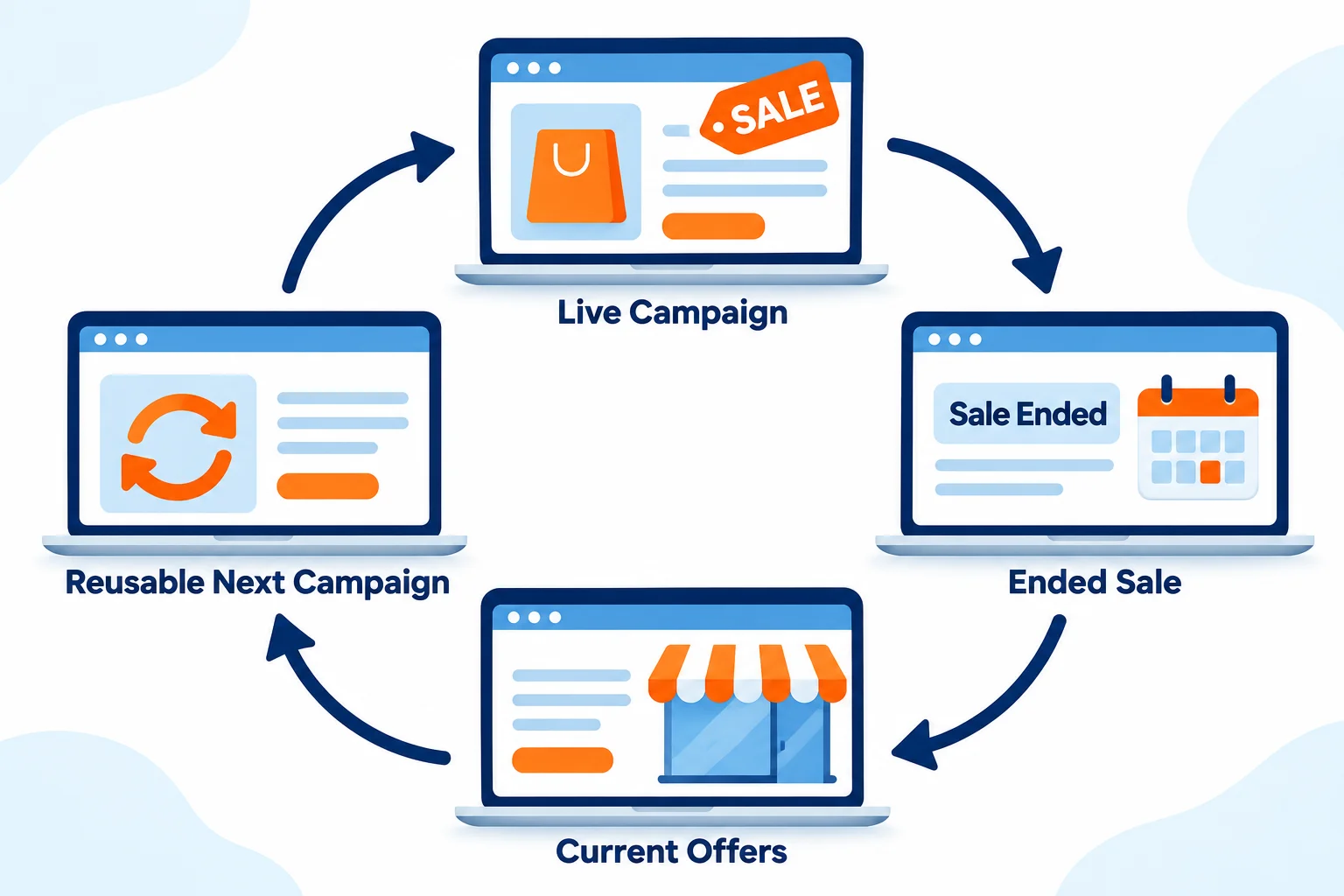
Once the sale ends, remove expired prices, coupon codes and countdowns. Then give the old address a useful next step:
- Tell customers the promotion has ended.
- Point them to current offers or your main store.
- Keep the page available so you can update it for the next sale.
If you printed a separate domain on flyers, keep its redirect working as long as people are likely to use that address.
Put the renewal under a business account and assign someone to manage it. That way the link can keep serving customers even after the campaign team moves on.