 Domain SearchInstantly check and register your preferred domain name
 Web Hosting
 cPanel HostingHosting powered by cPanel (Most user friendly)
 WordPress HostingHost your WordPress website with fast, secure, and affordable WordPress hosting in Kenya.
 KE Domains
 Reseller HostingStart your own hosting business without tech hustles
 Windows HostingOptimized for Windows-based applications and sites.
 Free Domain
 Affiliate ProgramEarn commissions by referring customers to our platforms
 Free HostingTest our SSD Hosting for free, for life (1GB storage)
 Domain TransferMove your domain to us with zero downtime and full control
 All DomainsBrowse and register domain extensions from around the world
 .Com Domain
 WhoisLook up domain ownership, expiry dates, and registrar information
 VPS Hosting
 Managed VPSNon techy? Opt for fully managed VPS server
 Dedicated ServersEnjoy unmatched power and control with your own physical server.
 Website Builder
 Online Store BuilderLaunch a professional e-commerce store without writing code.
 Web Design ServiceGet a custom-designed website tailored to your brand and goals. From just KES 15,600
 BlogRead our guides on web hosting, online business, digital marketing, and more
 SupportOur support guides cover everything you need to know about our services
 ContactContact us via chat or email

Almost everyone in Kenya is getting a website right now, and that shift is opening up a real opportunity.
Small businesses want to be found online, bloggers are publishing more, and e-commerce stores are popping up across every niche. All of them need hosting, and that demand isn’t slowing down anytime soon.
That’s why starting a reseller hosting business in Kenya right now is a real catch.
Instead of building a hosting company from scratch, you’re essentially stepping into the market with a shortcut.
You buy hosting resources in bulk from a provider like Truehost, then package and sell them under your own brand. Also, your customers deal directly with you, while the provider handles the servers, security, and uptime in the background
What makes this model work well in Kenya is how accessible it is. You don’t need to invest in infrastructure or run a data center, and you don’t need advanced technical skills to get started.
Once you begin getting clients, the income becomes recurring since hosting is something people renew regularly.
You also have the advantage of offering local support and faster performance for Kenyan users, which helps build trust.
As for how much you can make, it comes down to your pricing, how many clients you bring in, and how well you keep them. Even with a small number of customers, the recurring nature of hosting can add up steadily over time.
Now, this is how you get started.
Steps to Start a Reseller Hosting Business in Kenya
Step 1: Select a Reliable Reseller Provider
This is where everything begins. The provider you choose will shape your service quality, your reputation, and how easy it is to grow.

Start by looking at the essentials:
1. You want high uptime so your clients’ websites stay online without interruptions.
2. Local servers in Kenya are a big plus because they help websites load faster for Kenyan visitors.
3. Speed also comes down to the tech stack, and SSD storage and LiteSpeed servers make a noticeable difference.
4. Then there’s support. If something goes wrong, you need a team that’s available 24/7 and actually understands the local market.
5. And finally, make sure the provider offers white-label features, so your brand is what your customers see.
There are a few solid options to consider.
Truehost stands out for being locally focused, with competitive pricing and infrastructure built for this market. Other providers like HostAfrica, Asushost, and Hostraha are also in the mix, each with their own strengths.
One thing I can promise is that if you go with Truehost, you’re getting a setup designed for resellers from the ground up.
Features like SSD storage, LiteSpeed performance, Immunify security, and JetBackup are already set to help keep your clients’ sites fast and secure. You also get private nameservers, which means your business looks fully independent from day one.
Take your time here. A strong provider makes everything else easier, from sales and support to long-term growth.
Step 2: Choose the Right Reseller Hosting Plan
Once you’ve settled on a provider, the next move is picking a plan that matches where you are right now and not where you hope to be months down the line.
At Truehost, we have a few clear starting points.
The Bronze plan goes for about Ksh 1,500 per month and gives you up to 20 cPanel accounts, unlimited bandwidth, private nameservers, and tools like Softaculous to make website setup easy for your clients.
It’s a solid entry point if you’re just getting your first customers.
If you already have some traction or want a bit more room, the Silver plan ranges between Ksh 3,000 and 3,750 per month. That bumps you up to around 50 accounts and often includes extras like domain reseller automation, which can save you time as you grow.
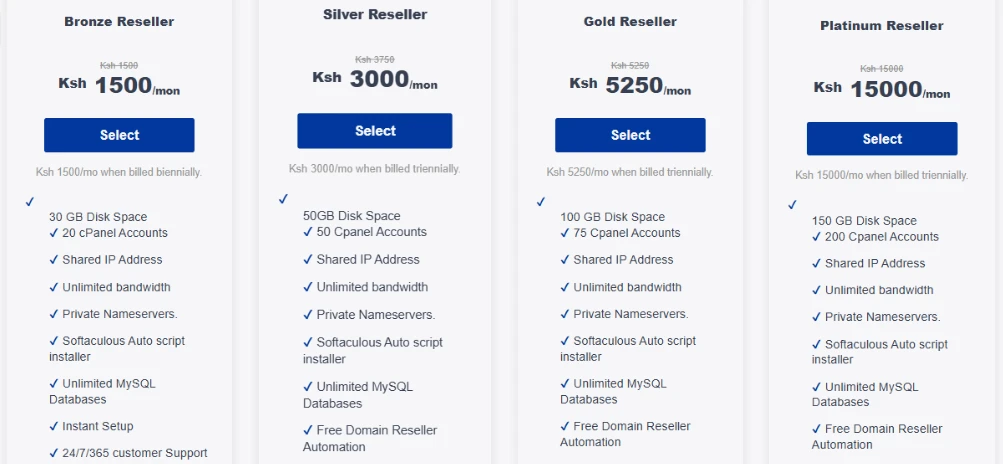
Beyond that, there are Gold and Platinum plans designed for scaling. These can support anywhere from 75 to 200 accounts, which is useful once your client base starts expanding consistently.
Most plans come with discounts if you commit to longer billing periods, and setup is usually instant, so you can get started without delays.
A simple way to approach this: start small, get a few clients in, then upgrade as needed. That way, you’re not paying for capacity you’re not using yet, and your costs stay aligned with your growth.
Step 3: Set Up Your Brand and Website
Now you’re moving from setup to actually building a business people can recognize and trust.
1) Start with your niche.
You don’t need to serve everyone. In fact, it’s easier to grow when you’re clear about who you’re helping.
You can focus on specific groups, like local small businesses, web designers who want to bundle hosting with their projects, bloggers, e-commerce stores, or even churches and NGOs.
2) Customize packages accordingly
Once you’ve picked your audience, shape your packages around what they actually need.
A small business might care about professional email accounts and reliability. A blogger may want a simple WordPress setup. An online store will care more about speed and uptime.
When your offers match their real needs, it becomes much easier to sell and to keep customers long-term.
It also helps to write down a simple plan. Nothing complicated. Just outline who you’re targeting, what you’re offering, and how you plan to price it. That clarity will guide your decisions as you grow.
3) Register a domain for your website
Next, set up your brand.
Register a domain name that reflects your business, something clean and easy to remember.
A .co.ke domain often builds local trust quickly.
4) Create a professional site
Then create a simple, professional website where people can see your hosting packages and sign up without confusion.
If you’re using Truehost, you can set up private nameservers from your control panel. This is what makes your service fully white-label, so everything appears under your brand, not the provider behind the scenes.
5) Use WHMCS for automated billing, client management, and provisioning
To keep things running smoothly, tools like WHMCS are worth setting up early.
It handles billing, client accounts, and automatic provisioning, so once a customer signs up, their hosting can be created without manual work.
At this point, you’re no longer just preparing; you’re ready to start bringing in clients.
Step 4: Customize Hosting Packages
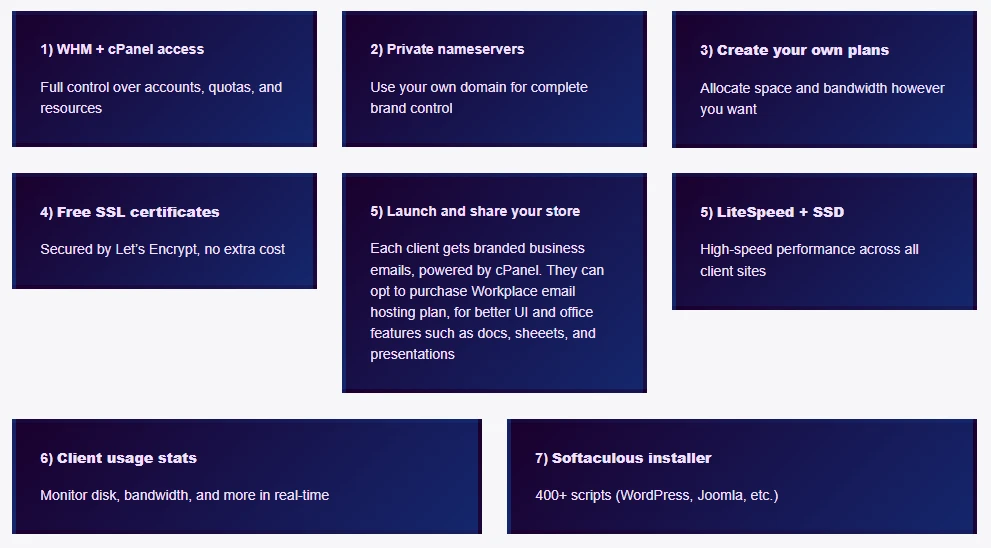
Once your reseller plan is active, you’ll get access to Web Host Manager (WHM). This is where you shape what you’re actually selling.
Inside WHM, you can create your own hosting packages from scratch.
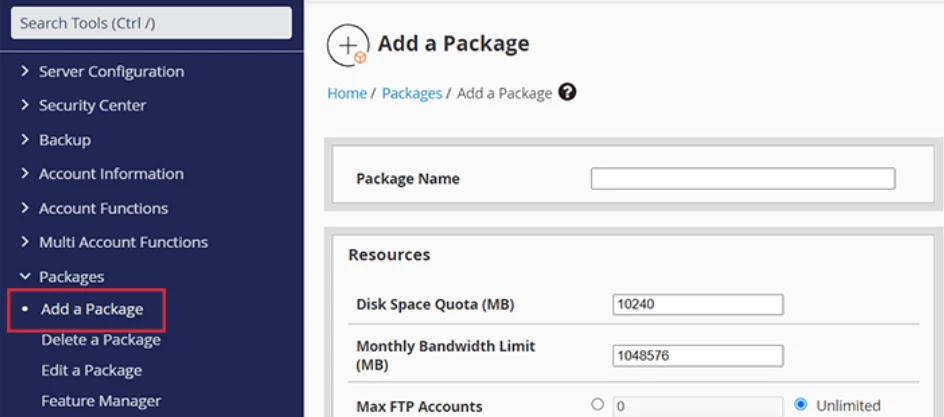
Give them names that fit your brand, something like Starter, Business, and Pro, or even Bronze, Silver, and Gold.
Then define what each plan includes: disk space, bandwidth, number of websites, email accounts, and databases.
You’re in full control here, so you can adjust things as you learn what your clients prefer. Most people appreciate simple, clear options rather than overly complex plans.
To make your packages more appealing, include extras that add real value. Free SSL certificates (like Let’s Encrypt) are a must.
You can also offer email hosting and tools like Softaculous, which lets users install over 400 apps, such as WordPress, in just a few clicks. Speed also plays a big role, so if your provider supports LiteSpeed, that’s another strong selling point.
The goal is to create packages that feel complete and easy to choose from.
Step 5: Set Pricing and Payment Methods
Now it’s time to put a price on your services and make it easy for people to pay you.
Start by finding a balance. Your prices should be competitive enough to attract customers but still leave you with a healthy margin.
Look at what other resellers in Kenya are charging, then position yourself based on the value you’re offering.
When it comes to payments, convenience is everything.
M-Pesa should be your top priority. Most customers prefer it, and having Lipa na M-Pesa integrated can significantly improve conversions. You can also add options like PayPal and bank transfers for flexibility.
Once everything is connected, a customer can sign up, pay, and get their hosting account created without you needing to step in.
At this stage, your business isn’t just set up; it’s ready to operate efficiently as you start bringing in clients.
Step 6: Market Your Business
With everything set up, the focus shifts to getting your first clients and then building steady growth from there.
1. Start with your website. Make sure your hosting packages are clearly laid out, easy to compare, and simple to purchase.
2. From there, put your business where your audience already spends time.
Platforms like Facebook, WhatsApp Business, and Instagram work well for reaching local customers. You can share offers, answer questions, and build trust through consistent engagement.
3. Search visibility also plays a big role. Basic SEO helps people find your site when they’re looking for hosting services.
4. If you have a budget, running ads through Google Ads can bring in targeted traffic quickly.
5. At the same time, don’t overlook simple networking; connecting with web designers, developers, and small agencies can lead to steady referrals.
When you present your service, focus on what local customers actually care about. Reliable uptime, fast loading speeds, responsive support, and easy payments through M-Pesa all make a strong difference.
You can also bundle services; offering hosting together with web design or domain registration often makes it easier for clients to say yes.
As your client base grows, a few tools can make management easier.
Monitoring tools help you keep track of uptime and performance, while communication platforms like Slack or email support systems help you stay responsive without getting overwhelmed.
Turn Reseller Hosting Into a Real Income Stream
At this point, you’ve got a clear path from setup to getting clients.
The model is simple, but it works, especially when you stay consistent and focus on delivering a good experience.
If you’re ready to get started, Truehost gives you everything you need to launch quickly: local servers, white-label tools, and support along the way.
Pick a plan that fits your current stage, set up your brand, and start bringing in your first customers.