 Domain SearchInstantly check and register your preferred domain name
 Web Hosting
 cPanel HostingHosting powered by cPanel (Most user friendly)
 KE Domains
 Reseller HostingStart your own hosting business without tech hustles
 Windows HostingOptimized for Windows-based applications and sites.
 Free Domain
 Affiliate ProgramEarn commissions by referring customers to our platforms
 Free HostingTest our SSD Hosting for free, for life (1GB storage)
 Domain TransferMove your domain to us with zero downtime and full control
 All DomainsBrowse and register domain extensions from around the world
 .Com Domain
 WhoisLook up domain ownership, expiry dates, and registrar information
 VPS Hosting
 Managed VPSNon techy? Opt for fully managed VPS server
 Dedicated ServersEnjoy unmatched power and control with your own physical server.
 Website Builder
 Online Store BuilderLaunch a professional e-commerce store without writing code.
 Web Design ServiceGet a custom-designed website tailored to your brand and goals. From just KES 15,600
 BlogRead our guides on web hosting, online business, digital marketing, and more
 SupportOur support guides cover everything you need to know about our services
 ContactContact us via chat or email
Web hosting uptime is simply the percentage of time your website stays online, working properly, and accessible to visitors.
When you’re running an online shop, even a short outage can mean missed sales, frustrated customers, and lost trust.
To be honest, nothing is more frustrating than clicking on a website and… it just won’t load. You refresh, still nothing. You check your internet, and it’s fine.
And most of the time, the problem comes down to a downtime episode.
But, given that your website should be ready whenever your customers are, so how much downtime is actually okay?
Why do some hosting companies promise 99.9% uptime while others go even higher? And does that small difference really matter?
To answer all that, I’ll walk you through everything you need to know about web hosting uptime.
We will look at:
- What web hosting uptime really means
- Why it matters for businesses in Kenya
- How it’s calculated
- What can cause downtime
- How you can monitor it yourself
By the time you’re done reading, you’ll feel confident knowing exactly what to look for when choosing a hosting provider.
How is Web Hosting Uptime Applied?
Web hosting uptime tells you how often your website is live and reachable.
It’s shown as a percentage over a specific period, usually a month or a year. The higher the percentage, the more consistently your site stays online.
How to Calculate Web Hosting Uptime

Here’s the basic formula used to calculate it:
Uptime % = (Total time in period – Downtime) / Total time in period × 100
Let’s put real numbers to that.
A 30-day month has 43,200 minutes. If your website is down for a total of 43 minutes during that time, the calculation looks like this:
(43,200 – 43) / 43,200 × 100 = 99.9% uptime
That small 0.1% represents a total of 43 minutes your visitors couldn’t access your site.
Downtime is simply any period when your website can’t be reached because of server issues, network problems, or system failures.
Planned maintenance is usually excluded, as long as your hosting provider informs you in advance.
At Truehost, for example, we always give notice before scheduled maintenance so you’re not caught off guard.
Different Web Hosting Uptime Percentages
Now let’s talk about what those percentages actually mean in real life:
- 99.9% (three nines) – About 43 minutes of downtime per month, or roughly 8 hours 46 minutes per year. This is a common standard for quality shared hosting.
- 99.95% – Around 21 minutes of downtime per month.
- 99.99% (four nines) – Roughly 4.3 minutes per month.
- 99.999% (five nines) – About 5 minutes per year. This level is usually reserved for mission-critical systems.
You’ll rarely see a true 100% uptime guarantee.
In theory it sounds perfect, but in practice, even the most advanced infrastructure can experience occasional issues.
That’s why reputable providers rely on Service Level Agreements (SLAs) and independent monitoring tools like UptimeRobot to track and verify performance.
So, when you see an uptime percentage, you’re literally looking at how reliable your website will be day after day, and how often your visitors will actually be able to reach you.
Why is Web Hosting Uptime Vital for Your Website and Business
Uptime is more than just a technical number tucked away on a hosting page. It affects your sales, your visibility, and the way customers feel about your brand.
When your site goes down, a few things happen almost immediately.
1. Customers leave.
Online visitors are impatient. If your site doesn’t load, they move on often straight to a competitor.
In Kenya, where many people browse on mobile and deal with inconsistent connections, even a short outage feels like a major inconvenience.
2. You lose revenue.
If you run an e-commerce store or offer services online, every minute offline can mean missed orders.
This hurts even more during peak evening hours or while running promotions.
3. Your SEO can suffer.
Search engines like Google track website reliability. If your site is frequently unavailable, rankings can drop.
That makes it harder for someone searching “best shoes in Nairobi” to find your business.
4. Trust takes a hit.
An error page leaves a lasting impression.
Visitors may start questioning how dependable your business really is, and once trust is shaken, it’s not easy to rebuild.
For Kenyan businesses, uptime carries even more weight.
Power fluctuations, regional connectivity challenges, and global routing delays can all amplify downtime issues, especially if your server is hosted far outside East Africa.
Hosting closer to your audience reduces latency and limits external disruptions, which translates into faster loading speeds and more consistent availability.
What Affects Web Hosting Uptime?
There are several factors that determine how reliable your website will be:

1. Server quality and infrastructure
Outdated hardware, overloaded shared servers, or slower HDD storage increase the risk of crashes.
Modern SSD or NVMe storage performs far better under load.
2. Data center location and redundancy
Servers located in Nairobi reduce latency for Kenyan traffic and avoid long international routing paths.
Reliable data centers also include backup power systems, multiple internet providers, and failover setups to prevent single points of failure.
3. Monitoring and proactive maintenance
Strong hosting providers monitor servers 24/7, fix issues before they escalate, and use tools like load balancers to distribute traffic evenly.
4. Traffic spikes or cyberattacks
Sudden surges in visitors or DDoS attacks can overwhelm poorly configured servers.
5. Software and security management
Outdated software and unpatched vulnerabilities can expose your site to malware, leading to forced downtime.
At Truehost, we address these risks through tracked 99.97% uptime, LiteSpeed servers, SSD storage, anti-DDoS protection, and local Kenyan hosting infrastructure where possible to deliver faster, more stable access across East Africa.
How to Monitor Web Hosting Uptime
It’s good to hear promises about uptime, but it’s even better to verify them yourself.
Luckily, you don’t need technical skills to track your website’s performance. There are simple tools that do the heavy lifting for you.
For example, you can sign up for UptimeRobot (the free plan checks your site every five minutes) or Pingdom.
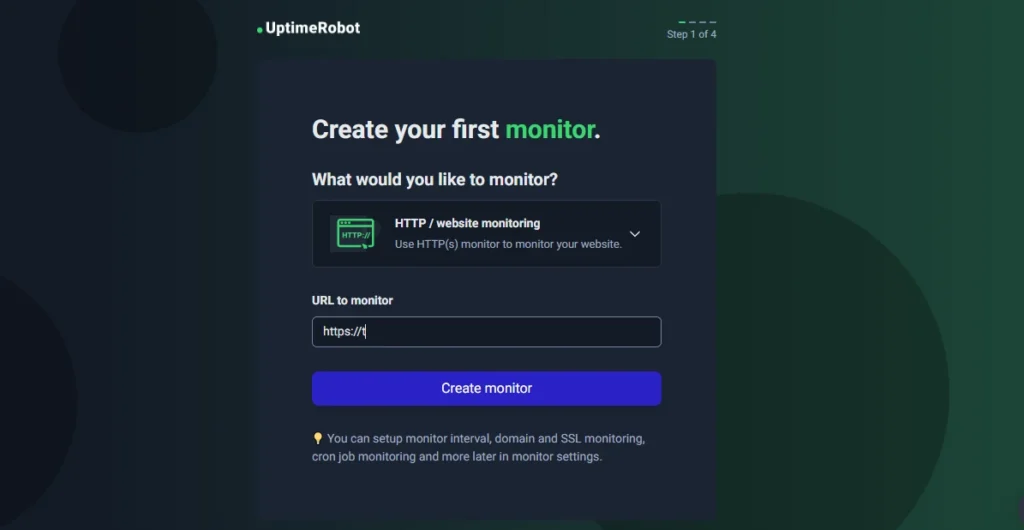
Setup takes just a few minutes:
- Create an account.
- Add your website URL.
- Choose how you want to receive alerts, with email or SMS.
From there, the tool continuously checks your site and logs any downtime.
If your website goes offline, you’ll know almost immediately. At the end of each month, you can review reports and see your actual uptime percentage, not just the advertised one.
Many of our customers use these tools and regularly share their reports with us.
In most cases, the recorded uptime meets or even exceeds the 99.95% guarantee outlined in our terms.
If you start noticing repeated outages, that’s usually a sign it’s time to reassess your hosting provider.
Choosing a Provider with Strong Web Hosting Uptime
When comparing hosting companies, here’s what to look for:
- A clear uptime guarantee – At least 99.9%, ideally higher, backed by a proper SLA.
- Local advantage – Servers in or close to Kenya reduce latency and improve stability for East African visitors.
- Independent verification – Real customer feedback and third-party monitoring results.
- Responsive 24/7 support – Fast help when you need it, ideally in English or Swahili.
At Truehost, our shared hosting plans start from Ksh 188 per month for Starter packages (30GB SSD, unlimited bandwidth, free SSL, and daily backups) and scale up to higher-tier options.
They all come with tracked 99.97% uptime, cPanel access, one-click installs, and LiteSpeed performance.
For growing websites that need more control and resources, our VPS plans start from Ksh 560 per month on global servers or Ksh 1400 per month on Kenyan servers.
They include full root access, SSD storage, and the same reliability standards, ideal when your traffic begins to climb.
Conclusion
High web hosting uptime gives you peace of mind.
Your website stays accessible, your search rankings remain stable, and your customers can rely on you.
If staying online matters to your business, and it does, choose hosting built for consistent performance in Kenya.
Reliable infrastructure, proactive monitoring, and responsive support make all the difference.
We’re here to help you get started and keep your site running smoothly.