 Domain SearchInstantly check and register your preferred domain name
 Web Hosting
 cPanel HostingHosting powered by cPanel (Most user friendly)
 WordPress HostingHost your WordPress website with fast, secure, and affordable WordPress hosting in Kenya.
 KE Domains
 Reseller HostingStart your own hosting business without tech hustles
 Windows HostingOptimized for Windows-based applications and sites.
 Free Domain
 Affiliate ProgramEarn commissions by referring customers to our platforms
 Free HostingTest our SSD Hosting for free, for life (1GB storage)
 Domain TransferMove your domain to us with zero downtime and full control
 All DomainsBrowse and register domain extensions from around the world
 .Com Domain
 WhoisLook up domain ownership, expiry dates, and registrar information
 VPS Hosting
 Managed VPSNon techy? Opt for fully managed VPS server
 Dedicated ServersEnjoy unmatched power and control with your own physical server.
 Website Builder
 Online Store BuilderLaunch a professional e-commerce store without writing code.
 Web Design ServiceGet a custom-designed website tailored to your brand and goals. From just KES 15,600
 BlogRead our guides on web hosting, online business, digital marketing, and more
 SupportOur support guides cover everything you need to know about our services
 ContactContact us via chat or email
Most lists of online business ideas make everything sound easy:
Start dropshipping.
Become an influencer.
Open a blog.
Apply for Google Adsense
Then the article ends before explaining who will pay you, what you need to spend or why the idea should work in the country.
This list takes a stricter approach.
I ranked over 20 online business ideas in Kenya by startup cost, speed to a first sale, visible local demand, ability to begin part-time and potential for repeat revenue.
The best option for most beginners is a productised service: one clear result for one type of customer. Website setup, short-form content production and virtual assistance rank highly because you can sell the service before building a large audience or buying stock.
If you prefer selling products, a small niche store beats a general shop. If you want passive-looking income from affiliate content or digital products, expect a slower start and more work than social media posts usually admit.
Why an Online Business Makes Sense in Kenya in 2026
Kenya already has the infrastructure needed to find customers, receive orders and collect payments online.
The Communications Authority of Kenya reported 84.1 million active mobile subscriptions in the third quarter of the 2025/2026 financial year.
That figure counts SIM subscriptions rather than individual people, but it still shows how central mobile access is to daily business.
Payment is rarely the hardest part though.
The Central Bank of Kenya’s December 2025 bulletin recorded KES 722.53 billion moved through mobile money during that month. Customers can move from a WhatsApp conversation to an M-PESA payment without needing a card.
Physical delivery is also becoming easier.
CA data shows domestic courier parcels increased from 3.44 million in the July-September 2025 quarter to 3.92 million in October-December, a 14.1% rise.
That supports small online shops that do not own delivery vehicles.
The wider economy offers useful clues about demand. The KNBS 2026 Economic Survey says information and communication grew by 4.8% in 2025, wholesale and retail trade by 3.6%, and accommodation and food services by 15.6%.
These numbers do not guarantee that any idea below will work. They show where customers and business activity already exist.
The Best Online Business Ideas at a Glance
The startup ranges below are planning estimates, not supplier quotes. They assume you already have a usable smartphone.
Businesses that require a laptop, specialist training or licensed software may cost more.
Online business idea | Estimated starting budget | Likely first-sale speed | Best customer source |
|---|---|---|---|
Website setup for small businesses | KES 3,000-20,000 | 1-4 weeks | Direct outreach and referrals |
Short-form content service | KES 0-15,000 | 1-3 weeks | Local businesses on Instagram and TikTok |
Niche online shop | KES 10,000-60,000 | 2-6 weeks | WhatsApp, TikTok and search |
Virtual assistant service | KES 0-15,000 | 2-6 weeks | LinkedIn, referrals and freelance platforms |
Digital templates and downloads | KES 0-15,000 | 2-8 weeks | Search, creator communities and social media |
Online tutoring | KES 0-10,000 | 1-4 weeks | Parents, schools and professional groups |
User-generated product videos | KES 0-20,000 | 2-5 weeks | Direct pitches to ecommerce brands |
Remote bookkeeping support | KES 5,000-25,000 | 2-6 weeks | SMEs and professional referrals |
AI and no-code automation setup | KES 5,000-30,000 | 3-8 weeks | SMEs with repetitive admin work |
Specialist freelancing | KES 0-20,000 | 2-8 weeks | Direct pitches and freelance platforms |
Live online classes | KES 0-20,000 | 3-8 weeks | Existing communities and partnerships |
CV, LinkedIn and interview service | KES 0-10,000 | 1-3 weeks | Universities, LinkedIn and referrals |
Affiliate content business | KES 3,000-25,000 | 3-12 months | Google search, email and YouTube |
Niche directory or lead-generation site | KES 5,000-30,000 | 2-6 months | Search and direct supplier recruitment |
Print-on-demand merchandise | KES 5,000-30,000 | 3-8 weeks | Communities, events and social media |
Curated second-hand store | KES 10,000-50,000 | 1-4 weeks | TikTok, Instagram and WhatsApp |
Remote technology support | KES 5,000-25,000 | 1-4 weeks | SMEs, home offices and referrals |
Reseller hosting and website care | KES 10,000-60,000 | 1-3 months | Web-design clients and local SMEs |
1) Set Up Websites for Small Businesses
Many Kenyan businesses do not need a custom application. They need a clean site with services, prices, location, WhatsApp, an enquiry form and a domain they control.
Package that result instead of selling vague “web design.” A useful starter offer might include a five-page site, mobile optimisation, Google Maps, basic search setup and one month of updates.
You can target one trade at a time: photographers in Nairobi, guest houses in Naivasha, lawyers in Kisumu, tour operators in Diani or contractors in Kiambu. A narrow portfolio makes your pitch easier to understand.
How to get the first customer:
a) Find ten businesses with active social pages but weak or missing websites.
b) Create one sample homepage for the best prospect.
c) Send a short message showing the problem and the sample, then offer a fixed scope and delivery date.
The main risk is endless revisions. Use a written scope, collect the client’s content early and limit revision rounds.
If you want to deliver the first version quickly, use our AI Website Builder to create the core pages without starting from a blank screen.
2) Produce Short-Form Content for Local Businesses
Restaurants, salons, gyms, clinics, property agents and online shops need a steady supply of short videos.
Many owners can record footage but do not have time to plan, edit, caption and publish it.
Sell a monthly content package rather than one video. For example, you could plan twelve posts, edit eight short videos, write captions and prepare a simple publishing calendar.
The client supplies product access and approvals.
Start with businesses whose products are visually easy to demonstrate.
A restaurant can show preparation and serving.
A salon can show a transformation.
A property agent can give a 30-second room tour.
Your first portfolio does not need a paying client. Ask one business for permission to create three sample videos, or use your own product to demonstrate filming and editing.
The trap is measuring success only by views. Agree on a business signal such as WhatsApp enquiries, bookings, store visits or catalogue clicks. That turns content from entertainment into a service worth renewing.
And when you need help, our free social media management tool can come in handy.
3) Open a Small Niche Online Shop
A niche store is easier to explain and market than an online supermarket. But, you’ve got to do it right:
Sell an experience:
Instead of “fashion,” sell modest office wear for petite women.
Instead of “baby items,” focus on feeding kits for babies starting solids.
Instead of “home products,” curate storage solutions for small apartments.
Use preorders or a small test batch before committing most of your money to stock. Ten products are enough to learn which photos, prices and delivery terms produce real orders.
A simple launch stack can include:
an Instagram or TikTok account for discovery;
WhatsApp Business for questions and follow-up;
M-PESA or another documented payment method;
a website for the catalogue, policies and search traffic; and
a courier partner for deliveries.
Do not hide delivery charges until checkout. State the product price, delivery areas, expected time and return conditions before the customer pays.
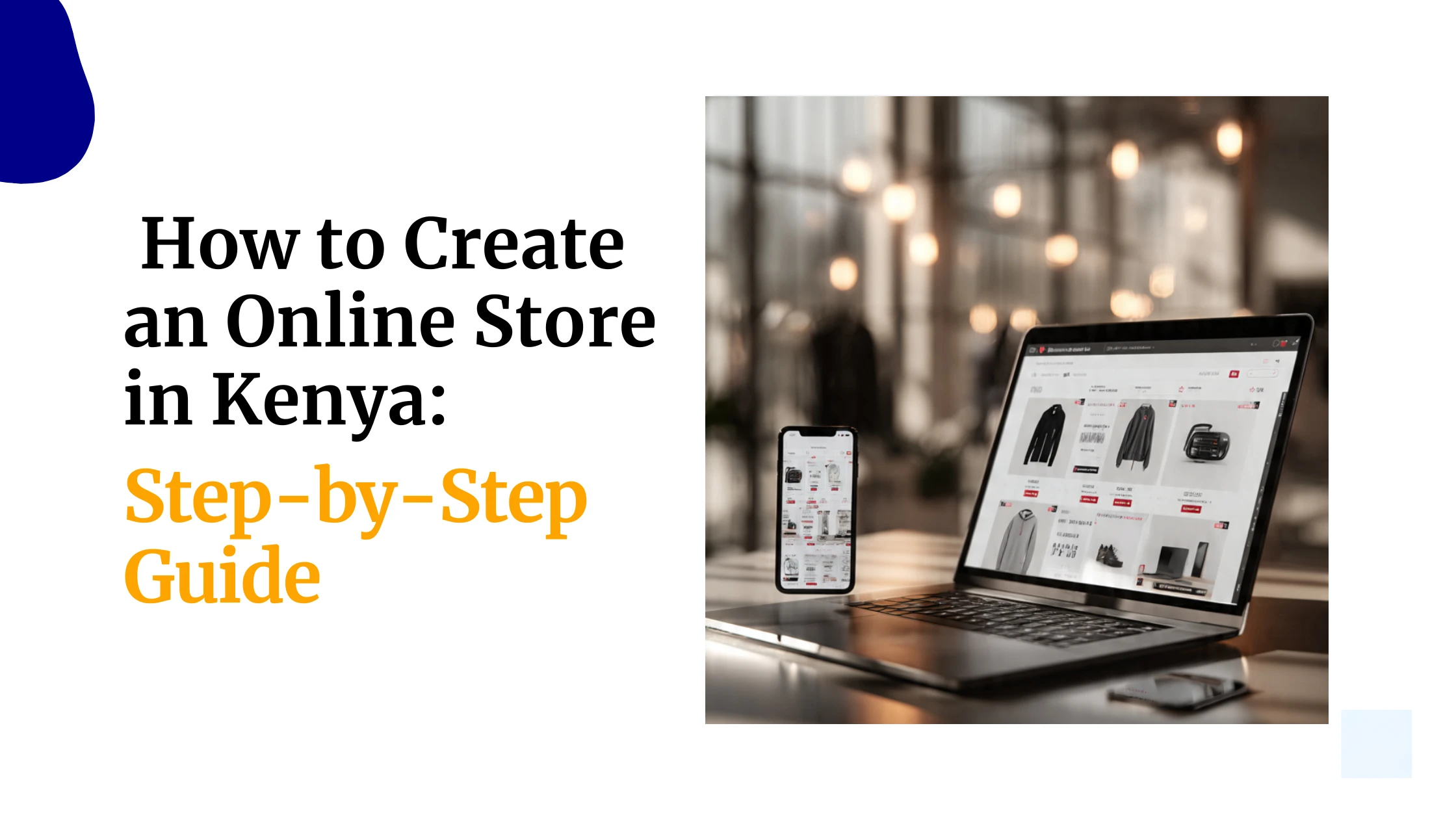
Use the steps in our online-store setup guide when you are ready to move beyond orders in direct messages.
4) Run a Virtual Assistant Service
Virtual assistants handle work that founders and small teams keep postponing:
inbox organisation,
meeting scheduling,
customer follow-up,
research,
data entry,
quotations and weekly reports.
“I can do any admin task” is a weak offer. Choose a client and a workflow.
You could support real-estate agents with listing uploads and viewing schedules, coaches with calendars and webinar follow-up, or ecommerce sellers with order updates and customer questions.
Prepare a one-page service menu with the tasks you accept, response hours, software you use and what the client must provide.
Offer a paid two-week trial before asking for a long contract.
Local referrals may produce work faster than competing globally on price. Contact accountants, marketing agencies and web designers whose clients frequently need ongoing admin help.
Protect customer data. Use separate passwords, enable two-factor authentication and request the lowest level of account access needed for the task.
5) Sell Useful Digital Templates and Downloads
Digital products avoid stock and delivery costs, but only when they solve a specific repeated problem.
Good examples include:
Salon appointment tracker,
Chama contribution sheet,
Wedding budget
Landlord inspection checklist,
Editable menu templates,
Revision planners and
Quotation templates for contractors.
Start with a problem you have seen directly. Interview five possible buyers, create the smallest useful version and ask them to use it before you build a large bundle.
Sell the product with a preview that shows what is inside. State the file format, required software, licence terms and whether updates are included. A beautiful mockup cannot rescue a confusing product.
Digital downloads are easy to copy.
Your defence is usefulness, updates, instructions and a trusted brand, not pretending piracy will never happen.
See our guide on selling digital products online for the delivery and checkout steps.
6) Teach Students or Professionals Online
Online tutoring can start with one learner and a phone or laptop.
Demand exists beyond school subjects. Adults pay to improve Excel, bookkeeping, coding, design software, English, Kiswahili, interview skills and professional exam performance.
Choose one outcome and level. “KCSE Form Four mathematics revision” is clearer than “math tutoring.” “Excel dashboards for small-business administrators” is clearer than “computer lessons.”
Sell a short paid assessment or one introductory lesson first. Use it to identify the learner’s gap and propose a four- or eight-session plan.
Parents and employers want evidence of progress. Give a baseline exercise, record attendance and share a short end-of-month report. Do not promise exam grades or job placement.
Your first learners can come from a school alumni group, a professional association, a church community or referrals from teachers. Get consent before recording lessons, especially when working with children.
7) Create User-Generated Product Videos for Brands
User-generated content, usually called UGC, is product-focused content made in the style of a normal customer video. You do not need a huge following because the brand can publish the video on its own account or use it in an advertisement.
Create five samples in different formats: unboxing, demonstration, problem-and-solution, testimonial-style and voice-over. Use products you own, but never invent a medical result or personal experience you did not have.
Pitch small ecommerce brands with a specific concept. Instead of “I create content,” send: “I can make a 20-second video showing how this lunch box prevents spills during a Nairobi commute.”
Price by deliverables and usage rights. A brand using your video as a paid advertisement receives more value than one posting it once. Put the length, revisions, raw-footage access and advertising period in writing.
8) Provide Remote Bookkeeping and Invoicing Support
Small businesses often have M-PESA statements, bank records, receipts and invoices spread across several places. A remote bookkeeping service can organise transactions, reconcile accounts, prepare management summaries and keep invoicing records current.
This business requires real accounting competence. If you are not trained, start with document organisation and work under a qualified bookkeeper rather than presenting yourself as a tax adviser.
Pick one client type, such as agencies, consultants, online shops or landlords. Build a monthly checklist and set a fixed deadline for the client to submit records.
Kenya Revenue Authority says people engaged in business generally need to use eTIMS, although invoicing arrangements differ for some small suppliers.
Read the current KRA eTIMS guidance and send tax questions outside your competence to a qualified professional.
Trust is the main sales barrier. Clear confidentiality terms, professional email and careful access controls matter as much as spreadsheet skills.
9) Set Up AI and No-Code Automations for SMEs
Kenya’s National AI Strategy 2025-2030 has made AI a practical business topic, but many firms do not need a custom model.
They need repetitive work reduced.
Possible projects include:
routing website enquiries to the right salesperson;
turning form responses into quotations;
sending order-status messages;
summarising customer feedback;
moving approved leads into a CRM; or
producing a weekly operations report.
Start with the workflow, not the tool. Map what happens now, count the time or errors involved, then automate one step.
Keep a manual approval point for payments, legal documents, public statements and sensitive customer decisions.
Sell a small audit and one pilot automation. Charge separately for maintenance because APIs, logins and business processes change.
The main risks are unreliable AI output and exposed customer data. Test failure cases, log actions and obtain permission before sending personal data to third-party systems.
10) Build a Specialist Freelance Service
Freelancing becomes a business when you stop selling a generic skill and package a result for a defined buyer.
A designer could create investor pitch decks for Kenyan startups. A writer could prepare case studies for software companies. A data analyst could build weekly sales dashboards for distributors. A developer could maintain booking websites for tour operators.
Create three strong samples that match the work you want. A client looking for an ecommerce email sequence does not care about your school essay or unrelated logo.
Use direct outreach alongside Upwork, Contra, Fiverr or specialist job boards. Platforms provide access to buyers but can change fees and rankings. Your own website, email list and referrals give you a channel you control.
Our guide to starting a freelance website covers the portfolio and client-acquisition basics.
11) Run Live Online Classes Before Recording a Course
Recording twenty polished lessons before anyone pays is an expensive way to test demand. Begin with a live workshop or a four-week cohort.
Choose a result that participants can complete: set up a bookkeeping system, prepare a portfolio, create a home garden plan or learn beginner Canva for a small business. Give participants templates, assignments and feedback.
Pre-sell the class to a small group. If people will not pay for a live version with your help, they are unlikely to buy a recording with less support.
After two or three cohorts, turn the questions, exercises and demonstrations that worked into a self-paced course. Keep live support as a higher-priced option.
Avoid selling copied information or income promises. The course needs your method, examples, feedback or organisation to be worth paying for.
12) Offer CV, LinkedIn and Interview Support
Job seekers need more than a prettier CV. They need documents matched to a role, clear evidence of achievements and practice explaining their experience.
Build packages around career stage: graduate applications, mid-career transitions, technical portfolios or executive profiles. A package might include a CV rewrite, LinkedIn profile, cover-letter template and one mock interview.
Ask for the target job description before editing. Replace vague duties with accurate outcomes, but never invent qualifications, employers or results.
Universities, alumni groups, professional associations and recruitment communities can provide clients. Run a short workshop to demonstrate your process, then offer individual sessions.
AI can help organise drafts, but the final work needs human fact-checking and the client’s voice. Sending the same generic CV to every employer will not become a good service simply because a model rewrote it.
13) Build an Affiliate Content Business
Affiliate marketing pays a commission when your content sends a buyer to a participating company. It can work, but it is not instant or passive at the beginning.
Choose a topic where people compare products before buying: web hosting, farm tools, home appliances, travel equipment or business software. Publish demonstrations, comparisons, calculators and answers to buying questions.
Do not build the business on copied product descriptions or endless “top ten” pages. Search engines and readers can already find those elsewhere. Add local availability, KES cost calculations, delivery details, screenshots or first-hand testing.
Disclose affiliate relationships. Track which pages and emails lead to sales rather than chasing traffic alone.
Expect several months of useful publishing before meaningful results. If you need income this month, start a service business and build affiliate content alongside it. Our affiliate marketing guide explains the model in more detail.
14) Create a Niche Directory or Lead-Generation Website
A directory helps buyers find a defined group of providers. Examples include wedding venues around Naivasha, verified home nurses in Nairobi, pet-friendly rentals, equipment hire in Mombasa or tutors for a particular professional exam.
Start manually. Recruit twenty providers, verify their details and publish useful comparison fields such as location, service area, response time and price range. Do not build complicated marketplace software until buyers use the basic directory.
Possible revenue sources include featured listings, qualified leads, membership fees and booking commissions. Choose one and state the terms clearly.
The hard part is the two-sided market: buyers want many providers, while providers want existing buyers. Solve it by starting in one location and one category. A small directory with accurate information is more useful than a national database full of stale listings.
15) Sell Print-on-Demand Merchandise
Print-on-demand means you create designs and produce an item after receiving an order. It reduces unsold stock, although you still need samples to check print quality and sizing.
Good products are tied to a group or occasion: alumni reunions, chama events, local sports communities, corporate teams, weddings or a creator’s audience. Generic motivational T-shirts compete mainly on price.
Work with a reliable local printer and document production times. Collect approval for names, dates and spellings before printing personalised items. For group orders, request a deposit that covers production.
Photograph real samples. Mockups are useful for testing interest, but customers should see the fabric, print position and likely colour.
Avoid copyrighted team logos, characters and brand marks unless you have permission.
16) Curate and Sell Second-Hand Products Online
Second-hand fashion, furniture, books, baby gear and electronics can be sold through short product drops on Instagram, TikTok and WhatsApp.
Curation is the value. Choose a recognisable standard such as office wear under a set budget, quality children’s books by age, or tested kitchen appliances for bedsitters.
Show the real item, not a catalogue photo. Record measurements, defects, model numbers and condition. For electronics, demonstrate that the main functions work and state any return window before payment.
Start with a small batch and track how long each item takes to sell. Fast turnover is safer than filling a room with stock because a supplier offered a discount.
Delivery and returns can destroy a thin margin. Include packaging, courier charges, rejected parcels and mobile-money fees when setting prices.
17) Provide Remote Technology Support
Small offices and home-based professionals need help with email setup, backups, device security, cloud storage, domains, printers and video-meeting problems.
Offer defined support plans rather than waiting for emergencies. A monthly package might include device checks, backup verification, account setup and a limited number of remote-support sessions.
Never ask customers to send passwords in a normal message. Use temporary access, password managers and screen-sharing tools with explicit permission. Keep a record of changes and remove your access when the job ends.
This idea suits someone who can explain technical problems patiently. The customer is paying for reduced downtime, not for a lecture about software.
Do not claim you provide forensic, cybersecurity or data-recovery services unless you have the training and tools to do so safely.
18) Sell Reseller Hosting and Website Care
Reseller hosting lets you provide hosting under your own packages while another company operates the underlying server platform. Combine it with updates, backups, security checks and minor website changes.
The strongest route is to add care plans to websites you already build. A client who trusts you with the launch may prefer one contact for hosting and maintenance.
Define what “maintenance” includes. Plugin updates and uptime checks are different from unlimited redesign work. Set response times, backup retention and an emergency process.
Recurring revenue is the attraction, but so is recurring responsibility. One poorly managed account can affect several customers. Standardise your setup and do not oversell capacity.
Our guide to starting a reseller hosting business in Kenya explains the operating model and setup choices.
19) SEO and local search services
Search engine optimization helps businesses appear when potential customers search for their products or services.
A beginner can start with narrower services such as keyword mapping, on-page updates, Google Business Profile optimization, citation cleanup and monthly performance reporting.
Avoid guaranteeing first-place rankings. Sell measurable work and report changes in visibility, qualified traffic, calls, messages and leads.
What you need: Search research, analytics and clear reporting skills.
How to find the first client: Record a five-minute audit identifying three fixable search problems.
Main risk: Chasing traffic that has no commercial value. Connect keywords to products, locations and customer intent.
20) Remote bookkeeping for small businesses
Many small firms need help organizing sales records, expenses, invoices and monthly reports. If you have accounting training, you can provide remote bookkeeping to ecommerce sellers, agencies and service businesses.
Bookkeeping is different from regulated audit, tax-agent or investment-advisory work. Be precise about what you are qualified and authorised to provide.
What you need: Accounting knowledge, secure document handling and suitable bookkeeping software.
How to find the first client: Offer a paid cleanup of one month’s records before proposing ongoing support.
Main risk: Handling sensitive financial information casually. Use access controls, backups and written confidentiality terms.
21) No-code automation services
Businesses lose time copying information between forms, email, spreadsheets and customer systems.
You can map these repetitive processes and build simple automations for inquiries, bookings, reminders, reports and internal approvals.
Begin with low-risk workflows.
Do not automate financial decisions, sensitive-data processing or customer messages until permissions, error handling and human review are clear.
What you need: Process-mapping skills, an automation platform and careful testing.
How to find the first client: Automate one small weekly task and calculate the time saved.
Main risk: A fragile workflow silently creating incorrect data. Include monitoring, documentation and a manual fallback.
Choose an Idea That Fits Your Current Advantage
The best idea is not the one with the largest imagined market. It is the one where you can reach a buyer, deliver a credible result and afford to learn.
Your current advantage | Best ideas to test first |
|---|---|
You have a smartphone and communicate well | Short-form content, UGC or second-hand curation |
You have a laptop and administrative experience | Virtual assistance, bookkeeping support or CV services |
You can teach a subject clearly | Tutoring, live classes or digital learning products |
You have technical skills | Website setup, automation, remote support or reseller hosting |
You understand a product niche | Niche online shop, affiliate content or print-on-demand |
You know many providers in one industry | Directory or lead-generation website |
You need money quickly | Sell a service before attempting an audience-based business |
You can wait and publish consistently | Affiliate content, digital products or a niche directory |
Best online businesses to start with little capital
If your budget is below KSh 10,000, begin with a service:
Virtual assistance
Freelance writing
Social media management
Online tutoring
B2B research
Basic video editing
These models let you sell time and skill before paying for stock. Reinvest the first revenue in better internet, software, training and a professional website.
Best online businesses for recurring income
Monthly retainers make income more predictable.
Social media management, bookkeeping, website maintenance, SEO, virtual assistance and automation support can all be sold as recurring services when the work repeats and the client continues receiving value.
Online Ideas That Need Extra Caution
Some popular recommendations are weak businesses for a beginner.
Generic overseas dropshipping
Long delivery times, inconsistent product quality, customs costs and difficult returns can erase the advantage of holding no stock.
Test a local supplier or preorder model before promising products you have never inspected.
Surveys and clicking apps
These may provide occasional small payments, but you do not control the customer, rate or availability of work. That makes them tasks, not durable businesses.
Copy-and-paste AI content sites
Publishing hundreds of unverified articles creates no useful advantage. Use AI to speed up research, outlines or routine production, then add evidence, examples and judgement.
Forex or cryptocurrency trading sold as a business
Speculation can lose capital quickly and does not create a customer asset. Treat trading and online businesses as different activities.
Becoming a general influencer
“Post until brands notice” is not a plan. A small creator with a clear audience and a defined UGC service can earn before reaching a large follower count.
Test Your Online Business in 30 Days
Do not spend the first month choosing colours and designing a logo. Use it to find out whether a customer will pay.
Days 1-3: Choose one buyer and one problem
Write one sentence: “I help [specific customer] achieve [specific result] without [main difficulty].”
Bad: “I offer digital solutions.”
Better: “I help Nairobi salons turn phone videos into twelve ready-to-post Reels each month.”
Days 4-7: Speak to ten potential customers
Ask how they handle the problem now, what it costs them and what they have already tried. Do not begin by pitching.
Days 8-12: Build the smallest credible offer
Create a sample, prototype, trial lesson, three-product catalogue or one working automation. State the scope, price, delivery time and exclusions.
Days 13-20: Make direct offers
Contact at least twenty suitable prospects. Personalise the first two lines and show relevant work. Track replies, objections, calls and sales.
Days 21-26: Deliver one paid pilot
Charge something. Free feedback does not test willingness to pay. Keep the pilot small enough to deliver well.
Days 27-30: Review the evidence
Continue when buyers understand the offer, some agree to pay and you can deliver at a sensible cost. Change the buyer, offer or channel when conversations repeatedly stall for the same reason.
What you need to operate an online business in Kenya
1) Business registration
The Business Registration Service processes registrations online through eCitizen.
Its current fee schedule lists KSh 950 for a business name and KSh 10,650 for a private limited company. A business name is simpler, while a limited company creates a separate legal entity. Choose based on ownership, liability, contracts and growth plans rather than appearance alone.
Depending on the activity and location, you may also need a county business permit or a sector-specific licence. Confirm requirements with the relevant county and regulator.
2) Tax and electronic invoicing
An online business is still a business for tax purposes. KRA states that all persons engaged in business must onboard eTIMS and issue electronic tax invoices, including people who are not registered for VAT.
KRA’s current Turnover Tax page says TOT generally applies to eligible resident businesses with annual gross turnover above KSh 1 million and up to KSh 25 million at a rate of 1.5% of gross sales.
It excludes several income categories, including management, professional and training fees. Businesses making taxable supplies generally need VAT registration once annual taxable turnover reaches KSh 5 million.
Tax treatment depends on what you sell and how the business is structured. Check the latest KRA guidance or speak to a qualified tax professional instead of assuming every small business pays TOT.
3) Customer data and privacy
If you collect names, phone numbers, locations, identification documents or payment details, you are handling personal data. Collect only what you need, explain why you need it, protect access and delete it when it is no longer required.
The Office of the Data Protection Commissioner says some activities require registration as a data controller or processor regardless of business size. Check the current ODPC categories and guidance before launching a business that handles health, education, financial, recruitment or other sensitive data.
4) Payments
Offer the payment options your customer trusts and can use. Mobile money is central to Kenya’s economy: the 2024 FinAccess survey found that 82.3% of adults used mobile money, and 52.6% used it daily.
Keep business and personal records separate, confirm every payment and reconcile orders regularly. For larger or international transactions, compare settlement times, fees, currency conversion, chargeback rules and platform availability in Kenya.
5) A website and business email
Social platforms are useful for discovery, but you do not control their algorithms or account decisions. A website gives customers a stable place to verify your offer, view prices or examples, read policies and contact you. A domain-based email address also appears more credible than using a personal account for proposals and invoices.
Start with the pages that help someone make a decision:
Home
Services or products
About or proof of experience
Frequently asked questions
Contact and payment instructions
Delivery, refund and privacy policies where relevant
Common mistakes to avoid
a) Buying stock before validating demand
Begin with samples, a small batch or pre-orders. Likes and comments do not guarantee purchases.
b) Copying a crowded idea without choosing a niche
“Digital marketing” puts you against thousands of alternatives. “Local SEO for dental clinics in Nairobi” gives the buyer a reason to pay attention.
c) Mixing revenue with profit
Revenue is the money received. Profit is what remains after product cost, delivery, refunds, payment fees, software, data, advertising, tax and your time.
d) Depending on one platform
Build an email list, customer records and a website you control. Follow platform rules and keep copies of your original content.
e) Trusting guaranteed-income schemes
Be cautious when someone promises fixed daily earnings, asks you to pay to unlock tasks or makes recruitment more important than the actual product.
A real business should have a clear customer, a useful product or service and understandable economics.
Basic Setup and Compliance in Kenya
An online business is still a business. Keep these basics in view as soon as you begin trading.
Separate business and personal records. Track every sale, fee, refund and expense from the first day.
Register the appropriate business form. The Business Registration Service says registration is completed online through eCitizen. Its published fee schedule lists a business name at KES 950, but confirm the current fee during application.
Check your tax obligations. Income from business carried out over the internet is taxable under Kenya’s Income Tax Act. KRA also publishes current eTIMS requirements for people engaged in business. Ask KRA or a qualified tax professional how the rules apply to your turnover and structure.
Protect customer information. If you collect names, phone numbers, locations, identification documents or payment records, check the Data Protection Act and current ODPC guidance. Registration and compliance duties depend on what data you process and how your business operates.
Publish clear terms. Product businesses need delivery, return and refund terms. Service businesses need a scope, payment schedule, revision limits and cancellation terms.
Use a professional identity. A domain and business email make quotations, invoices and support messages easier to verify. A simple website gives customers a stable place to confirm who you are and what you sell.
This section is general information, not individual legal or tax advice. Verify requirements for your business before launch.
Online Business Ideas FAQs
What is the best online business to start in Kenya?
For most beginners, the best online business is a focused service built around a skill you already have. You can test a service without buying stock, renting premises or building a complicated website.
Good options include:
- Virtual assistance
- Social media management
- Freelance writing and editing
- Graphic design and video editing
- Website design and maintenance
- Online tutoring or coaching
- Bookkeeping and administrative support
Choose one customer group and solve one clear problem. For example, social media management for restaurants is easier to understand and sell than a broad offer such as digital marketing services.
Find three potential customers, create a simple sample and ask whether they would pay for the service. Test demand before spending heavily on branding or software.
Which online business can I start with KSh 5,000?
KSh 5,000 is enough to test a small service business if you already own a phone or computer. Suitable options include freelance writing, virtual assistance, tutoring, simple design, social media management and business research.
| Expense | Example budget | Purpose |
|---|---|---|
| Internet and communication | KSh 1,500 | Research, outreach and client meetings |
| Portfolio or simple webpage | KSh 1,000 | Show examples of your work |
| Tools or templates | KSh 1,000 | Create better client work |
| Customer outreach | KSh 1,000 | Calls, transport or a small promotion |
| Reserve | KSh 500 | Unexpected operating costs |
You do not have to follow this budget exactly. If free tools can handle the work, direct more of your money towards internet access and finding customers.
Avoid using the full KSh 5,000 on a logo, paid course or advertising before confirming that customers want your offer.
Can I start an online business using only my phone?
Yes. A capable smartphone can support several online businesses, especially those centred on communication, content creation and social media.
Phone-friendly options include:
- UGC and short-form video creation
- Social media account management
- Pre-order and social-commerce selling
- Online tutoring through video calls
- Customer support and appointment booking
- Basic poster design and video editing
You can use cloud storage, mobile design tools, document apps and mobile money to manage much of the workflow. A laptop becomes useful when the work involves long documents, large spreadsheets, web development, advanced design or complex video editing.
Upgrade when the limitations of your phone begin costing you time, work quality or paying customers.
Do I need to register an online business in Kenya?
Registration requirements depend on your legal structure, location and business activity. Operating online does not automatically remove registration or licensing obligations.
You may need to consider:
- Business registration: Decide whether to operate under your personal name, register a business name or form a company.
- County permits: Check whether your county requires a business permit or another local licence.
- Tax registration: Confirm the KRA obligations that apply to your income and business structure.
- Sector licences: Regulated activities may require approval from the relevant authority.
- Customer information: Consider applicable privacy requirements if you collect personal data.
Business names and companies can be registered online through the Business Registration Service and eCitizen.
A registered business may find it easier to open business accounts, sign formal contracts, apply for certain payment services and work with larger clients.
Do online businesses pay tax in Kenya?
Yes. Earning money online does not remove your tax obligations. The taxes and filing requirements that apply depend on factors such as your income, turnover, business activity and legal structure.
Maintain clear records of:
- Sales and other business income
- Invoices and customer receipts
- Business expenses and supplier invoices
- Mobile money and bank transactions
- Refunds, cancellations and unpaid invoices
KRA states that people carrying on business, including those who are not registered for VAT, are generally required to onboard onto eTIMS and issue electronic tax invoices. Check the current requirements on the official KRA eTIMS page.
Check the latest KRA guidance or consult a qualified tax professional about your situation instead of relying on a general tax rate found online.
How do I receive payments from customers?
The best payment method depends on where your customers are located, what you sell and whether payments are one-off or recurring.
| Payment method | Best suited for | What to check |
|---|---|---|
| Mobile money | Local orders and service payments | Fees, confirmation and record keeping |
| Bank transfer | Larger payments and B2B clients | Processing time and payment references |
| Payment link | Social media and WhatsApp sales | Supported methods and settlement time |
| Website gateway | Ecommerce and automated checkout | Integration, refunds and recurring billing |
| International platform | Customers outside Kenya | Currency conversion and withdrawal options |
Compare transaction fees, settlement periods, refund handling, security, customer support, currencies and Kenyan availability before selecting a provider.
Separating personal and business transactions makes it easier to track revenue, follow up unpaid invoices and prepare tax records.
How long does an online business take to become profitable?
There is no fixed period. A service business can make its first sale within days if you already have a useful skill and access to potential customers. A content website, course, marketplace or ecommerce brand may take several months to recover its setup and customer-acquisition costs.
Your path to profitability depends on:
- How urgently customers need the solution
- How easily you can reach potential buyers
- Your prices and profit margins
- The cost of delivering each order
- Advertising and customer-acquisition costs
- Refunds, failed orders and repeat purchases
Do not use follower count as your main measure of success. Track enquiries, paying customers, revenue, expenses, profit and repeat purchases.
Start With One Customer, Not Eighteen Ideas
You do not need the perfect online business idea. You need one customer problem that you can solve credibly and a cheap way to test whether people will pay.
Choose one idea from the table, define one buyer and make a small paid offer within thirty days. A service usually provides the fastest feedback. A niche store works when you test stock carefully. An audience-based business is better treated as a longer project.
Once the offer works, give it a stable home online. Build a simple website that explains the result, shows proof and gives customers one clear way to order.
You can build your website with our no-code tools when you are ready to move beyond scattered social posts and direct messages.