 Domain SearchInstantly check and register your preferred domain name
 Web Hosting
 cPanel HostingHosting powered by cPanel (Most user friendly)
 KE Domains
 Reseller HostingStart your own hosting business without tech hustles
 Windows HostingOptimized for Windows-based applications and sites.
 Free Domain
 Affiliate ProgramEarn commissions by referring customers to our platforms
 Free HostingTest our SSD Hosting for free, for life (1GB storage)
 Domain TransferMove your domain to us with zero downtime and full control
 All DomainsBrowse and register domain extensions from around the world
 .Com Domain
 WhoisLook up domain ownership, expiry dates, and registrar information
 VPS Hosting
 Managed VPSNon techy? Opt for fully managed VPS server
 Dedicated ServersEnjoy unmatched power and control with your own physical server.
 Website Builder
 Online Store BuilderLaunch a professional e-commerce store without writing code.
 Web Design ServiceGet a custom-designed website tailored to your brand and goals. From just KES 15,600
 BlogRead our guides on web hosting, online business, digital marketing, and more
 SupportOur support guides cover everything you need to know about our services
 ContactContact us via chat or email
You are setting up email for your business, and suddenly you are staring at terms like alias and catch-all without a clear idea of what either one actually does.
That confusion is normal, since most people only ever use one type of email account and never learn that the others exist.
The types of email accounts break down into four main categories: personal, business, alias, and catch-all, each built for a different job.
This guide walks through what each one does so that you can set up your inbox the right way the first time.
The Short Answer
A personal account is a free address from a provider like Gmail, meant for private use.
A business account runs on your own domain and adds credibility to every message you send.
An alias is a forwarding address attached to an existing mailbox, and a catch-all account scoops up mail sent to any address at your domain, even misspelled ones.
The sections below cover each type in detail, along with how your email actually syncs once it reaches your device.
| Account Type | Example | Best For |
| Personal | [email protected], [email protected] | Private, non-commercial use |
| Business | [email protected] | Client-facing communication and branding |
| Alias | [email protected] routing to your inbox | Organizing mail without opening a new mailbox |
| Catch-all | Any misspelled address at your domain | Preventing lost mail from typos |
Personal Email Accounts
A personal email account is an individual address hosted by a public provider such as Gmail, Yahoo, or iCloud, built for private, non-commercial use.
The provider manages everything behind the scenes, and the account is usually free or low-cost to run.
Most people use this type for shopping, newsletters, and everyday conversations with friends and family.
A personal address works fine for casual use, but it starts to work against you the moment you send a business quote or invoice from it.
Clients and vendors read a free webmail address as a signal that a business is still small or informal.
That perception gap is exactly why the business account exists as a separate category.
Business Email Accounts
A business email account ties your address to a custom domain, so a message from you reads as [email protected] instead of a generic Gmail handle.
This setup gives you administrative control over every mailbox on the domain, along with centralized management when you add new staff.
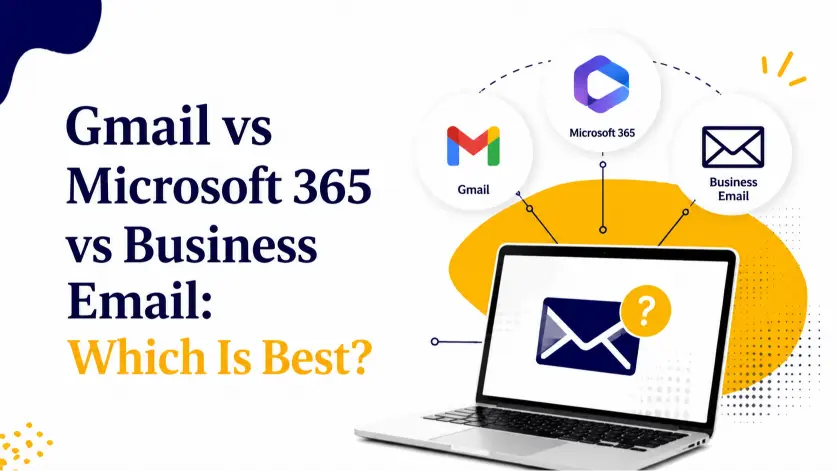
Platforms like Truehost Workplace, Google Workspace, and Microsoft 365 all build their email products around this model.
The branding advantage matters more than it might seem at first glance.
A domain-matched address tells a client that your business owns real infrastructure, not just a free account someone signed up for in an afternoon.
If you are still running client communication through a personal inbox, this is usually the first upgrade worth making.
Email Aliases
An email alias is a forwarding address attached to an existing mailbox, without any separate storage or login of its own.
A message sent to [email protected] can route straight into your main inbox, so a client never needs to know which real address answers them.
Gmail’s plus-addressing trick, where you add +anything before the @ symbol, works the same way for personal accounts.
Aliases exist to keep a primary address organized and hidden from public view.
If an alias starts collecting spam after being posted publicly, you can often turn off just that one address without touching your main mailbox.
Google Workspace caps admin-created aliases at 30 per user.
This covers most small business setups, though bulk address mapping tools exist for organizations that genuinely need more.
Catch-All Email (Wildcard)
A catch-all account is a server configuration that accepts any message sent to your domain, even when the part before the @ symbol does not match an existing mailbox.
Someone who mistypes your address as jon@ instead of john@ still reaches your inbox instead of triggering a bounce message.
This setup exists mainly to prevent lost business from a simple typing error.
The tradeoff is real, since a catch-all address also absorbs a heavier share of spam and bot-generated junk mail than a standard mailbox.
Bots frequently guess at common prefixes like info@ or admin@, and a catch-all account collects every one of those attempts.
Most providers let you turn catch-all routing on or off, so weigh the convenience against the extra filtering it demands.
How Your Email Syncs: POP3, IMAP, and Exchange
Beyond account type, your email also differs in how it saves and syncs messages across devices.
- POP3 downloads mail to a single device and typically removes it from the server, which works fine if you only ever check email from one computer.
- IMAP keeps every message on the server instead, syncing read status and folders across your phone, laptop, and tablet at once.
- Microsoft Exchange goes a step further, syncing shared calendars and contacts alongside mail for entire teams.
Most business email hosting today defaults to IMAP or Exchange, since a modern team rarely checks mail from only one device.
If your current setup still runs on POP3, switching to IMAP is usually a quick change inside your email client settings.
Matching the Account Type to Your Situation
A solo freelancer usually needs just one business mailbox plus a couple of aliases for roles like billing or support.
A growing team benefits from separate mailboxes per staff member, with shared aliases like info@ or sales@ routing to whoever monitors that inbox.
A business that markets heavily and worries about typos landing in the wrong place may want catch-all routing enabled, provided someone reviews that inbox regularly for spam.
Put together, these four types cover the accounts most businesses ever need, and the protocol choice underneath determines how smoothly they sync across your devices.
Once you know which combination fits your situation, setting up the right structure takes minutes rather than guesswork.
Grab Your Business Email Today
Choosing the right email account type comes down to matching the tool to the job, rather than defaulting to whatever you already have.
A personal account works for private use, but a business address, backed by aliases and the right sync protocol, supports client trust and daily operations.
If you are still running your business through a free webmail address, set up a proper domain-based mailbox on Truehost today and start sending mail that matches your brand.