 Domain SearchInstantly check and register your preferred domain name
 Web Hosting
 cPanel HostingHosting powered by cPanel (Most user friendly)
 WordPress HostingHost your WordPress website with fast, secure, and affordable WordPress hosting in Kenya.
 KE Domains
 Reseller HostingStart your own hosting business without tech hustles
 Windows HostingOptimized for Windows-based applications and sites.
 Free Domain
 Affiliate ProgramEarn commissions by referring customers to our platforms
 Free HostingTest our SSD Hosting for free, for life (1GB storage)
 Domain TransferMove your domain to us with zero downtime and full control
 All DomainsBrowse and register domain extensions from around the world
 .Com Domain
 WhoisLook up domain ownership, expiry dates, and registrar information
 VPS Hosting
 Managed VPSNon techy? Opt for fully managed VPS server
 Dedicated ServersEnjoy unmatched power and control with your own physical server.
 Website Builder
 Online Store BuilderLaunch a professional e-commerce store without writing code.
 Web Design ServiceGet a custom-designed website tailored to your brand and goals. From just KES 15,600
 BlogRead our guides on web hosting, online business, digital marketing, and more
 SupportOur support guides cover everything you need to know about our services
 ContactContact us via chat or email
If you’ve been searching for web hosting for beginners, you’ve probably noticed how confusing the options can get, especially when all you want is a simple, reliable place to launch your website.
Maybe it’s a blog, an online shop, or a passion project you’ve been sitting on for years.
Whatever your idea is, taking that first step should feel exciting, not stressful.
But with every host claiming to be “easy,” “fast,” or “beginner-friendly,” it’s hard to know who actually delivers.
That’s exactly why this guide exists.
We’re breaking down the best web hosting providers for beginners, the ones that are truly simple to use, don’t require technical know-how, and help you get online without the headaches.
By the end, you’ll know exactly which hosting platform fits your goals, your budget, and your comfort level.
Here’s a quick preview of what’s ahead:
- The basics of web hosting for beginners, explained.
- Key factors to pick a winner, with a handy Kenyan-focused checklist.
- Head-to-head comparisons of top platforms.
- A no-sweat setup guide, plus tips from real users who’ve been there.
Let’s turn that dream site into reality, starting with the essentials.
The Basics of Web Hosting for Beginners
You might be thinking, “Web hosting? Isn’t that some complicated tech stuff for developers?”
Not really. Web hosting for beginners is simply renting a bit of space on a special computer, called a server, so your website can live online.
That way, anyone in Kenya or anywhere else in the world can visit your site whenever they want.

You can liken it to renting a stall at Toi Market.
That stall becomes your shop’s “home,” where you keep your products, photos, banners, and stock.
Web hosting works the same way, just digital.
When someone visits your site, the server “opens the stall” and shows them everything instantly.
Now, why does this matter right now?
Well, Kenya’s online space is booming.
More people are shopping, learning, and doing business online every single day.
And when you’re just starting out, the right hosting makes sure your food blog, online boutique, or side-hustle site doesn’t disappear during random outages or take forever to load on slower connections.
Let’s break it down to bite-sized chunks.
Here are the main types of web hosting for beginners:
Shared Hosting
This is like sharing a flat with roommates.
It’s affordable (often under KES 500/month) and perfect when you’re just starting.
Your site shares resources with other sites, but with a good provider, like Truehost, it still runs smoothly.
VPS (Virtual Private Server)
Still in the same building, but now you’ve got your own room.
More privacy, more power.
Great if your Nairobi fashion blog suddenly goes viral or your business starts growing.
Prices usually start around KES 1,000/month or even lower for some generous providers.
Cloud Hosting
Think of this like calling an Uber.
It scales up or down depending on your needs.
It’s also fast, flexible, and very reliable.
Cloud options with 99.9% uptime keep your site accessible even during traffic spikes.
But here’s the catch: beginners in Kenya often run into pitfalls.
Some international hosts charge in dollars (and yes, the forex pain is real).
Others keep their servers in places like the US or Europe, which means your visitors in Eldoret or Mombasa could wait seconds longer for your site to load, long enough to cost you sales.
And with Kenya’s Data Protection Act, you need a host that takes local compliance seriously.
I once spoke to a teacher from Kisumu who launched an online tutoring site.
She picked a foreign host because it looked cheap.
A week later, her site went offline, and she lost all her new leads. “It felt like shouting into the void,” she told me.
That’s when she realized hosting is mainly the foundation of a great website experience.
Quick Checklist to Choose a Host
- Do you already have (or want) a domain like yourname.co.ke?
- Do you prefer simple tools like one-click WordPress installs?
- Are you working with a budget under KES 1,000/month?
- Do you want local support, in Swahili or English?
If you’re nodding “yes,” you’re ready to explore the best web hosting for beginners.
Next up, let’s look at what really makes a hosting platform beginner-friendly.
Key Factors to Consider When Choosing Web Hosting for Beginners
Choosing web hosting for beginners shouldn’t feel like decoding tech jargon.
Honestly, it’s really about finding a host that keeps your site running smoothly without giving you unnecessary stress.
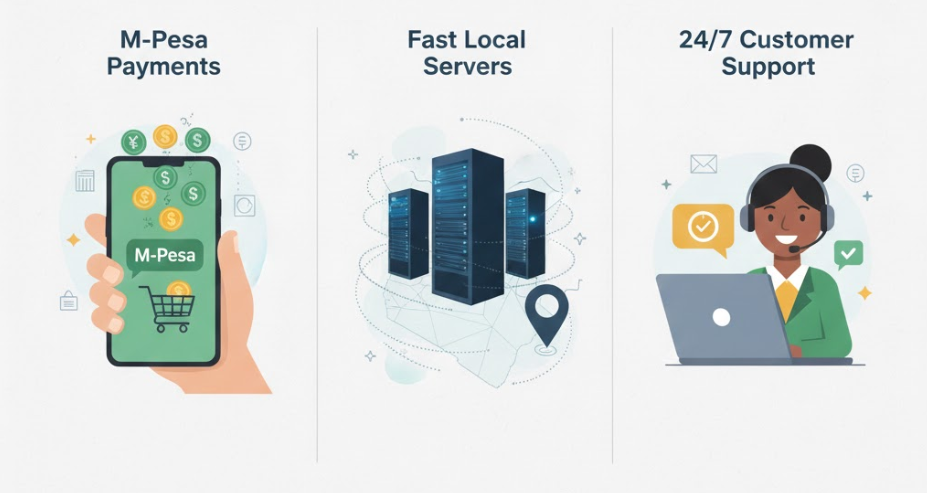
And if you’re starting out in Kenya, there are a few things that matter even more: M-Pesa payments, fast local servers, and support that doesn’t leave you hanging.
1. Ease of Use
First off, you want something easy to use.
Look for drag-and-drop builders or simple dashboards like cPanel, tools that don’t require a single line of code.
And even better, AI.
At Truehost, for example, we keep things clean and intuitive; using our interface feels almost as familiar as scrolling through Instagram.
2. Cost
Next is pricing, and this one is huge for beginners.
You shouldn’t have to worry about dollar fluctuations or surprise renewal fees.
Most shared hosting plans in Kenya fall between KES 500–3,000 per month, which is more than enough for a new blog, portfolio, or small online shop.
3. Performance
Then there’s uptime and speed.
Aim for hosts offering at least 99.9% uptime, because frequent downtime can kill your momentum before you even start.
And here’s a Kenyan advantage worth noting: local data centers can cut loading times by almost half compared to overseas servers.
Faster loads = happier visitors.
4. Customer Support
Customer support is another lifesaver, especially when you’re just getting started.
You want someone available day or night, ideally someone who gets the Kenyan context.
One beginner told me, “Richard solved my SSL issue in minutes… absolute lifesaver.”
That’s the kind of support that makes a host beginner-friendly.
5. Security
Of course, security and extras matter too.
A good host should give you free SSL certificates, automatic backups, and one-click installs for platforms like WordPress.
And as your site grows, you’ll want the option to upgrade without moving everything from scratch.
6. Local Market
Finally, don’t overlook the Kenyan-specific perks.
M-Pesa integration makes payments easy, .ke domain support gives your site a local identity, and compliance with Kenya’s Data Protection Act keeps your users safe.
If you want to compare hosts quickly, score each factor from speed to support on a simple 1–10 scale.
Truehost consistently lands in the 9+ range thanks to our affordability, ease of use, and local-first approach.
And here’s a pro tip: always start with a 30-day money-back guarantee so you can test everything before fully committing.
With these essentials in your back pocket, choosing the best web hosting for beginners becomes a whole lot easier.
Up next: real comparisons with the platforms that actually deliver for Kenyan users.
Top Web Hosting Platforms Compared: Easy-to-Use Options for Beginners
Alright, time to roll up our sleeves and actually compare these platforms.
We’ve narrowed things down to five beginner-friendly hosts that Kenyans love for that homegrown touch.
Each one gets a fair, simple breakdown of what’s good, what’s not, the pricing in KES, and how well it fits anyone looking for easy web hosting for beginners.
And just to set the stage: based on 2025 reviews and local usage, shared hosting still rules, with around 70% of Kenyan small websites running on it.
So if you’re starting out, you’re in good company.
1) Truehost
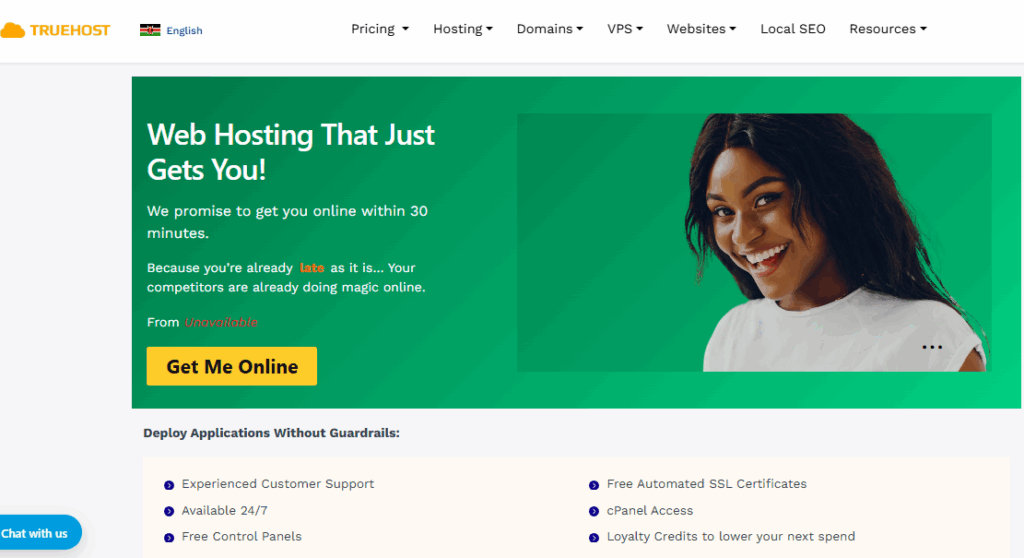
Truehost was founded to solve the headache of clunky international hosting, and you can feel that purpose in everything we do.
Our dashboard is refreshingly simple, think one-click WordPress installs and even a free .ke domain in your first year.
Pros:
- Kenyan servers for fast speeds (often under 2 seconds in Nairobi)
- Easy M-Pesa payments, beginner plans from about KES 188/month
- Friendly, responsive 24/7 support
Cons:
- Fewer “fancy” global add-ons, but beginners rarely miss them
Pricing: Starter at KES 188/mo paid annually and KES 500/mo paid monthly, Pro at KES 840/mo paid monthly.
Rated 4.8/5 on Trustpilot.
If you’re running something like a jewelry shop or a service site, our reliability works in your favor.
Why it’s perfect for beginners: No dollar payments, no forex stress, Kenya-ready compliance, and smooth migrations that won’t leave you sweating.
2) Bluehost
Bluehost is huge globally, especially for people starting their first blog.
Although, others do better when it come to local optimization and performance.
Advantages:
- Free domain for the first year
- Excellent WordPress integration
- Solid uptime at 99.8%
Disadvantages:
- Prices in USD, so you’re at the mercy of exchange rates
- Slower for East African visitors unless you tweak things with a CDN
Pricing: Basic plan around KES 520/mo equivalent. Rated 4.2/5.
It’s a decent choice, just not as effortless for Kenyans.
3) Hostinger
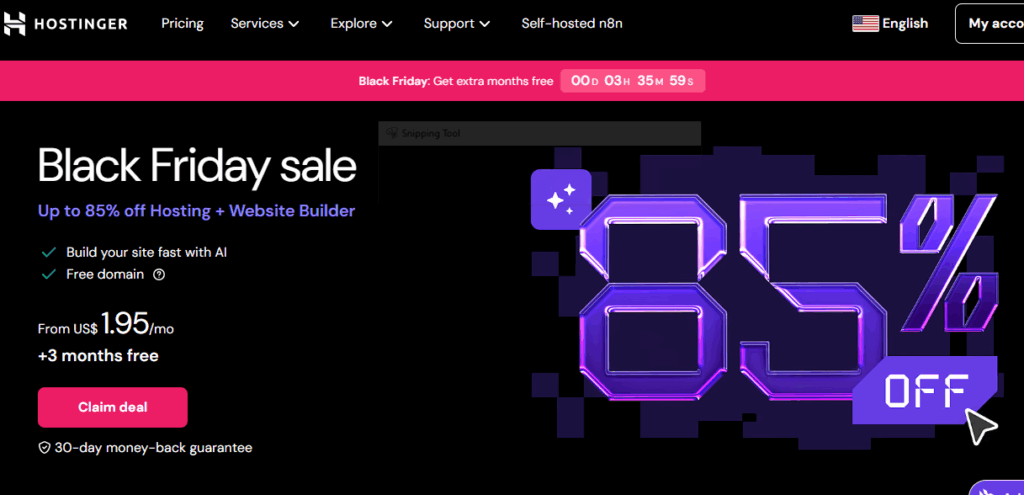
Hostinger has a massive global following, mainly because their prices are hard to ignore.
It’s also not as specific for the Kenyan local market.
Benefits:
- Starts at roughly KES 250/mo, great for tight budgets
- Fast LiteSpeed servers
- Plenty of features for the price
Detriment:
- Support is slower, especially during peak periods
- Not designed with Kenyan users specifically in mind
- Watch out for renewal price hikes
Pricing: Premium plan start at around KES 250/mo equivalent. Rated 4.5/5.
For Kenyans, Hostinger is a strong entry point, especially if you’re testing an idea.
Just watch out, some features cost extra.
4) SiteGround
If you’re looking for raw performance, SiteGround is one of those hosts that keeps popping up in conversations.
They’re built on Google Cloud, which means you get seriously fast, stable hosting without much tinkering on your end.
What people love:
- Their Google Cloud backbone delivers excellent reliability—think 99.99% uptime.
- They offer free site migrations, which is a huge relief if you’re nervous about moving your site yourself.
Where it falls short:
- Prices start at around KES 520/month, which is higher than what most beginners expect plus very steep renewal.
- For tiny blogs or simple personal sites, it can feel like paying for horsepower you’re not using yet.
Why it works for Kenyans:
If you’re growing an online shop or building something training-focused, like many emerging digital-learning platforms in Kenya, SiteGround’s speed can make a real difference.
Still, Truehost tends to edge it out for cost-conscious beginners.
5) KenyaWebExperts
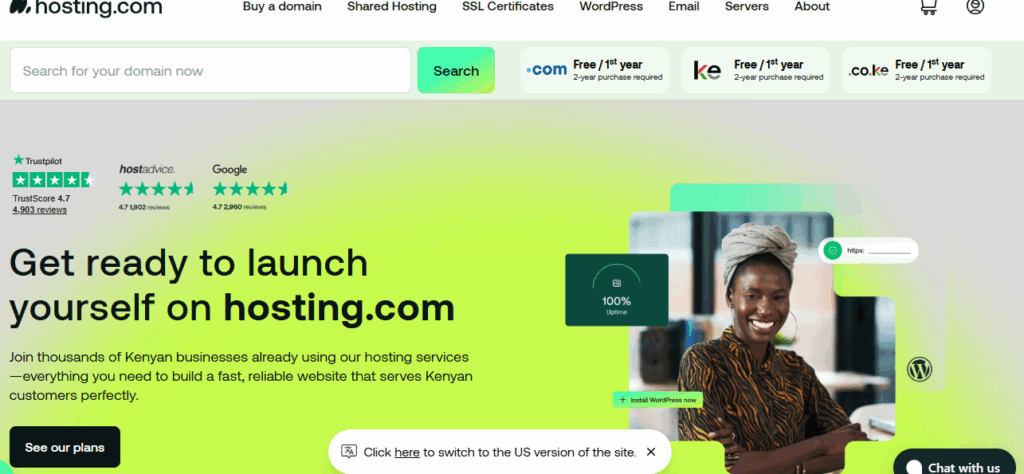
KenyaWebExperts is a familiar name locally, and for good reason.
It’s a solid Kenyan provider for anyone starting with the basics.
As of 2025, they’ve joined forces with Hosting.com, bringing their established Kenyan hosting legacy together with stronger infrastructure.
What stands out:
- Fully local support and a strong focus on .ke domains, which is great if you want a real Kenyan identity online.
- Because of the merger, you now get upgraded servers and more modern hosting features under Hosting.com’s infrastructure.
- Starter plans around KES 200/month, which makes budgeting easy.
Where it may limit you:
- Scalability isn’t as flexible as something like Truehost’s cloud hosting options.
- Disk space on the cheapest plans can be limited, especially if you plan to host large media-rich sites.
- Depending on the plan, there may be limits on the number of websites or features (so check carefully).
Why beginners like it:
If you’re launching a portfolio, personal site, or a simple business page, it gets the job done without overwhelm.
So… Who Comes Out on Top?
If we’re talking pure value, especially in a Kenya where e-commerce is projected to reach KES 180B by end of 2025, Truehost easily takes the crown for beginners.
It hits the sweet spot: local speed, M-Pesa convenience, helpful support, and pricing that doesn’t sting.
Here’s a quick thought experiment:
If your top priorities are fast local loading and easy payments, which host checks both boxes?
How to Set Up Your Web Hosting as a Beginner
Ready to get your site online? Here’s the super, simple version, no tech stress.
1. Sign up:
Go to truehost.co.ke, pick the Starter plan, and click “select” to proceed.
2. Choose your domain and checkout:
Grab a new .co.ke, transfer from another registrar or use your existing one.
Choose your billing cycle and additional services if you need specific ones.
Provide your billing address and checkout.
3. Install WordPress:
Log into cPanel, hit “Install WordPress,” choose a clean theme, and you’re set.
4. Add your content:
Upload your logo, write your pages, or add shop items, drag, drop, done.
5. Secure your site:
Turn on your free SSL and enable the CDN for faster loading across Kenya.
6. Preview and publish:
Check how your site looks on your phone, fix small things, then go live.
7. Monitor:
Keep an eye on speed and uptime. If something feels off, support will sort it out.
That’s all you need—quick, simple, and beginner-friendly. Ready to launch?
Conclusion
And that’s it!
You now have a clear, simple roadmap for choosing web hosting for beginners in Kenya.
The big takeaway? Go for local speed, KES pricing, and support that actually understands your needs.
Among the options, Truehost stands out for beginners thanks to its ease, speed, and Kenya-first approach.
If you’re ready to start building, the Starter plan is an easy first step, with a free domain, free automated SSL, and a 30-day trial to test things out.
Your online journey starts here.
What’s the first site you’re dreaming of creating?