 Domain SearchInstantly check and register your preferred domain name
 Web Hosting
 cPanel HostingHosting powered by cPanel (Most user friendly)
 WordPress HostingHost your WordPress website with fast, secure, and affordable WordPress hosting in Kenya.
 KE Domains
 Reseller HostingStart your own hosting business without tech hustles
 Windows HostingOptimized for Windows-based applications and sites.
 Free Domain
 Affiliate ProgramEarn commissions by referring customers to our platforms
 Free HostingTest our SSD Hosting for free, for life (1GB storage)
 Domain TransferMove your domain to us with zero downtime and full control
 All DomainsBrowse and register domain extensions from around the world
 .Com Domain
 WhoisLook up domain ownership, expiry dates, and registrar information
 VPS Hosting
 Managed VPSNon techy? Opt for fully managed VPS server
 Dedicated ServersEnjoy unmatched power and control with your own physical server.
 Website Builder
 Online Store BuilderLaunch a professional e-commerce store without writing code.
 Web Design ServiceGet a custom-designed website tailored to your brand and goals. From just KES 15,600
 BlogRead our guides on web hosting, online business, digital marketing, and more
 SupportOur support guides cover everything you need to know about our services
 ContactContact us via chat or email
The internet was originally built around open access. A place where anyone could create, build, and connect without constantly proving who they were. But today, even renting a simple virtual private server often means uploading a government ID, linking a personal phone number, and handing over private information that ends up stored in databases you never really control.
That creates a strange contradiction. The same people using self-hosted VPNs, encrypted messaging platforms, private cloud storage, and decentralized applications to protect their privacy are often required to surrender that privacy before they can even deploy the infrastructure. In many cases, you must expose yourself just to build systems designed to keep you secure.
For journalists protecting sources, activists operating in restrictive environments, security researchers running isolated testing labs, developers building projects that do not need personal attribution, or simply individuals who believe renting a server should not require a passport scan, this creates a legitimate concern. The issue is not whether someone has “something to hide.” It is whether they have something worth protecting.
This is where no-KYC VPS hosting comes in. These providers allow users to deploy infrastructure with little more than an email address and a payment method, often cryptocurrency, without requiring identity documents, phone verification, or proof of address. Some even support signups through Tor or privacy-focused email services.
That said, no-KYC does not mean invisible or untouchable. It Means:
- No identity verification required: These providers usually let you sign up with just an email address and payment method, without asking for passports, IDs, or proof of address. Some even allow signups through Tor or anonymous email services.
- Privacy-focused payment options: Most no-KYC VPS providers accept cryptocurrencies like Bitcoin, Monero, or USDT. Some also support prepaid cards or non-verified PayPal accounts, but crypto is typically the preferred option for users seeking maximum privacy.
Here are providers most worth considering if privacy is a priority.
1) Cloudzy
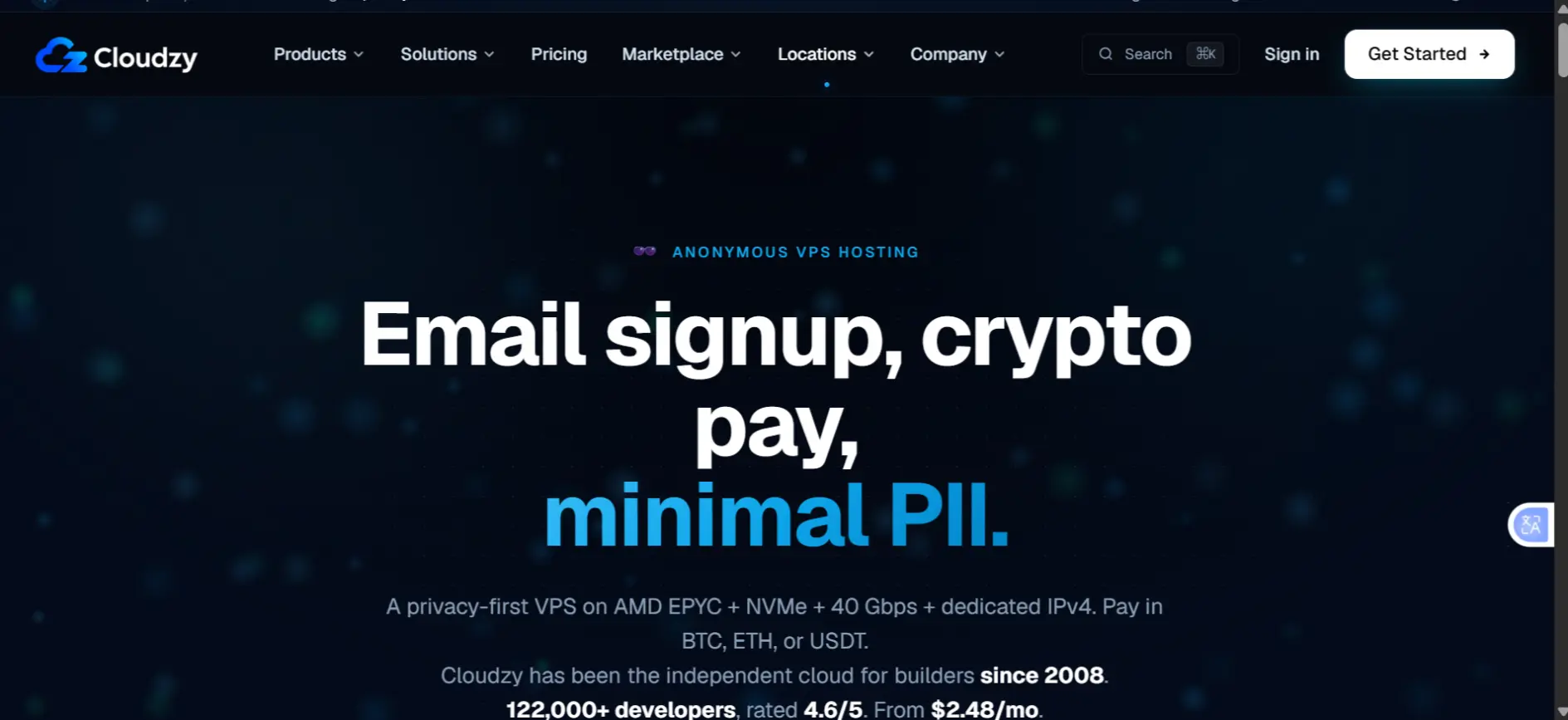
Cloudzy has operated since 2008, making it one of the more established names in the no-KYC VPS space. It also holds a strong reputation, with a 4.6/5 Trustpilot rating from over 700 users.
KYC Policy
No ID checks, phone verification, or document uploads are required. Users only need an email address and payment to get started.
Accepted Cryptocurrencies
Bitcoin (BTC), Ethereum (ETH), and Tether (USDT).
Hardware and Performance
Cloudzy uses AMD EPYC servers with NVMe storage, 40 Gbps uplinks, dedicated IPv4 addresses, and VPS deployment in around 60 seconds.
Coverage and Pricing
Servers are available across 12 regions in North America, Europe, Asia, and the Middle East. Plans start at $2.48/month.
Important Caveat
Some users have raised concerns about the company’s ownership transparency, so it’s worth doing independent research before hosting sensitive workloads.
Verdict
A strong all-around option with good performance, affordable pricing, and wide regional coverage for users focused mainly on signup privacy.
2) Njalla
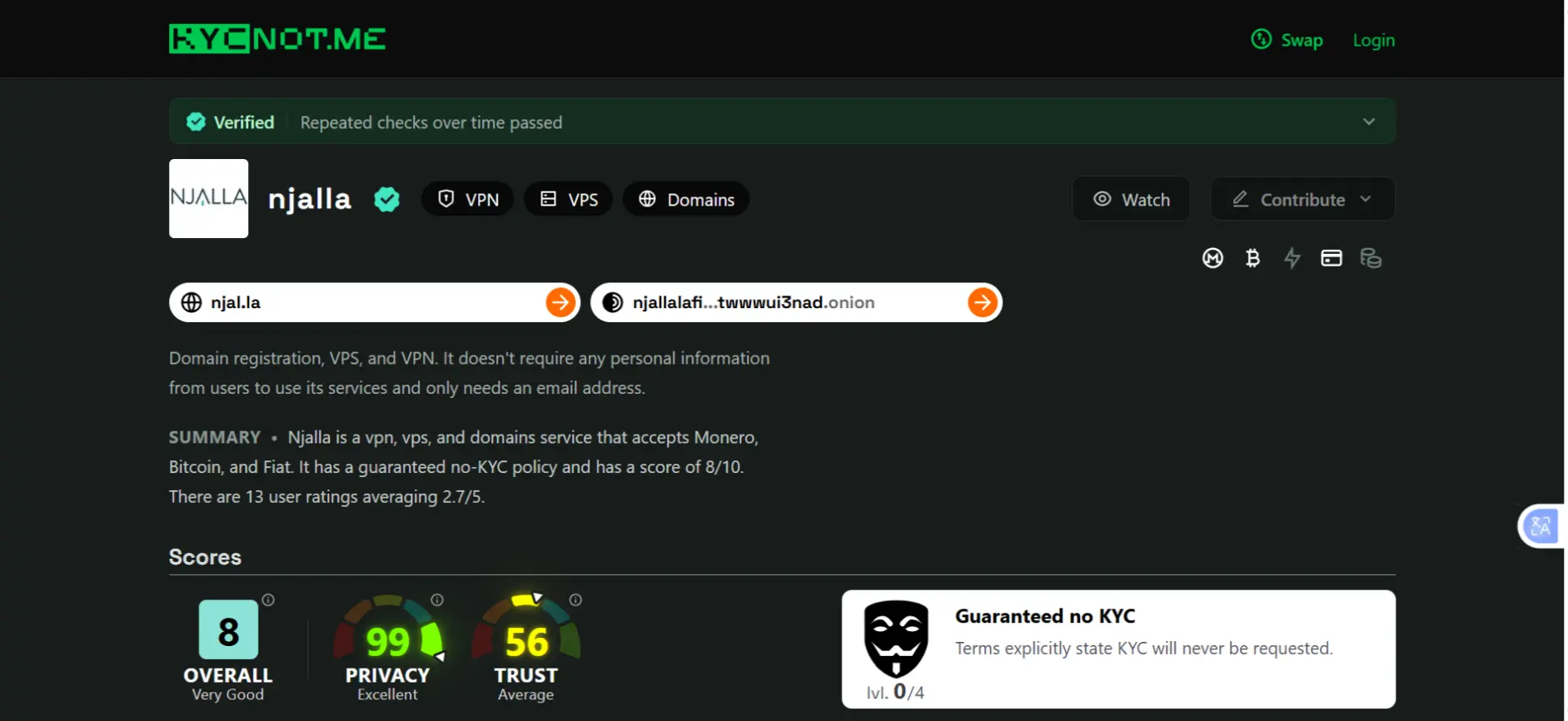
Njalla is one of the best-known privacy-focused hosting providers and was founded by a co-founder of The Pirate Bay. Unlike traditional hosts, Njalla technically owns the infrastructure and grants users access to it, adding another layer of separation.
KYC Policy
Only a username, email, and password are required. No names, IDs, or phone verification.
Accepted Payment
Cryptocurrency only.
Jurisdiction
Sweden, with a strong privacy and free speech focus.
Limitations
Njalla mainly operates from Sweden, which can increase latency for users outside Europe. Pricing is also higher compared to the specs offered, and some users report account suspensions for policy violations.
Verdict
One of the strongest choices for users who prioritize privacy philosophy and long-term trust over pricing or performance.
3) 1984 Hosting
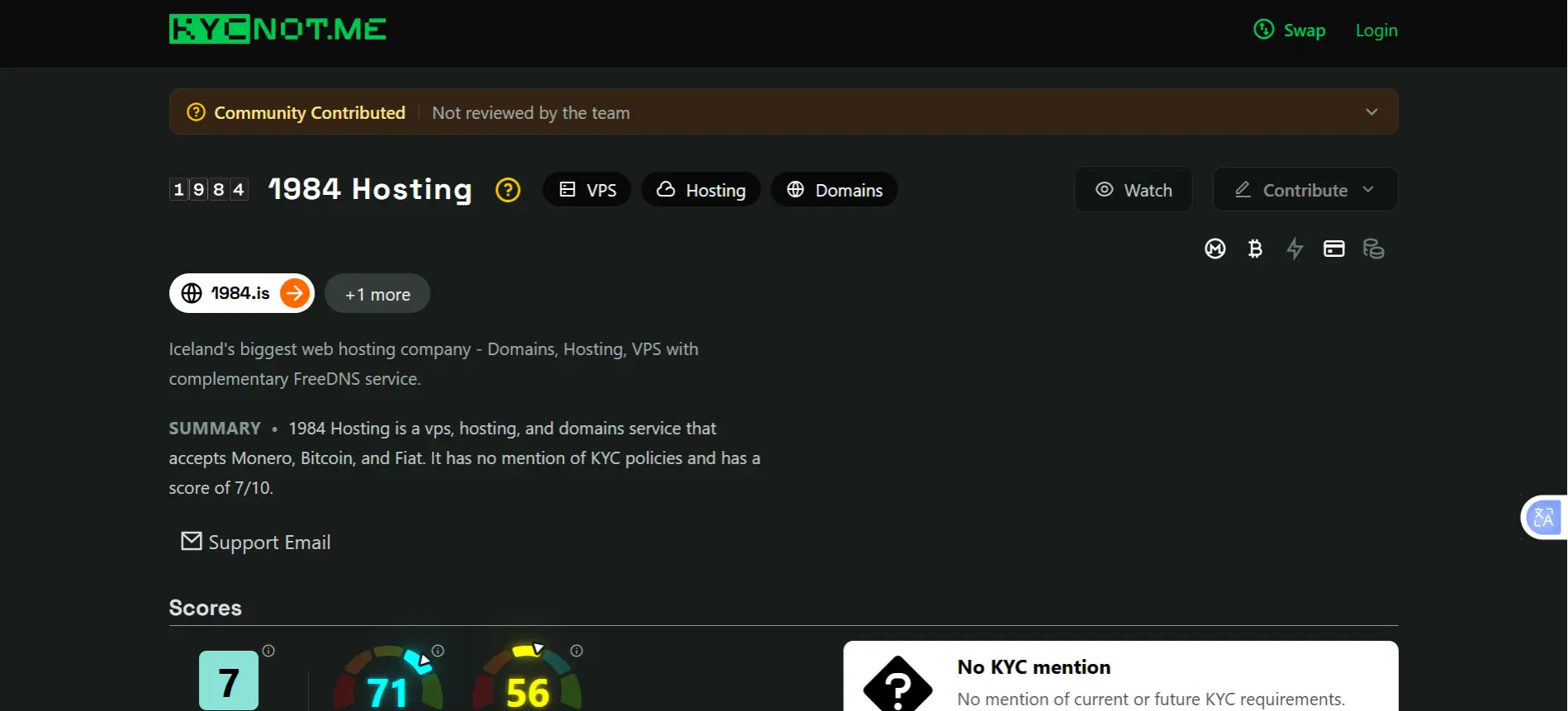
1984 Hosting is an Iceland-based provider named after George Orwell’s novel 1984. Founded in 2006, it has one of the longest operating histories in the privacy hosting space.
KYC Policy
Only an email address is required. No identity documents or phone verification.
Accepted Payment
Credit cards, PayPal, Bitcoin, and Monero.
Jurisdiction Strength
Iceland offers strong privacy protections and more favorable digital rights laws than many larger jurisdictions. The company also states it notifies users of legal requests when legally possible.
Limitations
Infrastructure is mainly based in Iceland, so users outside Europe may experience higher latency.
Verdict
An excellent option for users who care most about legal jurisdiction, privacy protections, and provider stability.
4) AnonVM
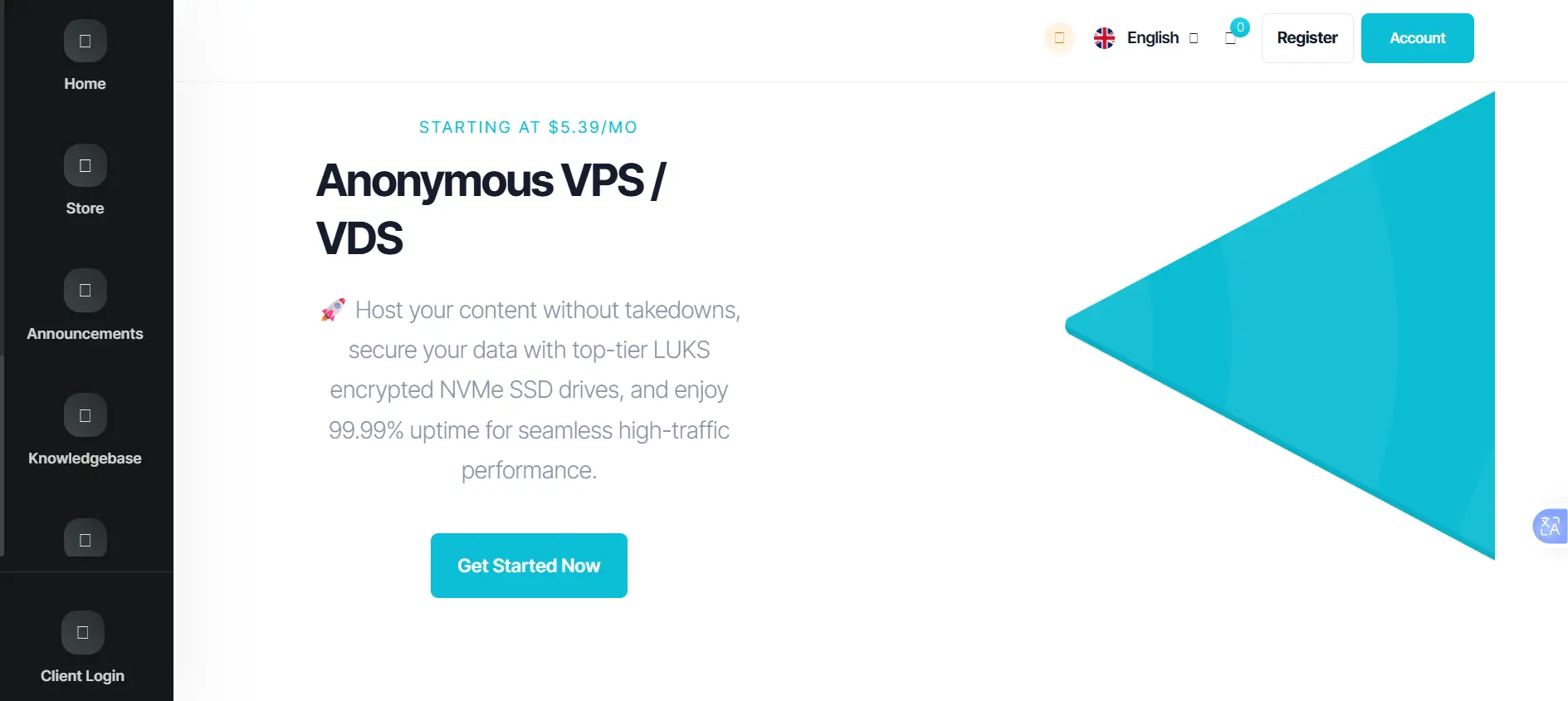
AnonVM focuses on offshore VPS hosting and privacy-first infrastructure. It openly markets itself toward developers, journalists, crypto users, and security researchers.
KYC Policy
No passport, ID, or selfie verification. Only an email address and cryptocurrency payment are required.
Target User Profile
Designed for developers, activists, privacy advocates, crypto traders, and penetration testers needing private infrastructure.
Uptime and Infrastructure
Offers offshore hosting options, full root access, and a 99.99% uptime target.
Verdict
A strong choice for users who want offshore hosting, full administrative control, and a provider built around privacy-focused workloads.
5) Regxa Cloud
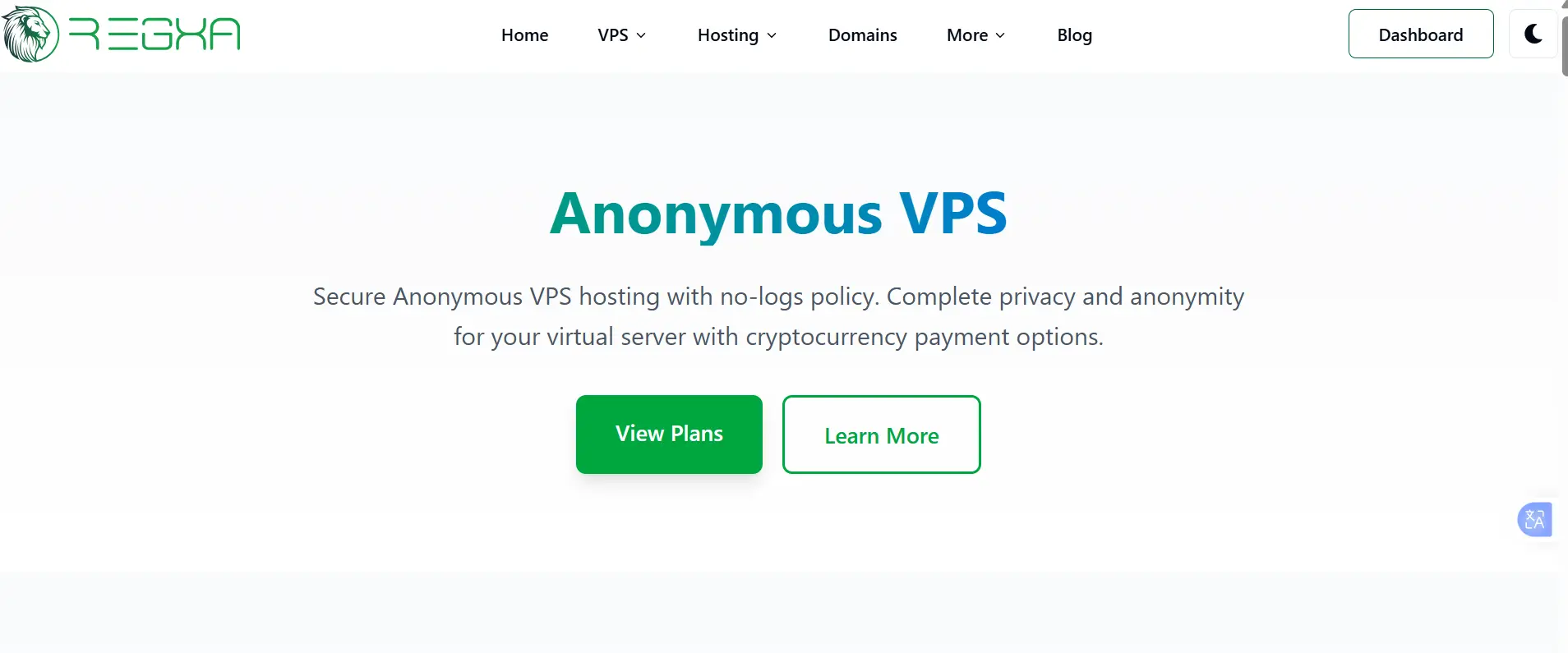
Regxa Cloud is a budget-friendly no-KYC VPS provider with broader global coverage than many alternatives on this list.
KYC Policy
Users can usually sign up with just an email address and cryptocurrency payment.
Coverage
Servers are available in multiple regions, including Brazil, London, and other international locations.
Customer Sentiment
Long-term users often report stable uptime, competitive pricing, and responsive support.
Important Caveat
Some users claim parts of the signup process may still request basic personal details, so it’s worth reviewing the registration flow yourself before purchasing.
Verdict
A practical option for budget-conscious users needing multi-region coverage, though verifying the current signup requirements is recommended.
Risks and Trade-Offs You Should Understand
Choosing a no-KYC provider is not a risk-free decision. These are the real considerations to weigh.
i) You Are Still Subject to Laws and Provider Policies
“No-KYC” does not mean “no consequences.” Every provider in this list operates under the laws of its jurisdiction and enforces its own acceptable use policy. Abuse complaints, DMCA notices, court orders, and takedown requests can still result in account suspension or termination.
No-KYC describes the onboarding process; it does not grant immunity from the legal obligations of the country where the servers physically sit.
ii) Support and Reliability Can Vary Significantly
The no-KYC hosting market is dominated by smaller, often offshore companies. Some oversell server resources, provide slower or inconsistent support, or, in some cases, disappear entirely after a short period.
The operational history of a provider counts. A company that has been operating for 10 or 15 years is meaningfully different from one that launched six months ago.
iii) Higher Risk of Network Blacklisting
No-KYC services attract a broader range of users than mainstream hosting providers. Because of this, some IP ranges associated with these services may already be flagged or blocked by email providers, CDNs, or upstream networks.
If you’re running a mail server or need clean IP reputation, test your assigned IP before building critical infrastructure around it.
iv) Cryptocurrency Payments Are Not Automatically Anonymous
Paying with Bitcoin improves privacy over credit card payments, but it is not anonymous. Bitcoin transactions are recorded on a public blockchain and can be traced with sufficient effort and chain analysis.
Monero, which uses ring signatures, stealth addresses, and confidential transactions, provides substantially stronger privacy guarantees. If anonymity in payment counts to your threat model, Monero is the correct choice where it is accepted.
How to Maximize Anonymity Beyond Provider Selection
Choosing the right provider is step one. How you use that provider counts just as much.
a) Use a privacy-first email address: Register with ProtonMail or Tutanota. Never use a personal, work, or Gmail address. Your email address at signup creates a persistent link back to you if it is associated with your real identity.
b) Pay with Monero where accepted: Bitcoin transactions are traceable on a public ledger. Monero’s privacy architecture, ring signatures, stealth addresses, and RingCT make transaction tracing significantly harder. Where Monero is accepted (notably 1984 Hosting), it is the stronger choice.
c) Route your signup through Tor or a trusted VPN: Your IP address at the time of account creation is a linkage risk even when no ID is required. A provider that logs signup IPs can be compelled to produce those logs. Using Tor or a VPN during signup breaks the link between your real network location and your account.
d) Use unique credentials for every provider: Password reuse and username reuse across accounts are common de-anonymization vectors. Use a password manager to generate unique, unrelated credentials for each service.
e) Start with a monthly billing cycle: Test the provider’s reliability, support responsiveness, and actual performance before committing to longer billing cycles or deploying critical workloads. A month of testing costs very little.
f) Read the acceptable use policy carefully: A legitimate no-KYC provider will have clear, published terms of service. Understanding what is and isn’t permitted protects you from unexpected suspension and gives you a signal about how seriously the provider takes its own policies.
Conclusion: Privacy Without Sacrificing Reliability
The case for no-KYC VPS hosting is not a case for lawlessness; it is a case for proportionality. The information required to rent a server has expanded far beyond what the transaction actually needs. An email address and a payment are sufficient to provision compute time. Everything beyond that is data collection that serves the provider’s interests, not yours.
The five providers in this guide represent different trade-offs across the key variables: operational history, jurisdictional strength, hardware performance, geographic coverage, and price. 1984 Hosting leads on jurisdiction and transparency. Njalla leads on privacy philosophy and identity isolation. Cloudzy leads on performance and coverage. AnonVM is the clearest choice for users who need full administrative control and offshore infrastructure. Regxa offers multi-region access worth investigating despite the caveats.
None of them are perfect. All of them require you to read their terms, test their performance, and apply the operational practices above to get the most out of them.
Privacy is not a single decision; it is a stack. Choosing the right provider is the foundation. How you sign up, how you pay, and how you operate are the layers built on top of it.
VPS Hosting Without KYC Verification FAQs
Is no-KYC VPS hosting legal?
Yes, in most countries. No-KYC hosting is generally legal, but anything you do on the server must still comply with local laws and the provider’s policies.
Does no-KYC mean completely anonymous?
No. It only means the provider does not require identity verification during signup. Your privacy still depends on factors like payment methods, IP logs, and your overall operational security.
Which cryptocurrency offers the best privacy?
Monero (XMR). Unlike Bitcoin, Monero hides transaction details by default, making it the preferred choice for users seeking stronger payment privacy.
Can a no-KYC VPS host websites, VPNs, or crypto nodes?
Yes. Common use cases include websites, VPN servers, crypto nodes, development environments, and private cloud storage, provided they comply with the provider’s acceptable use policy.