 Domain SearchInstantly check and register your preferred domain name
 Web Hosting
 cPanel HostingHosting powered by cPanel (Most user friendly)
 WordPress HostingHost your WordPress website with fast, secure, and affordable WordPress hosting in Kenya.
 KE Domains
 Reseller HostingStart your own hosting business without tech hustles
 Windows HostingOptimized for Windows-based applications and sites.
 Free Domain
 Affiliate ProgramEarn commissions by referring customers to our platforms
 Free HostingTest our SSD Hosting for free, for life (1GB storage)
 Domain TransferMove your domain to us with zero downtime and full control
 All DomainsBrowse and register domain extensions from around the world
 .Com Domain
 WhoisLook up domain ownership, expiry dates, and registrar information
 VPS Hosting
 Managed VPSNon techy? Opt for fully managed VPS server
 Dedicated ServersEnjoy unmatched power and control with your own physical server.
 Website Builder
 Online Store BuilderLaunch a professional e-commerce store without writing code.
 Web Design ServiceGet a custom-designed website tailored to your brand and goals. From just KES 15,600
 BlogRead our guides on web hosting, online business, digital marketing, and more
 SupportOur support guides cover everything you need to know about our services
 ContactContact us via chat or email
Choosing a domain extension looks simple until you’re faced with hundreds of options like .com, .co, .io, .xyz, .shop, .ke, and many more. At that point, it stops being a technical decision and becomes a branding one that shapes how people perceive your business online.
A Top-Level Domain (TLD) is the last part of a website address, such as .com in example.com or .ke in example.co.ke. While it sits at the end of your domain, it plays a big role in trust, memorability, and brand identity. Some extensions feel familiar and reliable, while others feel modern, niche, or experimental.
TLDs are grouped into categories like generic TLDs (.com, .org), country code TLDs (.ke, .uk), sponsored TLDs (.edu, .gov), restricted TLDs (.pro, .biz), and newer options like .io, .ai, and .xyz. Each serves a different purpose depending on audience, industry, and credibility needs.
The system started in the 1980s with just a few domains like .com and .org, but has now expanded to over 1,500 TLDs globally. However, despite this growth, .com still dominates the internet, with most users instinctively typing it first. Country domains remain strong locally, while newer TLDs are still growing but less widely trusted.
This gap between innovation and user behavior is why choosing the right TLD is more important than it seems.
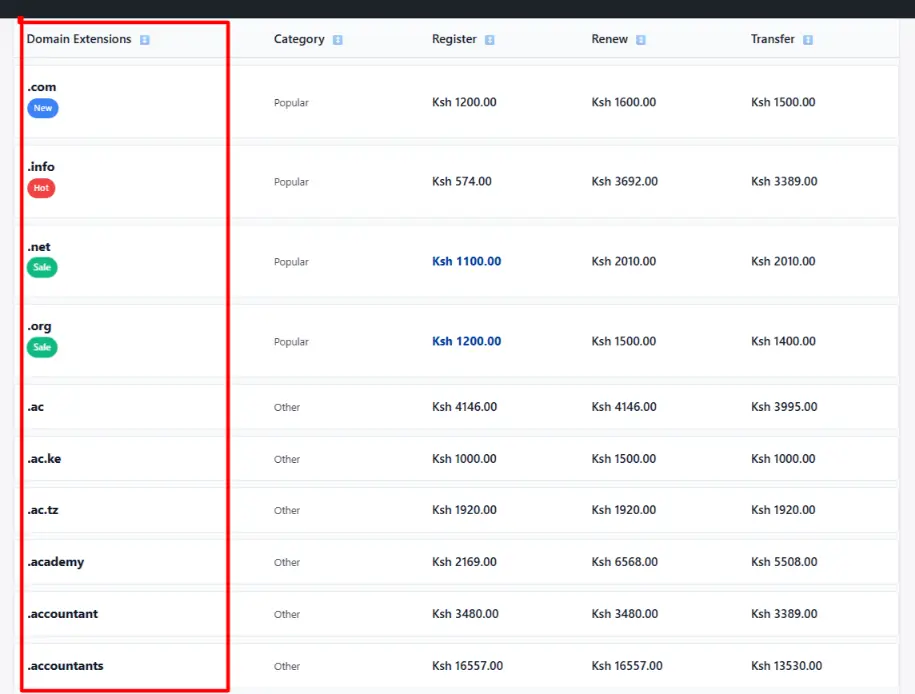
How to Choose the Right TLD
Choosing a domain extension is one of those decisions that looks small but quietly affects your brand for years. The goal isn’t to pick something cool, it’s to pick something clear, trusted, and easy for people to remember. Here’s how to do it properly.
1) Start with one question: Does the .com exist?
This is your first and most important filter.
- If the .com domain is available and reasonably priced, take it immediately. No debate.
- If it’s taken or overpriced (sometimes even $1,000–$5,000+), don’t get emotionally attached; move on.
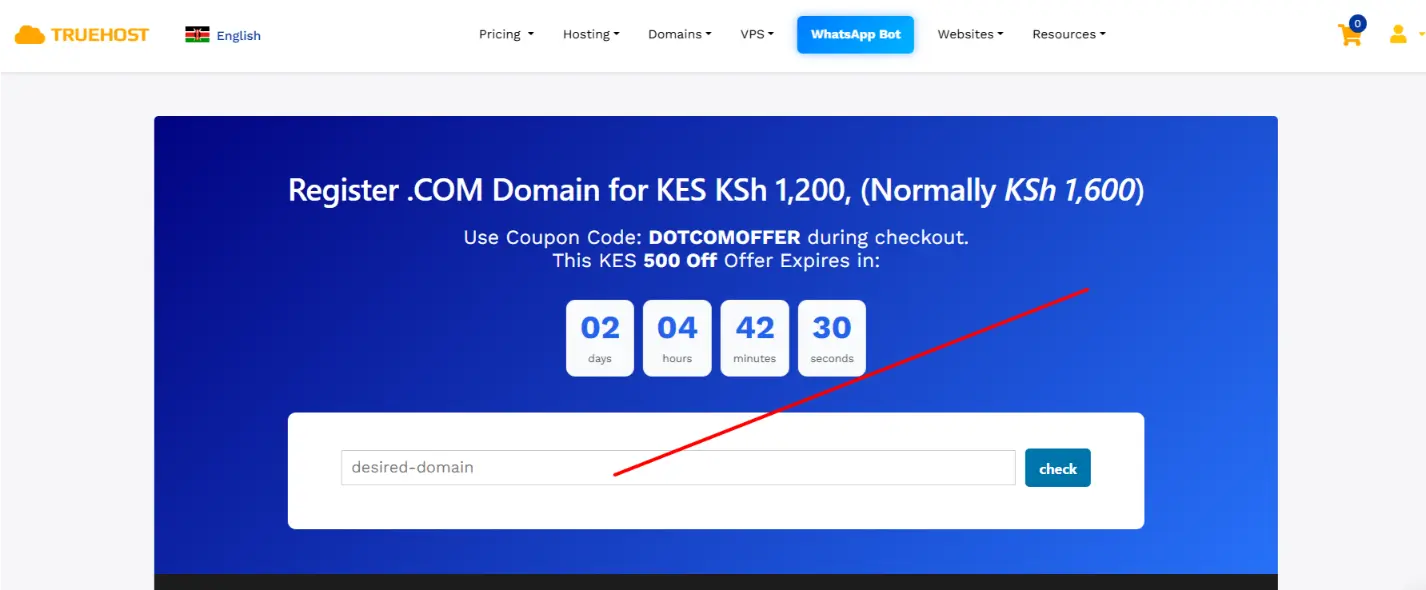
Why is it important?
- .com is still the default in people’s minds
- It’s what users trust first
- It’s what people type without thinking
In practice, owning the .com removes a huge amount of future friction, like:
- Lost traffic from misspellings
- Brand confusion
- Credibility doubts
If you secure it, you eliminate most branding headaches early.
2) Match the TLD to your actual use case
If .com doesn’t work out, your next step is to match the extension to what you actually do.
- Local businesses (cafes, salons, plumbers)
- Best options: .com or country TLDs like .ke, .uk, .us
- Why: locals still trust familiar + regional identity builds relevance
- Portfolio / personal brand
- Options: .me, .name, .io
- Best for: creatives, freelancers, developers
- Startups / SaaS/tech products
- Options: .io, .co
- Caution: .co is often mistyped as .com
- Nonprofits/communities
- Best option: .org
- Why: still widely recognized as trustworthy and mission-driven
- Ecommerce stores
- Options: .store, .shop
- Use only if .com is unavailable
- Don’t depend on people typing your domain directly
- Tech, AI, modern products
- Options: .ai, .dev, .xyz
- Works best if your audience is already tech-aware
3) Be honest about trust levels
Not all TLDs are perceived equally. Some instantly build confidence, others need strong branding to work.
- High trust
- .com, .org, .edu, .gov (restricted)
- Medium trust
- .co, .io, country domains like .ke, .uk
- Lower trust (context-dependent)
- .xyz, .online, .click
If you’re collecting payments, running ads, or building a serious brand, trust beats creativity every time.
4) Check eligibility before you commit
Some TLDs aren’t open to everyone. You may need proof or a legal status before registering:
- .pro → professional license or certification
- .bank → verified financial institution
- .us → U.S. residency or citizenship
- .edu → accredited educational institutions
- .travel → verified travel industry businesses
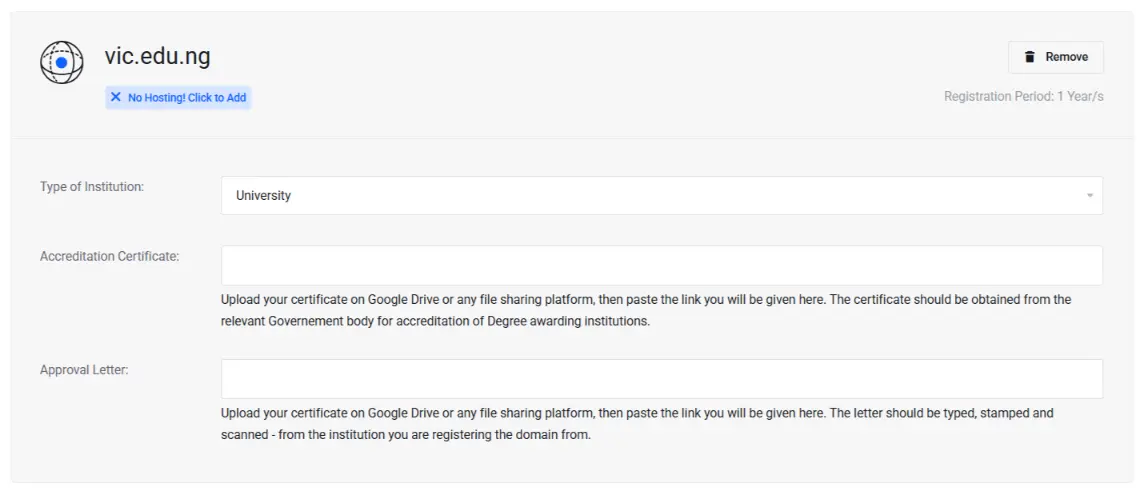
If you don’t qualify, don’t force it; you’ll waste time and possibly lose registration fees.
Why Your TLD Choice Is Important
Your domain extension might look like a small detail, but it quietly shapes how people experience your brand from the very first click. It influences perception, trust, visibility, and even long-term protection of your business online.
a) Branding & User Perception
A TLD sends an instant (and often unconscious) message about your brand:
- .com → “We are established and credible”
- .ke / country domains → “We are local and accessible.”
- .io / .ai → “We are modern, tech-driven, or innovative.”
Even before someone visits your site, the extension has already shaped expectations about your business.
b) SEO Impact (Direct and Indirect)
Google has made it clear that TLDs do not directly improve rankings. However, they still influence performance in indirect ways:
- Click-through rate (CTR): Users are more likely to click on domains they recognize and trust
- User behavior: Familiar domains often lead to higher engagement and lower bounce rates
- Perceived credibility: Trust influences whether people click your link in search results
So while SEO isn’t directly affected by your TLD, user behavior absolutely is.
c) Trust, Security & Deliverability
Trust plays a major role in how your domain performs across the web:
- Emails from .com and .org domains are generally seen as more credible
- Some unfamiliar or spammy-looking TLDs may get flagged more often
- In e-commerce, a weak or unfamiliar extension can reduce confidence at checkout
Simply put, trust affects conversions.
d) Availability, Cost & Scalability
Different TLDs come with different trade-offs:
- .com: Most trusted, but often taken or expensive
- New TLDs (.xyz, .shop, .online): Easy to get and affordable, but less universal
- Country codes (.ke, .uk, .de): Strong for local markets, but limited global reach
Your choice should balance cost, availability, and where you plan to grow.
e) Legal & Brand Protection
Owning more than one extension can protect your brand in the long run:
- Prevents competitors or impersonators from using similar domains
- Reduces risk of brand confusion
- Helps avoid traffic loss from mistyped URLs
For example, securing both brand.com and brand.co.ke ensures your audience ends up in the right place, no matter what they type.
Key Factors for Choosing a TLD
Choosing the right domain extension is about making a strategic decision that supports your brand, audience, and long-term goals. Here are the key factors you should carefully evaluate before settling on a TLD.
1) Trust & Recognition
Your TLD directly affects how people perceive your website at first glance. Familiar extensions like .com and .org tend to feel more credible because users have seen them for years. Less common extensions can still work, but they often need stronger branding to build the same level of trust.
2) Target Audience Location
Where your audience is based is important. If you’re targeting a specific country, a country code TLD (ccTLD) like .ke, .uk, or .de can instantly signal local presence and build relevance.
For global audiences, more universal extensions like .com are usually better.
3) Industry Niche
Some TLDs naturally fit certain industries. For example:
- .org for nonprofits
- .io or .ai for tech and startups
- .shop or .store for ecommerce
Matching your TLD to your niche helps users quickly understand what you do.
4) Brand Identity
Your domain should feel like an extension of your brand. A modern tech startup might lean toward something like .io, while a personal brand might feel more natural on .me. The key is consistency with your brand personality.
5) Availability & Cost
Sometimes the ideal .com is already taken or too expensive. In such cases, you’ll need to balance budget and availability while still choosing something credible and easy to work with long-term.
6) Memorability
The best domain is one that people can easily remember and type without hesitation. Short, simple, and familiar TLDs reduce the chances of errors and help users find you again effortlessly.
Comparison of Major TLD Categories and Their Prices
| Category | Examples | Registration Price | Renewal Price |
| Generic Restricted Top-Level Domains (grTLDs) | .biz, .pro | Ksh 962| 462| | Ksh 2,633| 3,692 |
| Sponsored Top-Level Domains (sTLDs) | .travel, museum | Ksh 24,506 | Ksh 24,506 |
| Country Code Top-Level Domains (ccTLDs) | .ke, .uk, .de | Ksh 3,000|892|| 816 | Ksh 3,000| 892| 816 |
| Generic Top-Level Domains (gTLDs) | .com, .org, .net | Ksh1,200|1,200| 1,100 | Ksh 1,600| 1,500| 2,010 |
Register Your TLD Choice Today
Your domain name is the foundation of your online identity. It affects how people remember you, how much they trust you, and how easily they find you. The right TLD can quietly strengthen your brand, while the wrong one can create confusion or limit your growth.
At the end of the day, the best approach is simple: secure the most suitable TLD for your brand as early as possible, before it’s taken or becomes expensive.
Launching a business, building a personal brand, or bringing an idea online all start with one thing: your domain. It’s the first real step toward becoming visible on the internet and establishing your presence.
Register your domain today with Truehost and choose from a wide range of trusted TLDs at affordable prices. Build your online presence the right way from day one.
TLD FAQs
Is .com still the best option in 2026?
Yes. Despite the rise of many new extensions, .com remains the most trusted, widely recognized, and default domain choice globally. Most users still instinctively type .com, which makes it the safest option for long-term branding if it’s available.
Are newer TLDs like .xyz or .ai safe to use?
Yes, they are safe and fully legitimate. In fact, they are widely used in tech, AI, and startup ecosystems. However, because they are less familiar to the average user, they often require stronger branding and marketing to build trust.
Will using a non-.com TLD hurt SEO?
No. Search engines like Google do not rank websites based on the type of TLD you use. Whether your domain ends in .com, .co, .io, or a country-specific extension like .ke, it has no direct impact on your search rankings.
However, user behavior can play a role indirectly. People are generally more comfortable clicking on familiar domain extensions, which can influence click-through rates, trust, and overall engagement on your website over time.
What TLD is best for local businesses?
The strongest approach is usually a combination of .com and a country-specific domain like .ke, .uk, or .us. Local TLDs help signal relevance, while .com maintains universal credibility.
Why do some domains cost thousands of dollars?
High prices usually apply to premium or aftermarket domains. These are often short, highly brandable, or contain popular keywords, making them more valuable and in high demand.
Is it worth buying multiple TLDs for one brand?
Yes, especially for brand protection. Owning multiple extensions helps prevent impersonation, reduces confusion, and ensures traffic still reaches your business even if users type the wrong version.
Can I switch my TLD later?
Not directly. You can’t change a TLD; you would need to register a new domain and set up redirects from the old one. This is why choosing wisely from the start is important.
What happens if someone owns the .com version of my domain?
You may lose potential traffic, as users often default to .com. In some cases, you can try to buy the domain from the current owner, but if that’s not possible, you’ll need to build a strong alternative brand and use redirects where applicable.