 Domain SearchInstantly check and register your preferred domain name
 Web Hosting
 cPanel HostingHosting powered by cPanel (Most user friendly)
 WordPress HostingHost your WordPress website with fast, secure, and affordable WordPress hosting in Kenya.
 KE Domains
 Reseller HostingStart your own hosting business without tech hustles
 Windows HostingOptimized for Windows-based applications and sites.
 Free Domain
 Affiliate ProgramEarn commissions by referring customers to our platforms
 Free HostingTest our SSD Hosting for free, for life (1GB storage)
 Domain TransferMove your domain to us with zero downtime and full control
 All DomainsBrowse and register domain extensions from around the world
 .Com Domain
 WhoisLook up domain ownership, expiry dates, and registrar information
 VPS Hosting
 Managed VPSNon techy? Opt for fully managed VPS server
 Dedicated ServersEnjoy unmatched power and control with your own physical server.
 Website Builder
 Online Store BuilderLaunch a professional e-commerce store without writing code.
 Web Design ServiceGet a custom-designed website tailored to your brand and goals. From just KES 15,600
 BlogRead our guides on web hosting, online business, digital marketing, and more
 SupportOur support guides cover everything you need to know about our services
 ContactContact us via chat or email
Many Kenyan businesses are visible, but still hard to understand.
You can find them on WhatsApp, Instagram, TikTok, Facebook, Google Maps, posters, referrals, and estate groups.
But when a customer wants prices, product photos, opening hours, location, delivery areas, service details, reviews, or a proper email address, the information is often scattered.
That gap costs money.
This guide shows 100+ Kenyan businesses that need a website, what each website should include, and how to tell which businesses are the strongest prospects.
Kenya already has the digital behaviour to support this.
DataReportal’s Digital 2025 Kenya report estimated 27.4 million internet users in Kenya at the start of 2025:
The Central Bank of Kenya’s mobile payments data showed 94.09 million registered mobile money accounts in May 2026 and KSh 681.45 billion in agent cash-in/cash-out value that month.
Customers are already digital.
The question is whether a business gives them a clear place to act.
The Best Websites Have Five Signals
Not every business needs the same website.
A mama mboga stall, a dental clinic, a safari company, and a baby shop have different buying paths.
But the strongest website opportunities usually share at least three of these signals.
Baby shops, clinics, schools, salons, restaurants, real estate agents, car dealers, and tour companies score high because customers need trust and detail before they buy.
What a Kenyan Business Website Should Do
A useful business website should answer the questions customers ask before they call:
- What do you sell or offer?
- Where are you located?
- Are you open now?
- What does it cost, or how do I get a quote?
- Can I see photos?
- Can I trust you?
- Do you deliver or serve my area?
- Can I contact you on WhatsApp?
- Do you have a professional email address?
- What should I do next?
For most Kenyan SMEs, the first version can be simple:
- Register a domain such as
.co.ke,.ke, or.com. - Build a mobile-friendly website.
- Host it on shared hosting.
- Add business email.
- Add WhatsApp, phone, forms, and map links.
- Connect or improve the Google Business Profile.
- Upgrade later if the site needs ecommerce, bookings, or more server control.
Google also allows verified businesses to update details such as address, hours, phone, photos, website link, service area, and sometimes WhatsApp chat through Google Business Profile.
A website and Google profile work best together: the profile helps customers find you; the website helps them decide.
Top 10 Niches That Could Use a website
If you are a web designer, agency, freelancer, or Truehost content planner, do not treat all 128 ideas equally.
Start with businesses where a website can clearly create money, trust, or saved time.
| Business type | Reason to target first | Best first offer |
|---|---|---|
| #1 Baby shops | Repeat purchases, product browsing, gifting, delivery, parent trust | Catalog website with WhatsApp orders Create Website |
| 2# Clinics and dentists | High trust, high search intent, appointment need | Service website with booking form |
| 3# Schools and daycares | Parents need proof before visiting | Admissions and trust website |
| 4# Restaurants and bakeries | Menus, photos, prices, location, orders | Menu website with WhatsApp |
| 5# Salons and beauty studios | Galleries and bookings drive sales | Portfolio website with booking CTA |
| 6# Real estate agents | Listings and trust signals matter | Property listing website |
| 7# Car dealers and garages | Buyers compare before calling | Inventory or services website |
| 8# Tour and accommodation businesses | Photos, packages, rates, booking | Visual booking website |
| 9# Professional services | Credibility, expertise, consultation | Authority website with business email |
| 10# Home service providers | Urgent local search demand | Local service website with phone CTA |
These businesses are easier to sell a website to because the website is not a vanity item. It answers questions that already block the sale.
Baby, Kids & Parenting Businesses
1) Baby Shops
Baby shops are the best place to start because the buying path is rich.
Parents do not just ask, “Do you have baby clothes?” They ask about age, size, safety, delivery, price, quality, colour, stock, return policy, and whether the shop is real.
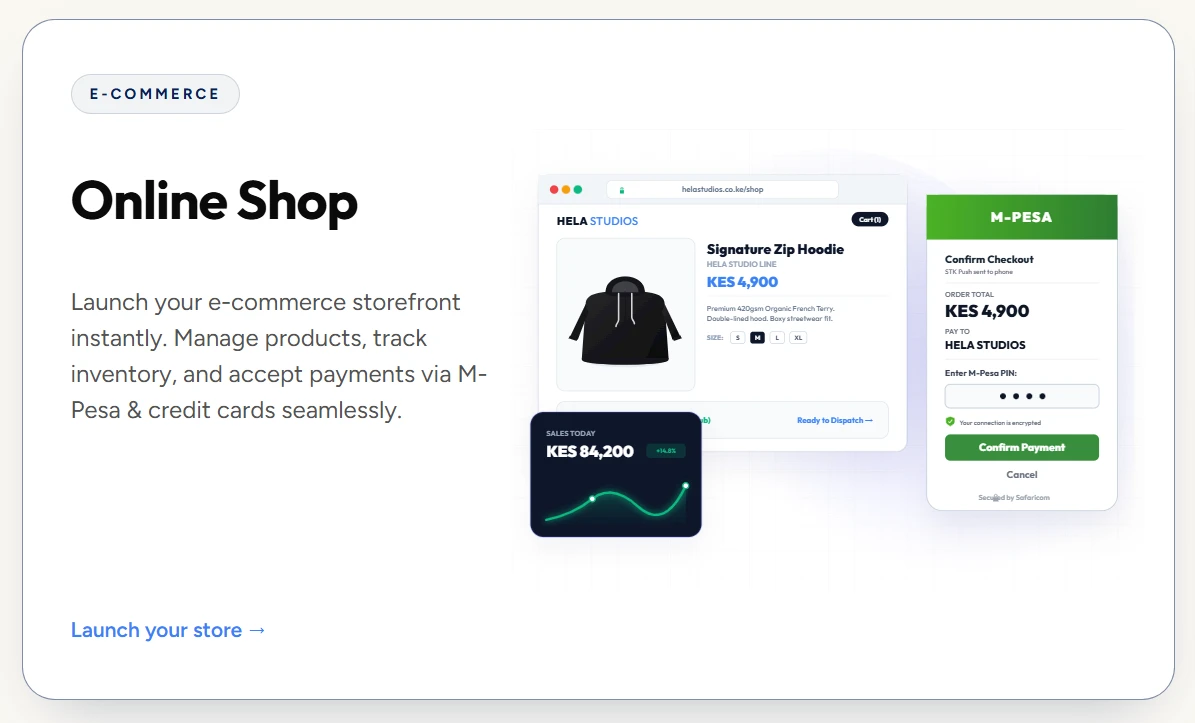
A strong baby shop website should include:
- product categories by age: newborn, 0-3 months, 3-6 months, toddlers
- clothes, diapers, wipes, cots, walkers, strollers, car seats, bottles, toys, and maternity items
- gift bundles for baby showers and newborn visits
- clear delivery areas such as Nairobi, Kiambu, Thika, Mombasa, Nakuru, Kisumu, Eldoret, and countrywide courier options
- WhatsApp order buttons
- M-PESA payment instructions or checkout
- real customer reviews
- a Google Maps link for physical shops
- business email for suppliers, schools, clinics, and bulk buyers
Examples of great leaders in this space include:
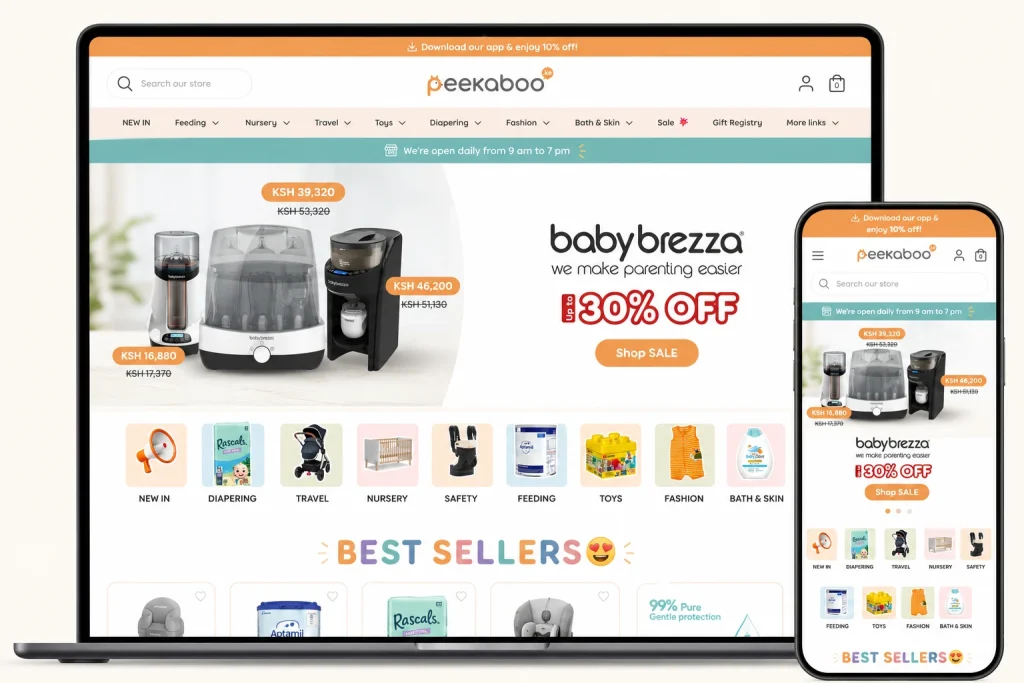
- Nila Baby Shop
- Zawadi Baby Shop
- Peekabo.ke
What to study from strong baby retailers:
- how they group products
- whether prices are visible
- whether WhatsApp is used for conversion
- how delivery is explained
- whether photos are original
- how much trust the site builds before payment
Setting a baby shop for a client or your business? You can leverage our AI website builder to help you get started in minutes.
Online Shop
Launch your e-commerce storefront instantly. Manage products, track inventory, and accept payments via M-Pesa & credit cards seamlessly.
Launch your store →-
Let AI build and customize online store
-
Connect your domain
-
setup business email
-
Integrate whatsapp and chat
-
and start delivering those orders.
As your shop grows, you can move to a VPS. Or you could get started on it if your shop is already big enough
2) Children Clothing Stores
Parents shop by age, size, event, school season, and budget. A website helps them compare without forcing the shop owner to resend the same photos all day.
The site should include size guides, prices, product photos, new arrivals, delivery areas, exchange rules, and WhatsApp ordering.
3) Maternity Stores
Expectant mothers need comfort, sizing, privacy, and clear product guidance. A maternity store can group items by trimester, hospital bag, nursing, postpartum recovery, and baby arrival.
Useful pages include maternity dresses, nursing bras, hospital bags, pillows, and newborn starter packs.
4) Toy Shops
Toy buyers care about age, safety, learning stage, price, and gifting. A toy shop website should group products by age, budget, educational value, and occasion.
Good categories include sensory toys, puzzles, outdoor play, school toys, baby toys, and birthday gifts.
5) Kids Furniture Shops
Cots, bunk beds, study desks, wardrobes, and toy storage need dimensions, materials, colours, delivery fees, and installation notes.
The site should show real rooms, custom work, timelines, and care instructions.
6) Diaper Suppliers
Diapers are repeat purchases. A diaper supplier can use a website to sell monthly bundles, wholesale cartons, subscriptions, and same-day delivery.
The site should compare sizes, brands, pack counts, and delivery areas.
7) Baby Photography Studios
Parents want proof before booking. A baby photography website should show newborn shoots, birthday sessions, maternity shoots, cake smash packages, themes, props, prices, and booking steps.
This niche needs strong galleries and clear package differences.
Education & Training Businesses
8) Daycares
Parents do not choose a daycare from a phone number. They want to see the environment, meals, safety approach, fees, opening hours, teacher information, and location.
A daycare website should reduce fear before the first visit.
9) Kindergartens
Kindergartens need pages for curriculum, term dates, fee guidance, activities, meals, transport, and application steps.
Good photos matter because parents want to see the learning space.
10) Private Primary Schools
Schools need more than notices in WhatsApp groups. Parents want admissions, fees, school calendar, performance signals, facilities, transport routes, and contacts.
A website also helps the school publish updates that parents can find later.
11) Tutoring Centers
Parents and students search by subject, grade, exam, location, and fee. A tutoring center website can show subjects, tutors, timetable, packages, testimonials, and registration options.
Strong service pages include KCSE revision, CBC support, maths tutoring, sciences, English, Kiswahili, and holiday tuition.
12) Homeschooling Support Services
Homeschooling support needs explanation. Parents want to know the method, schedule, materials, cost, legal considerations, social activities, and expected outcomes.
A website gives space for FAQs, parent stories, and consultation booking.
13) Driving Schools
Learners compare fees, lesson packages, branch locations, NTSA support, vehicle types, and reviews before enrolling.
A driving school website should show packages, requirements, class schedules, branch contacts, and payment steps.
14) TVET Colleges
TVET colleges need course pages, intake dates, fees, application forms, accreditation notes, and location pages.
Each course should have its own page because students search for specific training, not just the institution name.
15) Coding Bootcamps
Students want curriculum, tools taught, fees, schedules, projects, mentorship, career support, and alumni proof.
Avoid fake job guarantees. Show what students will build and how the learning process works.
16) Language Schools
Language schools can attract learners searching for French, German, Arabic, Chinese, English, Kiswahili, IELTS, and TOEFL support.
The site should show levels, class times, tutor profiles, online options, placement tests, and fees.
17) Music Schools
Parents and adults want instruments taught, lesson fees, teacher profiles, location, and recital opportunities.
A good music school website should make booking a trial lesson easy.
18) Exam Revision Centers
Exam revision centers need schedules, subjects, prices, location, teacher profiles, and signup forms.
They can also publish revision tips that bring search traffic before peak exam season.
Healthcare & Wellness Businesses
19) Private Clinics
Patients search for services, opening hours, location, insurance support, doctor availability, and directions before calling.
A clinic website should show services, consultation hours, emergency process, map location, phone, and appointment options.
20) Dental Clinics
Dental patients compare services, prices, before-and-after proof, location, and appointment options.
Useful pages include cleaning, braces, whitening, implants, root canal, kids dentistry, and emergency dental care.
21) Eye Clinics
Eye clinics need pages for eye tests, glasses, contacts, specialist care, and common conditions.
The site should show location, opening hours, payment options, and appointment steps.
22) Physiotherapy Clinics
Patients want to know what conditions are treated, who the therapist is, how sessions work, and how long recovery might take.
The website can group services by back pain, sports injuries, post-surgery rehab, stroke rehab, and workplace injuries.
23) Mental Health Counselors
Trust and privacy are central. A mental health website should explain services, confidentiality, session formats, fees, online sessions, and booking options.
The tone should be calm and precise.
24) Fertility Clinics
Couples need credible information, doctor profiles, treatment paths, privacy, and private inquiry forms.
This site must be medically careful. Avoid guarantees and unsupported success claims.
25) Diagnostic Labs
Labs can list tests, sample collection options, turnaround times, branches, corporate packages, and contact channels.
Clear test categories help patients and clinics find the right service fast.
26) Pharmacies
A pharmacy website can show branches, delivery areas, product categories, prescription upload instructions, and opening hours.
It can also help customers confirm availability before visiting.
27) Home Nursing Agencies
Families need trust before allowing care providers into a home. A website should show staff checks, care packages, pricing guidance, availability, and emergency contacts.
Good pages include elderly care, post-surgery care, palliative care, and home-based care.
28) Medical Equipment Suppliers
Hospitals, clinics, and families need product specs, stock status, warranties, delivery, installation, and quote forms.
A catalog website can reduce repeated phone questions.
29) Nutritionists
Nutritionists need service packages, consultation formats, meal planning options, testimonials, and booking links.
The site should focus on practical health goals, not miracle claims.
Food, Drinks & Hospitality Businesses
30) Restaurants
Customers check menus, prices, photos, location, parking, delivery options, and opening hours before visiting.
A restaurant website should make the menu readable on mobile and include phone, WhatsApp, reservation, and map links.
31) Cafes
Cafes need menus, ambience photos, work-friendly details, Wi-Fi notes, events, and Google Maps visibility.
If the cafe hosts brunches, meetings, or small events, those should have dedicated sections.
32) Bakeries
Cakes and pastries sell through photos, prices, flavours, order deadlines, pickup points, and delivery notes.
A bakery website should make custom order requests easy.
33) Catering Companies
Event buyers want menus, price ranges, past events, serving options, guest-count guidance, and quote forms.
The website should show packages for weddings, office lunches, birthdays, funerals, and corporate events.
34) Cloud Kitchens
A cloud kitchen can use a website to take direct orders instead of depending only on delivery apps and social media.
The site should show menus, delivery zones, ordering hours, payment options, and WhatsApp checkout.
35) Butcheries
Butcheries can show cuts, prices, bulk orders, delivery areas, freshness details, and business supply options.
Hotels, restaurants, and homes need different buying paths.
36) Organic Food Shops
Customers want source details, weekly stock, prices, delivery days, and subscription boxes.
A website helps the shop explain its sourcing and pricing clearly.
37) Wine and Spirits Shops
Wine and spirits stores need product catalogs, legal age notices, location pages, delivery rules, and offers.
The site should be clear about responsible selling and delivery limits.
38) Event Food Vendors
Food vendors need menus, event photos, package prices, serving capacity, and booking calendars.
Buyers want proof from past events before trusting a vendor with a large crowd.
39) Juice and Smoothie Bars
Menus, ingredients, health notes, delivery, loyalty offers, and location can turn searches into visits.
The website should separate everyday drinks, event supply, and wellness packages.
Beauty, Fitness & Personal Care Businesses
40) Salons
Salons win with galleries, service menus, prices, stylist profiles, opening hours, and WhatsApp booking.
Customers want to see the work before booking.
41) Barbershops
Barbershops need photos, prices, barber profiles, booking links, location, and Google reviews.
The AP reported in 2025 that Kenyan barber Safari Martins built large audiences on TikTok and Instagram, showing how social visibility can drive attention. A website gives that attention a stable place to convert into bookings.
42) Spas
Spa customers compare treatments, packages, ambience, prices, and availability.
Strong pages include massage, facials, body scrub, couples packages, and gift vouchers.
43) Nail Studios
Nail studios need photo galleries, price menus, design categories, location, and appointment booking.
The site can group designs by short nails, acrylics, gel, bridal nails, and seasonal styles.
44. Makeup Artists
Makeup artists sell trust through portfolios, bridal packages, rates, travel fees, locations, and testimonials.
The website should show different looks, not just one style.
45) Bridal Stylists
Brides want proof, packages, timelines, travel fees, and past work.
A bridal stylist website should make consultation booking clear and show full wedding-day support.
46) Tattoo Studios
Tattoo buyers need artist portfolios, hygiene notes, pricing guidance, location, and booking forms.
The website should also explain consultation and aftercare steps.
47) Fitness Trainers
Trainers need packages, transformation proof, class schedules, location, online coaching options, and signup forms.
The site should help people choose between personal training, group classes, and home workouts.
48) Gyms
Gyms can show membership plans, equipment, trainers, classes, opening hours, and location.
Photos and clear pricing reduce walk-in uncertainty.
49) Yoga and Pilates Studios
Studios need schedules, teacher profiles, class types, prices, booking links, and beginner guidance.
A website can also sell workshops, retreats, and private sessions.
Property, Construction & Home Services
50) Real Estate Agents
Property buyers need listings, photos, location details, prices, viewing forms, and agent contacts.
A website helps agents build trust beyond forwarded WhatsApp images.
51) Property Managers
Landlords need service pages, management fees, portfolio proof, reporting process, and inquiry forms.
The site should explain rent collection, maintenance, tenant screening, and reports.
52) Airbnb Hosts
Hosts need direct booking pages, photos, amenities, house rules, location, rates, and WhatsApp contact.
This can reduce dependence on booking platforms for repeat guests.
53) Apartment Blocks
Apartment blocks need unit types, rent ranges, amenities, parking, location, photos, and viewing requests.
A dedicated website can help fill vacancies faster.
54) Land Sellers
Land buyers need title status, location, maps, pricing, payment options, site visit booking, and legal details.
This niche needs careful wording and verified claims.
55) Construction Companies
Clients want past projects, services, budgets handled, location coverage, and quote forms.
A construction website should show actual work, not generic building photos.
56) Interior Designers
Interior designers sell through portfolios, packages, before-and-after images, consultation booking, and room-by-room examples.
The website should make style and process clear.
57) Architects
Architects need project galleries, service scope, approvals experience, consultation forms, and client types served.
Good pages include residential, commercial, renovation, and concept design.
58) Quantity Surveyors
Developers search for cost planning, bills of quantities, tender support, project controls, and credentials.
A website helps explain technical services in language clients can act on.
59) Borehole Drillers
Customers need location coverage, survey process, drilling depth guidance, equipment, permits, and quote forms.
The website should explain what affects cost without giving unsafe fixed claims.
60) Plumbers
Emergency service pages, service areas, rates, WhatsApp buttons, and Google visibility can win calls.
Useful pages include blocked drains, leaks, bathroom installation, water tanks, and pump repair.
61) Electricians
Electricians need services, certifications, emergency response, location coverage, and reviews.
A website helps customers choose someone trustworthy for a risky job.
62) Solar Installers
Solar buyers need packages, panel specs, battery options, pricing guidance, warranties, and site assessment forms.
This niche benefits from calculators, FAQs, and simple explanations.
63) CCTV Installers
CCTV clients want camera packages, installation areas, maintenance, remote viewing options, and quote forms.
A website can group packages for homes, shops, schools, and offices.
64) Internet Installers
Customers search by estate, speeds, installation fees, router costs, downtime response, and support contacts.
Location pages are especially useful for this niche.
65) Cleaning Companies
Homes and offices want cleaning packages, prices, availability, photos, and booking forms.
Good pages include sofa cleaning, post-construction cleaning, office cleaning, deep cleaning, and move-in cleaning.
66) Pest Control Firms
Customers need services by pest type, safety notes, service areas, prices, and urgent contact.
The site should cover termites, bedbugs, cockroaches, ants, rats, and fumigation.
67) Moving Companies
Movers need truck sizes, packing services, routes, price estimates, insurance notes, and booking forms.
A website can help customers request a quote without a long phone call.
68) Locksmiths
Emergency locksmiths need search visibility, service areas, phone buttons, and trust signals.
The website should make emergency contact fast on mobile.
69) Landscaping Businesses
Landscapers sell through project photos, service packages, plant options, maintenance plans, and quote forms.
Good pages include lawns, gardens, compound design, and office landscaping.
Automotive, Transport & Logistics Businesses
70) Car Dealerships
Car buyers compare stock, prices, mileage, financing, trade-ins, inspection status, and viewing options.
A car dealer website should let buyers filter by make, model, price, year, and location.
71) Car Washes
Car washes need package prices, location, opening hours, loyalty offers, and Google Maps visibility.
The site can also show detailing, engine wash, interior cleaning, and home service.
72) Garages
Garages can list services, vehicle types, diagnostics, spare parts, booking, and location details.
Trust is the main sale here. Show real mechanics, tools, work bays, and reviews.
73) Spare Parts Shops
Customers search by car model, part type, price, delivery, and availability.
A catalog website can reduce repeated calls and help buyers send the right inquiry.
74) Car Hire Companies
Travelers need vehicle types, rates, insurance terms, pickup locations, and booking forms.
Good pages include self-drive, chauffeur-driven, airport pickup, and long-term hire.
75) Driving Instructors
Independent instructors need packages, lesson areas, prices, availability, and WhatsApp booking.
A website helps them look more serious than a phone number in a group chat.
76) Motorcycle Dealers
Buyers need models, prices, financing, spare parts, warranties, and location.
The site can serve both personal riders and delivery businesses.
77) Logistics Firms
Businesses want routes, fleet size, delivery times, tracking options, cargo types, and quote forms.
A logistics website should make B2B inquiries easy.
78) Courier Businesses
Couriers need delivery zones, pricing, pickup request forms, delivery timelines, and customer support contacts.
The website should answer the most common question fast: where do you deliver and how much does it cost?
79) Towing Services
Towing companies need emergency phone buttons, service areas, pricing guidance, and 24-hour visibility.
Mobile speed matters because customers may be stuck on the road.
Travel, Tourism & Accommodation Businesses
80) Tour Operators
Tour buyers compare itineraries, prices, dates, inclusions, photos, and reviews.
A tour operator website should show packages clearly and make inquiry forms easy.
81) Safari Companies
Safari companies need destination pages, packages, vehicles, guides, lodges, inclusions, exclusions, and booking forms.
Good pages include Maasai Mara, Amboseli, Tsavo, Samburu, Naivasha, and Nakuru.
82) Diani Villas
Villa sites need photos, amenities, rates, calendars, house rules, location, and direct booking contacts.
The website should help guests understand the space before they ask for dates.
83) Mombasa Guesthouses
Guesthouses need rooms, rates, location, parking, breakfast details, check-in rules, and booking contacts.
Photos should show actual rooms, bathrooms, common areas, and nearby landmarks.
84) Naivasha Cottages
Cottages sell through lake access, photos, rates, activities, availability, and directions.
The site can also show group packages, couples stays, and family stays.
85) Nanyuki Lodges
Lodges need room types, views, activities, rates, events, and direct booking options.
Good pages include conference, honeymoon, family stay, and local attractions.
86) Kisumu Hotels
Hotels need room pages, conference facilities, rates, food options, parking, and Google Maps visibility.
The website should work well for both leisure and business guests.
87) Travel Agents
Travel agents need packages, destinations, visa support, payment terms, and inquiry forms.
The site should separate holidays, flights, visa support, corporate travel, and honeymoon packages.
88) Airport Transfer Companies
Travelers want vehicle options, rates, pickup process, flight tracking, and phone contacts.
A website can help the business win searches around JKIA, Wilson, Moi International Airport, and hotel transfers.
89) Team-Building Venues
Companies need packages, capacity, activities, meals, photos, location, and quote forms.
The website should make HR and admin teams comfortable requesting a proposal.
Events & Creative Services
90) Event Planners
Event planners sell through past work, packages, vendors, budgets, and booking consultations.
A website helps buyers see the planner’s taste and range before calling.
91) Wedding Venues
Venues need galleries, capacity, rates, packages, location, parking, catering rules, and viewing booking.
Good photos and clear capacity information can reduce unqualified inquiries.
92) Photographers
Photographers need portfolios, packages, niches, rates, booking forms, and delivery timelines.
The site should separate weddings, portraits, corporate, newborn, product, and event work.
93) Videographers
Video clients want samples, packages, drone options, editing timelines, and quote forms.
A website can host selected work better than a crowded social feed.
94) DJs
DJs need mixes, event photos, packages, equipment, availability, and booking contacts.
The site should show event types served: weddings, clubs, corporate events, birthdays, and ruracios.
95) Sound and Lighting Companies
Event buyers need equipment lists, package sizes, past events, delivery areas, and quotes.
A website helps clients choose the right package for the size of the event.
96) Tent and Chair Providers
These providers need inventory, photos, package prices, transport fees, setup areas, and booking forms.
The site should show tents, chairs, tables, decor add-ons, and capacity.
97) Florists
Florists need galleries, bouquet prices, delivery locations, wedding packages, and order forms.
Clear categories help: birthdays, sympathy, weddings, corporate, and same-day delivery.
98) Cake Decorators
Cake buyers need galleries, sizes, flavours, prices, order deadlines, and delivery details.
The website should make quote requests easy by asking for size, theme, date, and location.
99) MCs and Entertainers
Performers need videos, past events, packages, availability, and booking contacts.
The website should show the personality of the performer without making the page hard to scan.
Professional, Finance & Advisory Services
100) Law Firms
Clients search by practice area, lawyer profiles, fees guidance, location, and consultation options.
A law firm website should build trust while staying careful about legal claims.
101) Accounting Firms
Businesses need bookkeeping, payroll, tax, audit support, pricing guidance, and contact forms.
The website can group services for SMEs, NGOs, landlords, and growing companies.
102) Tax Consultants
Tax clients need deadlines, services, KRA support, pricing guidance, and appointment booking.
A website can also publish timely tax updates when rules or filing dates change.
103) HR Consultants
Companies search for recruitment, contracts, payroll, compliance, training, and retainer support.
A website should make services clear for both SMEs and larger employers.
104) Insurance Agencies
Insurance buyers compare covers, premiums, claims support, documents needed, and contacts.
The site should explain motor, medical, travel, business, and life insurance in plain language.
105) SACCOs
Members need loan products, forms, branch contacts, rates, member portal links, updates, and support.
A SACCO website must be clear, current, and easy to use on mobile.
106) Microfinance Firms
Borrowers need loan types, requirements, repayment terms, branch locations, and application steps.
The website should explain fees and conditions carefully.
107) Business Coaches
Coaches need proof, programs, pricing, session formats, client fit, and booking pages.
A website should show what kind of business owner the coach helps.
108) Tender Consultants
Businesses need services, document support, tender search help, pricing, timelines, and inquiry forms.
The site should not promise tender wins. It should explain the support process.
109) Immigration Consultants
Clients need visa categories, requirements, country pages, fees guidance, and private inquiry forms.
Accuracy matters because wrong advice can cost people money and time.
Retail, Repairs & Supplies Businesses
110) Hardware Shops
Hardware customers search for products, prices, delivery areas, bulk supply, and location.
A hardware website can help contractors and homeowners request quotes faster.
111) Furniture Makers
Furniture makers need catalogs, dimensions, materials, custom order forms, delivery notes, and past work.
The website should show real products, not only design inspiration.
112) Curtain and Blinds Shops
Customers want fabric choices, measurement process, installation, galleries, and quote forms.
Good pages include office blinds, home curtains, sheers, blackout curtains, and motorised blinds.
113) Electronics Shops
Electronics buyers need product specs, prices, warranties, delivery, and stock status.
A website can help reduce price-checking calls and build trust around genuine products.
114) Phone Repair Shops
Repair shops need services, phone models, price ranges, turnaround times, and locations.
The website should show screen replacement, battery replacement, charging port repair, water damage, and diagnostics.
115) Computer Repair Shops
Customers need laptop repair services, parts, pricing guidance, diagnostics, data recovery, and contact buttons.
The site can also serve offices that need regular IT support.
116) Printing Shops
Printing customers want product types, paper sizes, design support, prices, and order upload options.
Good pages include business cards, flyers, banners, booklets, stickers, and branded merchandise.
117) Uniform Suppliers
Schools and companies need catalogs, sizes, fabric options, bulk pricing, delivery timelines, and quote forms.
The website should separate school uniforms, security uniforms, hospitality uniforms, and corporate wear.
118) Corporate Gift Suppliers
Companies need product catalogs, branding options, minimum order quantities, timelines, and quotes.
A website can show notebooks, bottles, pens, bags, calendars, awards, and gift sets.
119) Stationery Suppliers
Schools and offices need item lists, wholesale rates, delivery, and account setup.
A website can make repeat ordering easier for admin teams.
120) Fashion Boutiques
Boutiques need lookbooks, size guides, prices, delivery, returns, and WhatsApp orders.
The website should make new arrivals and best sellers easy to find.
121) Tailors
Tailors need galleries, services, measurement guidance, timelines, location, and booking contacts.
A website can show school uniforms, suits, dresses, alterations, and custom pieces.
122) Shoe Sellers
Shoe buyers need sizes, prices, stock photos, delivery, exchanges, and WhatsApp ordering.
The site should make size and return rules clear.
123) Cosmetics Shops
Cosmetics buyers need product categories, shade guides, authenticity proof, prices, and delivery.
A website can group products by skin type, brand, shade, routine, and budget.
Agriculture & Food Supply Businesses
124) Agrovet Shops
Farmers need products, animal health supplies, seed varieties, prices, location, and expert contact.
An agrovet website should make it easy to find products by crop, animal, or farming need.
125) Farm Produce Suppliers
Hotels, homes, schools, and shops want weekly stock, prices, delivery days, and bulk order forms.
A website helps buyers know what is available before they call.
126) Dairy Farms
Dairy farms can sell milk, yoghurt, cheese, farm visits, subscriptions, and wholesale supply.
The website should show delivery days, product handling, and order options.
127) Poultry Farms
Poultry farms need pages for eggs, chicken, chicks, feeds, delivery, and bulk buyers.
A website can serve households, retailers, hotels, and other farmers.
128) Fish Suppliers
Fish suppliers need stock types, prices, delivery days, freshness details, and wholesale contacts.
Good pages include tilapia, fillets, whole fish, smoked fish, and bulk orders.
The Website Pages Most Businesses Should Start With
A small business does not need 30 pages on day one. 5-7 is a sweet spot.
Our web design plans here at Truehost start at about 7 pages. Even a onepager can be good enough for some sites.
| Page | What it should answer |
|---|---|
| Home | What do you offer, who is it for, and what should the customer do next? |
| Products or services | What exactly can the customer buy or book? |
| Prices or quote request | What does it cost, or how does the customer get a quote? |
| Gallery or proof | Can the customer see real work, products, rooms, food, or results? |
| Reviews or testimonials | Can the customer trust you? |
| Contact | How do they call, WhatsApp, email, visit, or request a callback? |
| FAQs | What objections or repeated questions can be answered before a call? |
Some businesses need extra pages:
- Baby shops need size guides, delivery areas, and product categories.
- Clinics need doctor profiles, service pages, and appointment steps.
- Schools need admissions, fees guidance, calendar, and transport.
- Restaurants need menu, delivery, reservations, and location.
- Real estate firms need listings, viewing requests, and area pages.
- Tour companies need itineraries, inclusions, dates, and rates.
How to Turn This List Into Leads
If you are using this article to find website clients, use a simple research process.
- Search Google Maps for the business type and town.
- Open the top 20 results.
- Check whether each business has a website link.
- If there is no website, check Instagram, Facebook, TikTok, and WhatsApp catalog quality.
- Look for gaps: no prices, no service pages, no booking, no business email, weak photos, or confusing location details.
- Offer a specific fix, not a generic website.
Bad pitch:
You need a website.
Better pitch:
Your shop already has good baby product photos on Instagram, but customers cannot browse by age, price, or delivery area. A simple catalog website could make ordering easier and reduce repeated WhatsApp questions.
That pitch works because it names the business problem.
A Simple Website Scorecard
Use this quick scorecard before deciding what a business needs.
| Question | Score 0 | Score 1 | Score 2 |
|---|---|---|---|
| Does the business have a website? | no | weak or outdated | yes and useful |
| Can customers find prices or quote steps? | no | partly | yes |
| Are real photos available? | no | few | strong gallery |
| Is WhatsApp or phone easy to use? | no | visible but clumsy | clear CTA |
| Is the location clear? | no | partly | map and service areas |
| Are reviews or proof visible? | no | some | strong trust signals |
| Is there a business email? | no | generic email | domain email |
| Does Google Business Profile look complete? | no | partly | complete |
Total score:
- 0-5: strong website opportunity
- 6-10: needs a focused improvement
- 11-16: already has a foundation; pitch upgrade, SEO, email, or hosting
This prevents lazy outreach. A good website offer should match the gap.
Which Website Setup Fits Which Business?
Most businesses do not need a large build on day one.
| Business type | First website to build | Upgrade when |
|---|---|---|
| Baby shop, salon, cafe, tutor | 5-page site or catalog with WhatsApp | orders, products, or branches increase |
| Clinic, school, law firm | trust-focused service website | forms, portals, or bookings become central |
| Restaurant, hotel, tour company | visual site with menu, rates, bookings, and map | direct booking volume grows |
| Real estate, car dealer, furniture shop | catalog or listing website | inventory gets large |
| Ecommerce or software business | scalable site with payments and admin tools | traffic or custom features need more control |
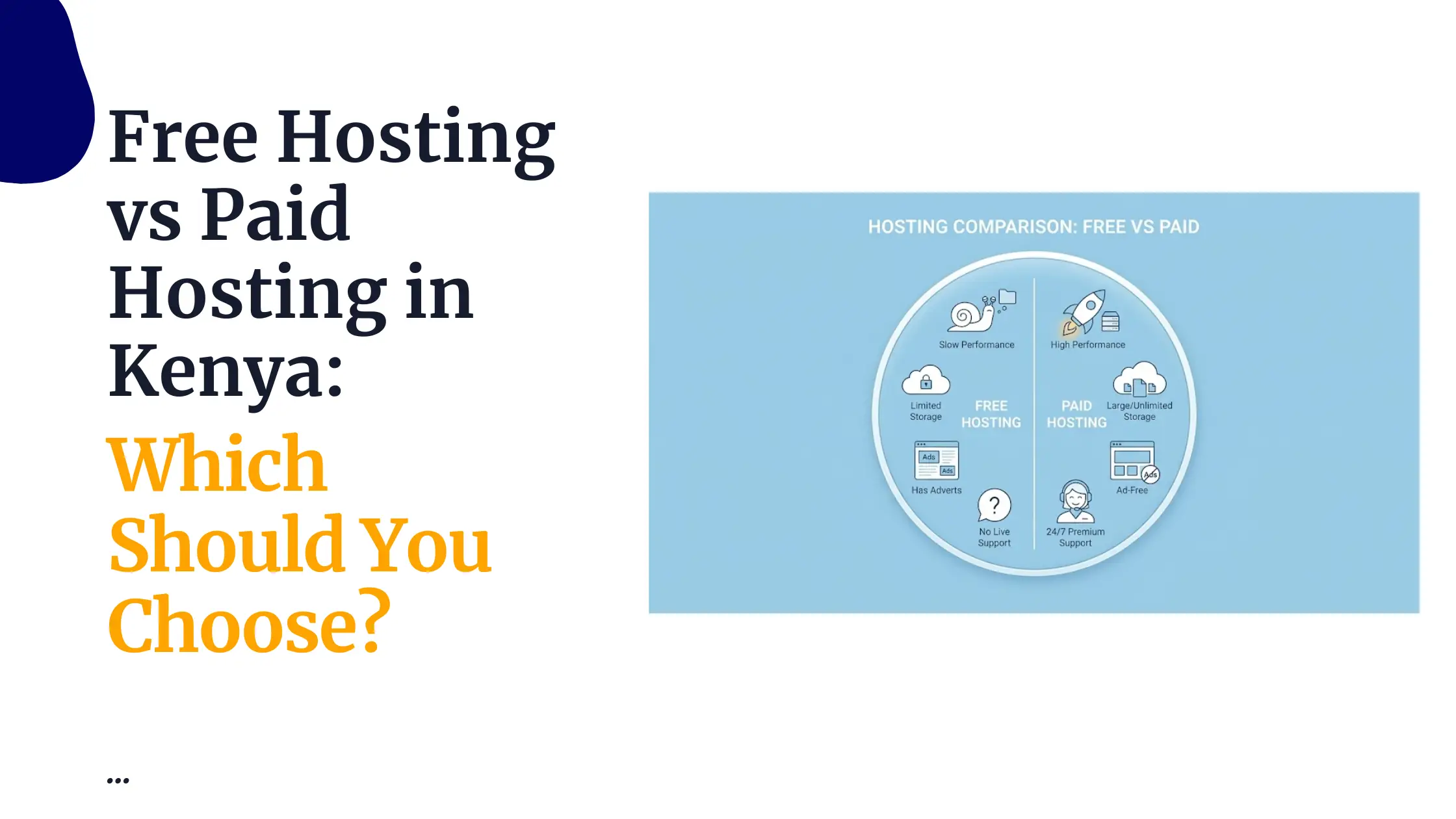
Shared hosting is enough for many small business websites: service pages, portfolios, menus, blogs, landing pages, and simple catalogs.
VPS hosting makes sense when the business needs more control, heavier traffic capacity, custom applications, larger ecommerce, or agency-level client work.
What to Put On The Website Before Spending On Ads
Ads send people to a decision point. If the website is weak, paid traffic only exposes the weakness faster.
Before spending on ads, a Kenyan SME website should have:
- clear homepage headline
- real photos
- service or product pages
- prices or quote steps
- WhatsApp button
- phone number
- business email
- Google Maps location
- delivery or service areas
- customer reviews
- FAQs
- simple contact form
- privacy note if collecting personal details
For local service businesses, connect the website to Google Business Profile. Google says verified businesses can update address, hours, phone, photos, service area, website URL, and other useful profile details.
That is exactly the information customers check before visiting or calling.
How to Build Faster and Better With Truehost
The first goal is to give the business a credible online home.
For many Kenyan SMEs, the practical path is:
- Search for a domain name. we are now offering instant domain checker
- Build the first version with Truehost AI Website Builder.
- Host the website on shared hosting.
- Set up business email.
- Add WhatsApp buttons, forms, and maps.
- Improve Google Business Profile visibility.
- Move to VPS when the site needs more power, custom features, or higher traffic capacity.
This gives the business a clear foundation before it spends heavily on ads, ecommerce, or custom development.
CTA: Build Your Website With AI
FAQs
Which Kenyan businesses need a website most?
Businesses that depend on trust, search, bookings, photos, prices, location, or repeat orders need a website most. Baby shops, clinics, schools, restaurants, salons, real estate firms, travel companies, professional services, and retail shops are strong examples.
Can a small Kenyan business start with only WhatsApp and social media?
Businesses that depend on trust, search, bookings, photos, prices, location, or repeat orders need a website most. Baby shops, clinics, schools, restaurants, salons, real estate firms, travel companies, professional services, and retail shops are strong examples.
Is shared hosting enough for a small business website?
Shared hosting is enough for many small business websites, blogs, menus, service pages, portfolios, and simple catalogs. VPS hosting is better when the site needs more control, more resources, custom software, or larger ecommerce features.
What should a Kenyan business website include first?
Start with a homepage, service or product pages, contact page, WhatsApp button, business email, Google Maps location, real photos, reviews, FAQs, and clear delivery or service areas.
Can AI build a business website?
AI can help create the first version faster by drafting pages, structure, and starter content. A human should still check the details, add real photos, confirm prices, adjust the tone, and make sure the website matches the business.
Should every business website have ecommerce?
No. Many businesses only need a catalog, quote form, booking form, WhatsApp button, or service pages at the start. Ecommerce makes sense when the business is ready to manage stock, payments, delivery, returns, and customer support online.
What is the best website idea for a Kenyan business owner starting from zero?
Start with a simple site that answers customer questions: what you sell, where you are, how much it costs, how to contact you, and why customers can trust you. For many businesses, that is more useful than a complex store with half-filled product pages.
Which Website Setup Fits Your Business?
Start with the setup that matches the job the website must do.
| Business type | Best first setup | Truehost product fit |
|---|---|---|
| Baby shop, salon, cafe, tutor | Simple 5-page site or catalog | AI Website Builder, domain, shared hosting, business email |
| Clinic, school, law firm | Trust-focused service website | Domain, shared hosting, business email |
| Restaurant, hotel, tour company | Visual website with bookings | AI Website Builder, hosting, Google Business Profile management |
| Real estate, car dealer, furniture shop | Catalog website | Shared hosting first, VPS when listings grow |
| Ecommerce or high-traffic brand | Scalable website | VPS, domain, business email |
If the business only needs pages, photos, services, contact details, and WhatsApp inquiries, shared hosting is usually enough.
Move to VPS when the website handles heavier traffic, runs custom software, needs more control, or supports a larger online store.
What to Put On The Website Before Spending Money On Ads
Paid ads cannot fix a confusing website.
Before a business spends on traffic, the website should already include:
- real photos
- clear prices or quote steps
- WhatsApp button
- phone number
- Google Maps location
- business email
- reviews or testimonials
- FAQs
- delivery or service areas
- a clear homepage headline
If the website does not answer basic questions, paid traffic only sends confused customers to a nicer-looking dead end.